Heating Element Comparison
The eight families of heating element side by side: what each one heats, how hot it runs, how it mounts, and the one thing that most often goes wrong with it. Read across a row to see whether a type suits your job, and down a column to see how the families differ.
Ask for a Price or Technical Advice
Call us or send a WhatsApp message for a price, full specifications, or a custom build.
The Table
The temperature is the element's own limit, not the temperature your process reaches. Every figure is the usual range for that family; a build outside it is possible and is worth asking about.
| Type | What it heats | Element limit | How it mounts | The thing to watch |
|---|---|---|---|---|
| Cartridge heater | Moulds, platens, dies and metal blocks | up to 600 °C | Pushed into a drilled hole | The clearance in the bore decides its life: a loose fit overheats |
| Tubular heater | Water, oil, air, and solids it is clamped to | up to 600 °C | Immersed, in a duct, or clamped to a surface | The most adaptable family; can be formed to almost any shape |
| Immersion heater | Liquids in tanks, boilers and pipelines | up to 800 °C | Screwed or flanged into the vessel | Burns out in minutes if switched on while the tank is dry |
| Band heater | Plastic barrels, nozzles and pipe sections | 300 °C mica, 500 °C ceramic | Clamped around a cylinder | Must be tight against the barrel; a loose band cooks itself |
| Flat and strip heater | Platens, plates, presses and oven walls | up to 200 °C on the strip type | Bolted flat against a surface, or radiating | Heat transfer is only as good as the flatness of the contact |
| Flexible heater | Drums, small tanks, pipework and irregular shapes | up to 230 °C | Wrapped and strapped onto the outside | Needs full contact and a low watt density; air gaps burn it |
| Radiant heater | Surfaces, from a distance: paint, plastic sheet, food | 300 to 2200 °C at the element | Mounted facing the work, touching nothing | It heats only what it can see; anything shadowed stays cold |
| High temperature heater | The inside of furnaces, kilns and heat-treatment chambers | 1200 to 1700 °C | Standing inside the chamber | Needs the right controller and the right furnace atmosphere |
Sub-types within a family differ again — a mica band heater and a ceramic band heater are not interchangeable. Each family page lists its types.
The Detail
How to read the table
Three of the five columns are the ones that rule things out. What it heats sets the safe watt density and therefore the size. The element limit rules out whole families as soon as your temperature is above them. How it mounts is a physical fact about your machine that is rarely negotiable — there is either a threaded boss in the tank or there is not, and there is either a drilled hole in the mould or there is not.
The last column is the one people learn the hard way. Every family has a characteristic failure, and it is almost always the same failure repeated: a loose bore, a dry tank, a band that was not tightened, a blanket with an air gap under it.
The families overlap more than the names suggest
A tubular element and an immersion heater are the same heating technology in different packaging. So are a strip heater and a plate heater. The names in this catalogue follow how the parts are bought and fitted, not how they are made, and that is the more useful split for choosing.
Where the families genuinely differ is in how the heat leaves the element. Conduction into a solid, conduction into a liquid, convection into air and radiation across a gap have very different rules, and an element designed for one of them fails quickly in another.
Temperature columns are about the element, not your process
A tubular element rated to 600 °C at the sheath does not mean your oil should reach 600 °C. It means the sheath survives that. What your process reaches depends on the power, the losses and the control — and in most jobs the process temperature is far below the element’s limit, which is exactly how it should be.
Radiant heaters are the extreme case. A halogen emitter’s filament runs at over 2000 °C while the surface it warms sits at 80 °C. The number in the table describes the source, not the result.
When two types both fit
Pick the one with more surface for the same power. It will run cooler, last longer and cost less to replace, and the difference in purchase price between two elements is small compared with a day of stopped production. Where two families both fit and one of them can be reached without dismantling the machine, pick that one too — maintenance is a real cost.
Common Questions
What is the difference between a tubular element and an immersion heater?
An immersion heater is tubular elements built into a fitting — a screwed plug or a flange — so the assembly can be mounted through the wall of a tank and sealed. A bare tubular element has no such fitting and is supported or clamped however the job allows.
Cartridge or band heater for a plastic machine?
Both, in different places. A band heater clamps around the barrel and the nozzle, where the heat has to go into a cylinder from outside. A cartridge goes into a drilled hole in a hot runner manifold or a mould, where the heat has to come from inside a solid.
Which type gives the fastest heat-up?
A cartridge in metal, because a solid conducts heat away far faster than a liquid or air, so the same element can run at a much higher watt density. In fluids, the fastest safe heat-up comes from more surface, not more power — that is, more elements.
Why do the mica and ceramic versions have different limits?
The insulation inside them is different. Mica is a mineral sheet that insulates well up to about 450 °C, which is why we quote a mica band at 300 °C working. A ceramic-bodied heater holds the wire in fired ceramic and takes about 650 °C, quoted at 500 °C working, and it radiates as well as conducting, which is why it works on a barrel that is not perfectly round.
Can one type replace another to save money?
Only when the mounting and the medium are the same. Replacing a family with a cheaper one that mounts differently usually means the heat arrives somewhere else, and the failure that follows costs more than the saving.
Where do the sub-types fit in?
Each family page lists them and explains the differences. Straight, formed and finned tubular elements are the same element with different shapes for liquid, awkward spaces and air. Start from the family, then pick the type.
Read Next
The pages that answer the question this one leaves you with.
Cartridge Heater
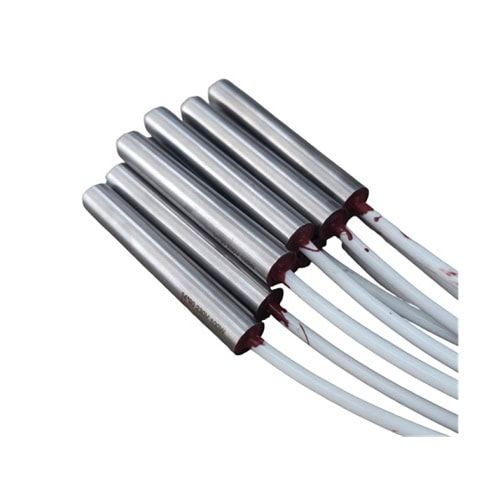
A cartridge heater is a compact metal rod that slides into a drilled hole in a metal part and heats it from the inside. Nickel-chrome wire is wound on a ceramic core, packed with magnesium oxide and sealed in a stainless sheath. It carries far more power per square centimetre than any other element, which is why moulds, dies and platens use it.
Tubular Heater
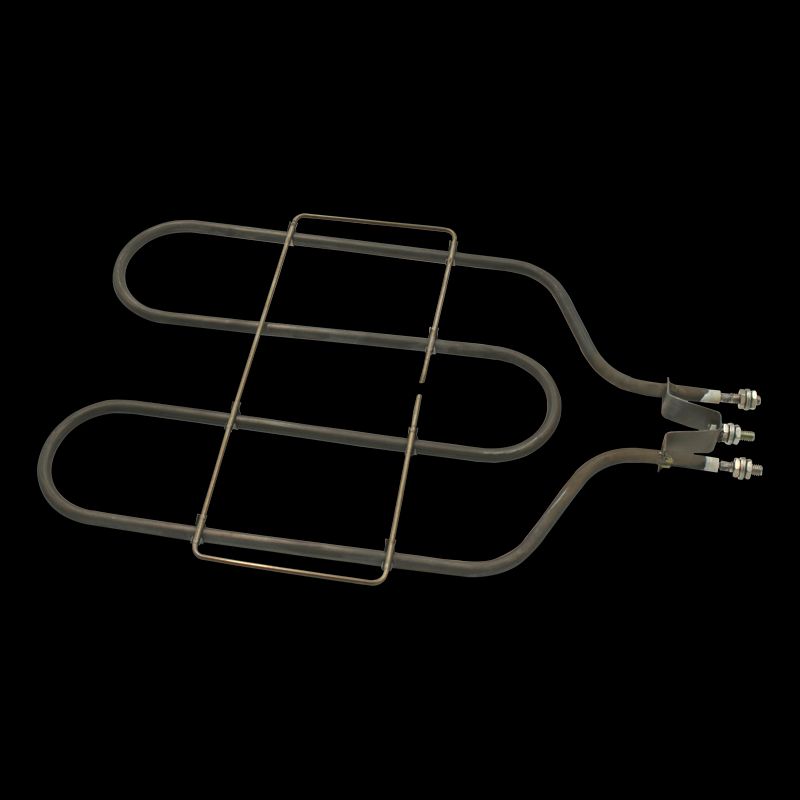
A tubular heater is a metal tube with a resistance wire running down the middle, the gap packed tight with magnesium oxide powder. It is the most widely used industrial heating element, working in water, oil, air and against metal surfaces up to a sheath temperature of around 750 °C.
Immersion Heater
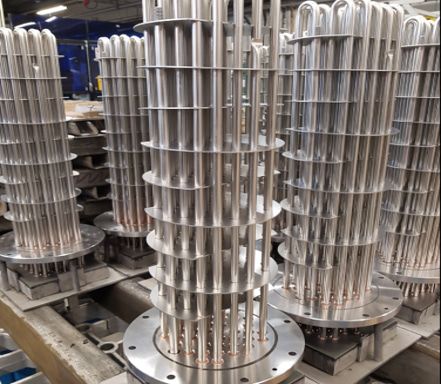
An immersion heater is a tubular element mounted on a screw plug or a flange so it can be sealed into the wall of a tank and sit directly in the liquid. It heats water, oil, fuel, chemicals and process baths from the inside, which wastes almost nothing, and it is chosen by the liquid it will live in rather than by wattage alone.
Band Heater
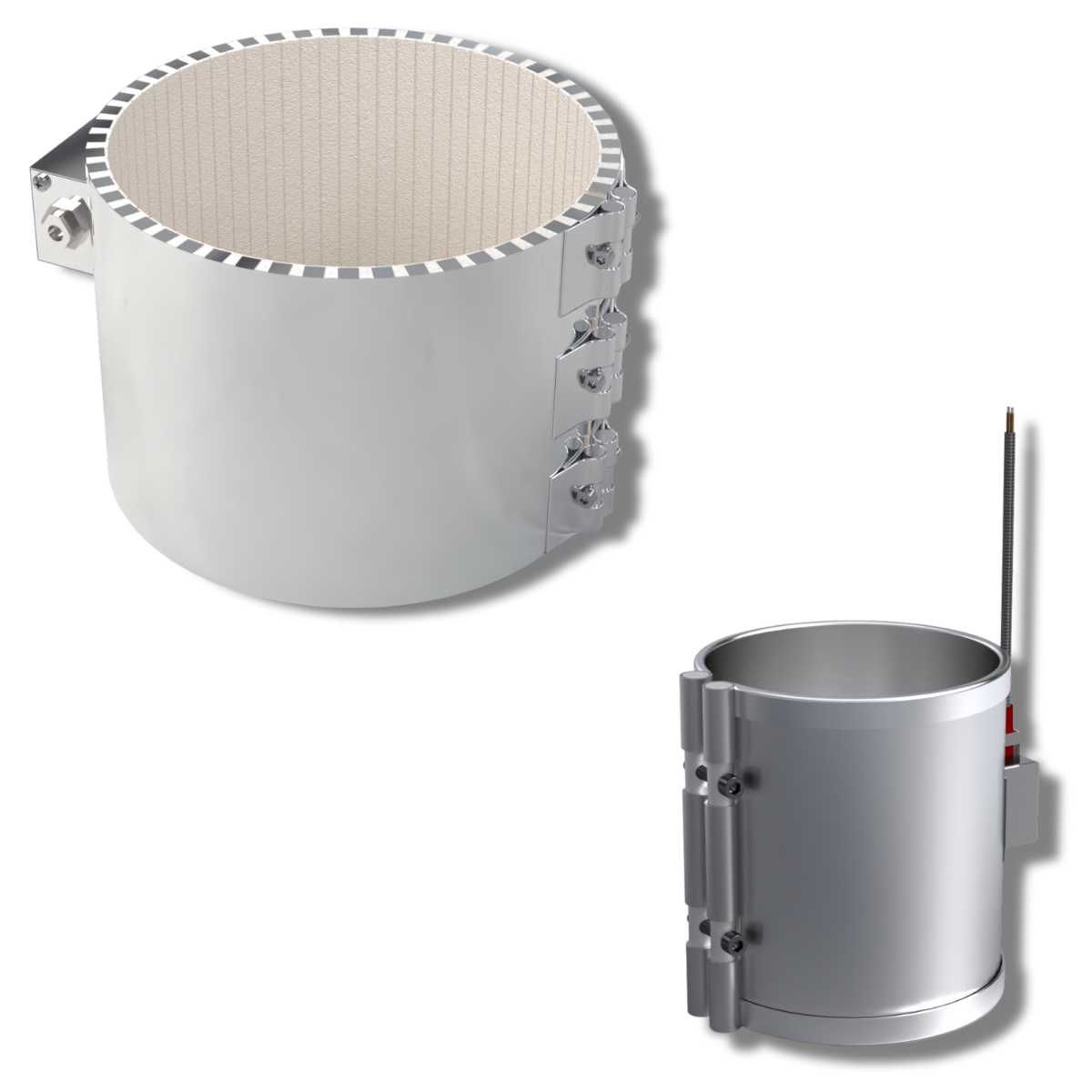
A band heater is a ring-shaped element that clamps around a cylinder and heats it through its wall. Resistance wire sits on mica or inside a ceramic body, wrapped in a stainless steel band that is pulled tight by a clamp. It is the element that heats injection barrels, extruder zones, nozzles and pipes.
Flat and Strip Heater
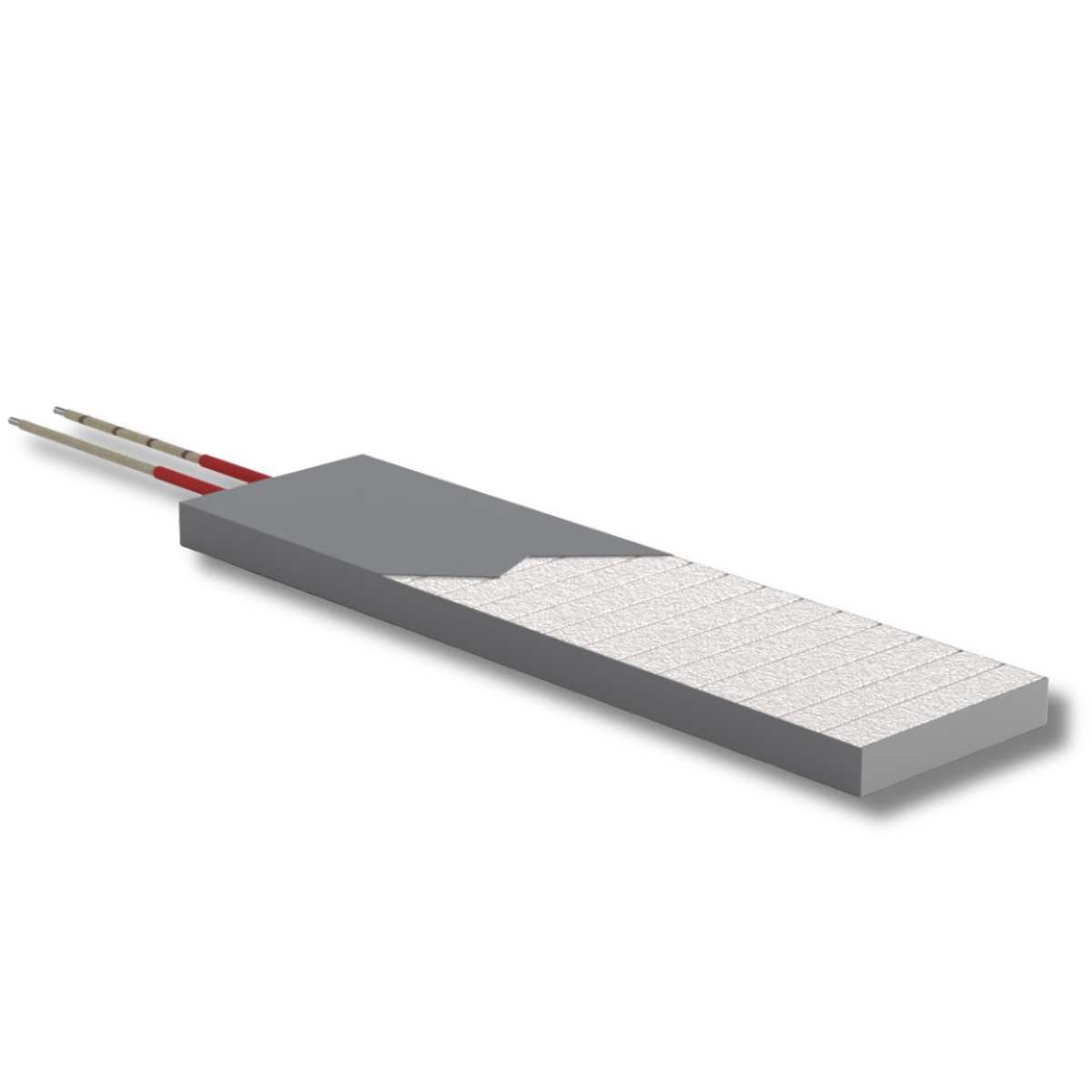
A flat or strip heater is a rectangular element that bolts against a flat surface and heats it by contact. Resistance wire sits on mica or in compacted magnesium oxide inside a steel or stainless case. It is the element used wherever the thing being heated is a plate, a bar or a platen rather than a liquid or a pipe.
Flexible Heater
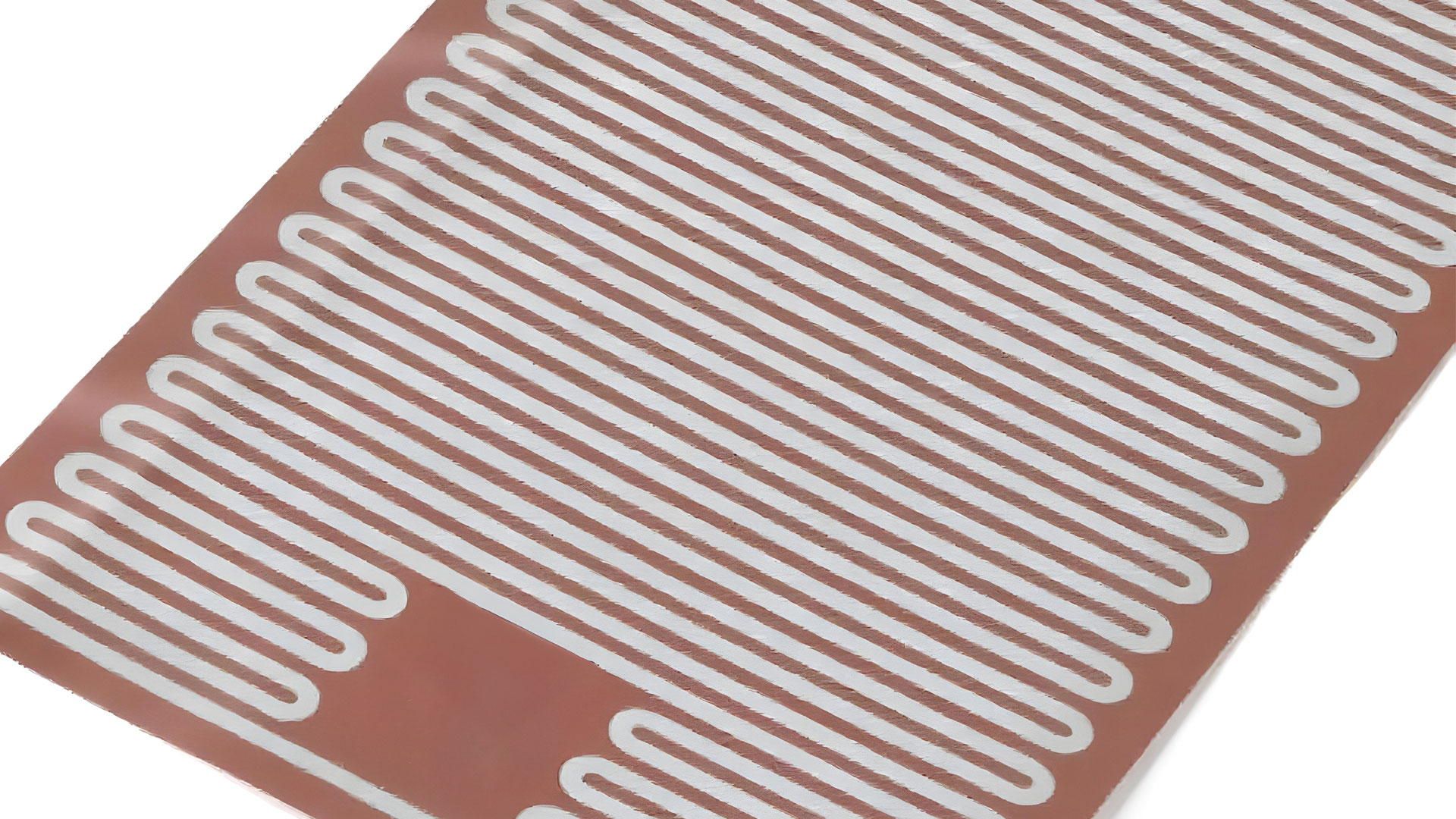
A flexible heater is a thin, bendable element that wraps around a curved surface or lies flat against an awkward one. A resistance circuit is sealed between sheets of silicone rubber, so the whole heater is a few millimetres thick and can be strapped or bonded onto drums, tanks, pipes and plates up to about 230 °C.
Radiant Heater
A radiant heater warms an object by infrared light rather than by touching it or by heating the air between them. A quartz tube, a halogen lamp or a ceramic face glows, and the surface facing it absorbs that energy directly. It is used where something has to be heated quickly, across a gap, without contact.
High Temperature Heater
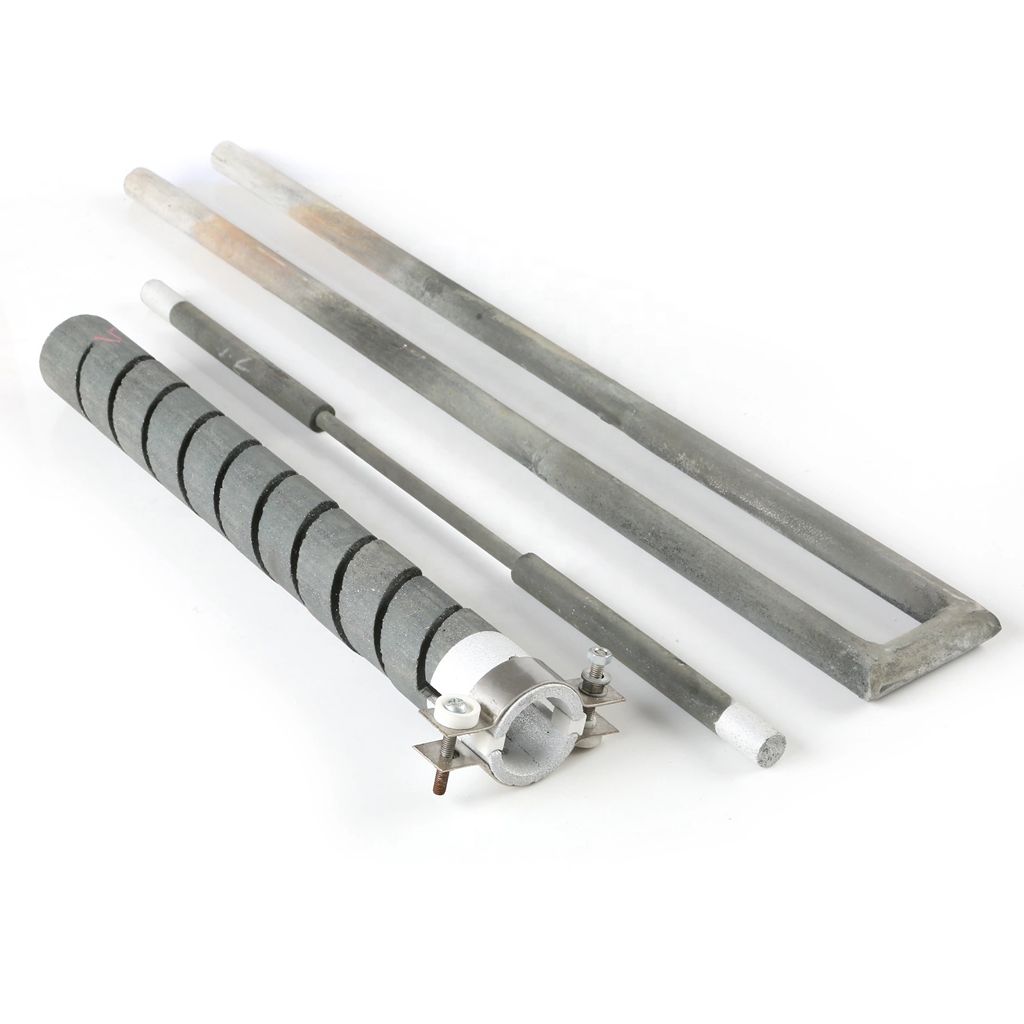
A high temperature heater works above the range where an ordinary sheathed element survives — roughly 1000 °C and up. Silicon carbide rods, molybdenum disilicide elements, open resistance coils and molybdenum heaters take furnaces and kilns from 1000 °C to about 1800 °C, and each one is chosen as much by the atmosphere inside the furnace as by the temperature.
Ask for a Price or Technical Advice
Call us or send a WhatsApp message for a price, full specifications, or a custom build.
Last updated: