Screw Plug Immersion Heater
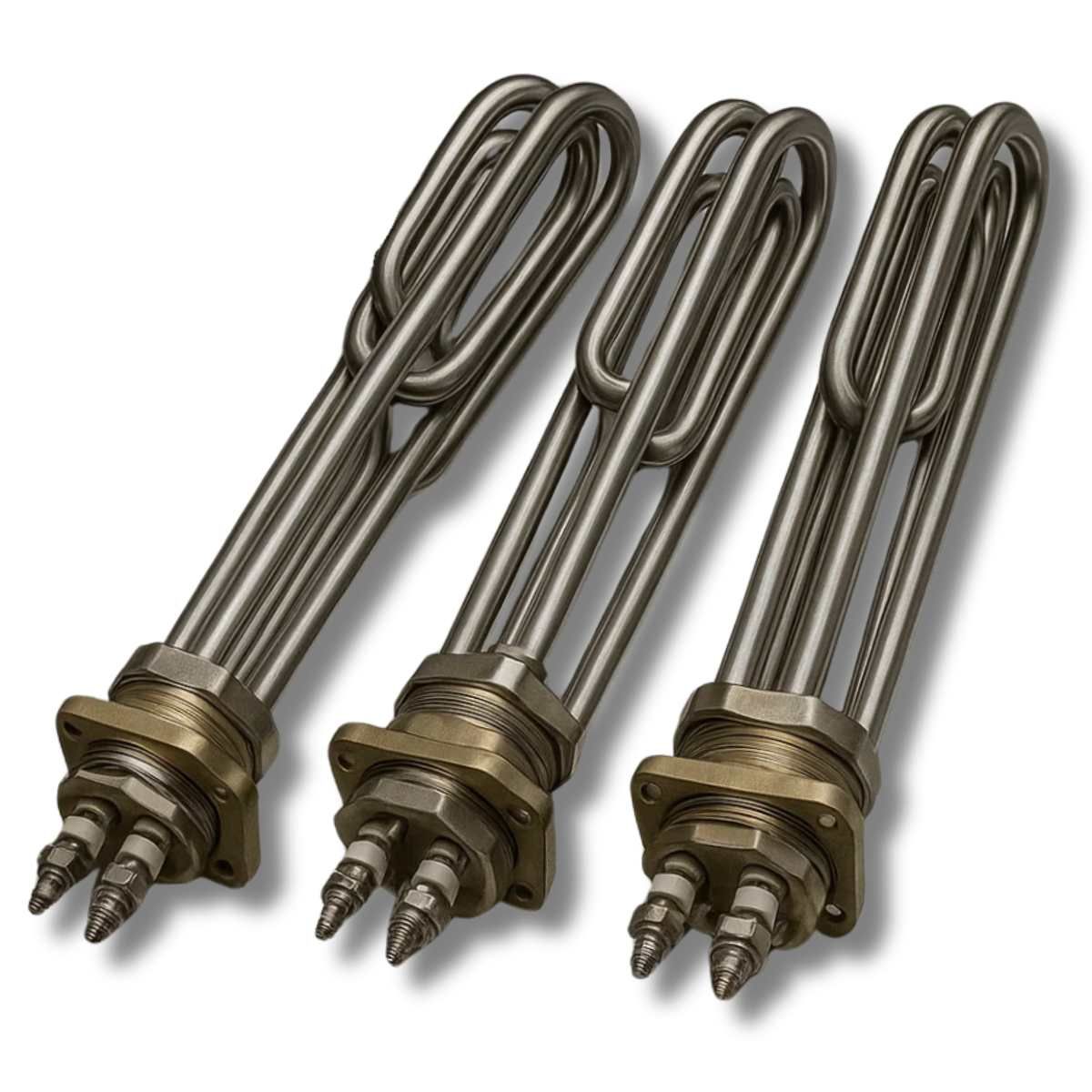
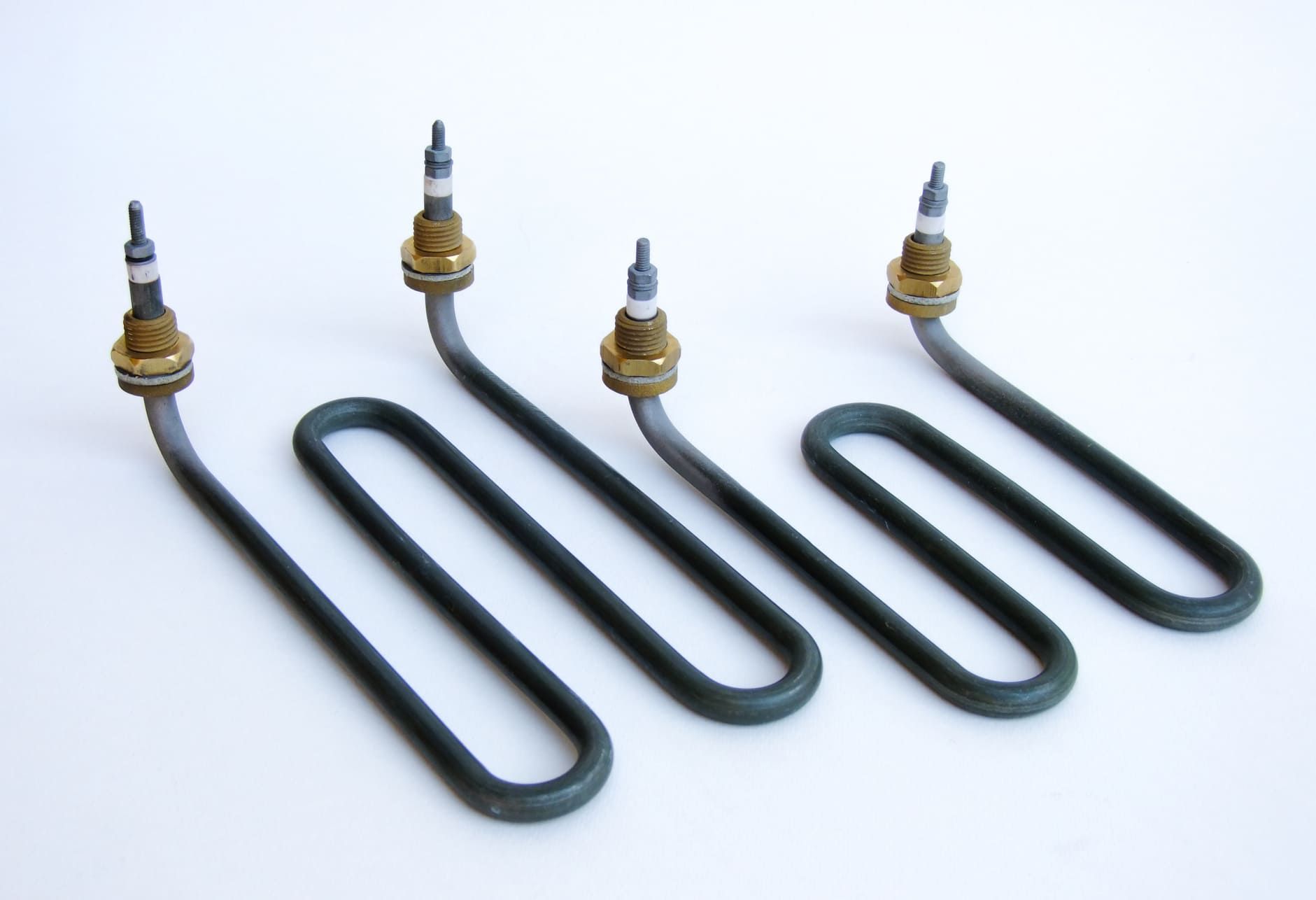
A screw plug immersion heater is a hairpin element brazed or welded into a threaded plug, so it screws straight into a boss on the side or the top of a tank. It is the simplest sealed way to put heat inside a vessel, and it suits tanks up to a few kilowatts at low and medium pressure.
- Thread sizes
- 1, 1¼, 1½, 2 inch BSP
- Maximum power
- up to 4 kW
- Max working temperature
- up to 600 °C
- Sheath material
- Stainless steel
- Pressure
- Low and medium
- Custom builds
- To your boss size and depth
Ask for a Price or Technical Advice
Call us or send a WhatsApp message for a price, full specifications, or a custom build.
Technical Specifications
The figures below are the usual ranges for this type of element. Builds outside them are possible.
| Property | Value |
|---|---|
| Construction | One or more hairpin tubular elements sealed into a threaded brass or steel plug |
| Thread | 1, 1¼, 1½ and 2 inch BSP, other threads to order |
| Sheath material | Stainless steel |
| Plug material | Brass, carbon steel or stainless, matched to the tank |
| Max working temperature | up to 600 °C |
| Immersed length | 150 to 1500 mm |
| Safe watt density in water | 8 to 12 W/cm² |
| Safe watt density in oil | 1 to 3 W/cm² |
| Working voltage | 12, 24 or 220 single phase V |
| Sealing | Tapered thread with sealant, or parallel thread with a gasket |
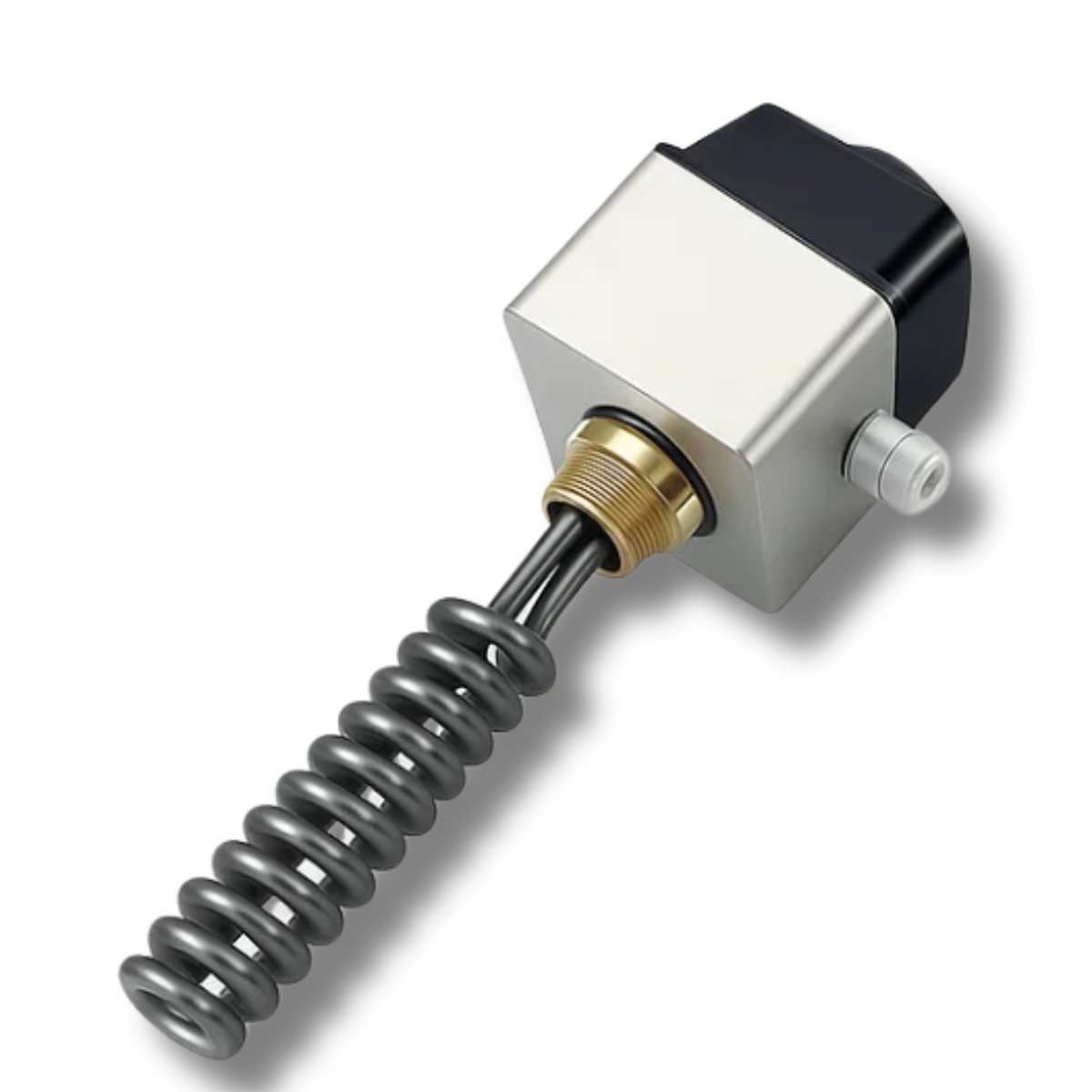
| Termination | Terminal box on the plug, with a gland for the supply cable |
| Power tolerance | +5 to -10 % |
Sizes and Specifications We Supply
| Property | What we supply |
|---|---|
| Diameter | From 8 mm |
| Length | 150 to 1,500 mm |
| Maximum power per element | 4,000 W |
| Voltage | 12, 24, 220 V |
| Sheath material | Stainless steel |
| Maximum working temperature | 600 °C |
| Termination | Threaded |
| Delivery | 1 working day |
| Minimum order | 1 piece |
The size ordered most often is 500 mm long.
Where It Is Used
- Water and liquid heating
- Tank and drum heating
- Oil, fuel and mazut heating
- Food and pharmaceutical industry
- Small process and washing tanks
Choosing, Fitting and Looking After It
Depth is the number that decides the design
Power tells you how much heat. Depth tells you whether it can be delivered. A 9 kW heater needs a certain amount of heated length to keep the watt density safe, and that length has to fit inside the tank without touching the far wall, the floor, or a stirrer. If the tank is shallow, the answer is a multi-element build folded into a tighter hairpin, or two smaller heaters in two bosses — not the same power squeezed onto less length.
Measure from the face of the boss to the nearest obstruction inside, and send that figure. It saves a heater that arrives and will not go in.
The boss has to be as good as the heater
A screw plug seals against the tank’s own boss, so that boss is part of the pressure joint. A thread that has been chased with the wrong tap, a boss welded slightly out of square, or one that has corroded over years will leak whatever is screwed into it. Look into the boss with a light before ordering. If the thread is damaged, deal with it while the tank is empty, not on the day the new heater arrives.
Support the weight, and never on the terminal box
A long screw plug heater is a lever. All of its weight, plus whatever the liquid does to it, is carried on a thread a couple of inches across. On anything long or heavy, fit a support inside the tank near the far end of the element, or a bracket outside that takes the load off the joint. And when fitting or removing, put the spanner on the flats. A terminal box turned as a handle twists the seal and shears the internal connections.
Wire it so a leak cannot reach the terminals
The terminal box sits directly above the seal. If the joint ever weeps, that is where the liquid goes. Point the cable gland downward, dress the cable so it loops below the gland before rising, and use a gland rated for the environment. On any tank in a wet area, an RCD is not optional.
Orientation and the air pocket
A screw plug fitted into the top of a tank can trap air along the top of the element as the tank fills. That pocket has no liquid to carry heat away, and the element runs dry along that line. Fit it slightly nose-down where the geometry allows, or fill the tank slowly enough for the air to escape past it.
Give it its own high-limit protection
The control thermostat sits in the liquid and does its job while there is liquid. A separate high-limit cut-out, wired to break the supply and not merely to warn, covers the case the thermostat cannot see: an emptied tank, a stuck contactor, a sensor that fell out of its pocket. On a screw plug heater there is rarely a thermowell, so this is usually a separate fitting — plan a boss for it at the same time as the heater.
Price
Price
1,000,000 – 3,600,000 Toman
Prices checked — confirm the figure before ordering, as it moves with the exchange rate and with the specification.
What Sets the Price
- Diameter and length
- Power and voltage needed
- Sheath material (stainless steel, brass and so on)
- Termination type and lead or thread length
- Whether a thermocouple is built in
- Order quantity
How It Compares
Screw plug against the flanged heater it competes with.
| Feature | Screw plug | Flanged |
|---|---|---|
| Fitting | Screws into a boss | Bolts onto a flange |
| Usual power | Up to about 15 kW | Tens of kilowatts |
| Cost | Lower | Higher |
| Removal | One spanner | Undo the bolts, new gasket |
| Pressure | Low and medium | Suits pressure vessels |
Common Questions
What do I need to measure before ordering?
The thread size of the boss, whether it is tapered or parallel, how deep the heater can go before it touches anything, the liquid, the working temperature and the power. Depth is the one most often left out and the one that decides the design.
Tapered thread or parallel with a gasket?
Tapered seals on the thread itself and suits a boss cut for it. Parallel needs a gasket or a bonded washer against a flat face. They are not interchangeable — forcing a tapered plug into a parallel boss cracks the boss or leaks, sometimes both.
How tight should it be done up?
Tight enough to seal and no more. It is being screwed into a tank wall, not a machine casting. Use a spanner on the flats provided, never on the terminal box, and never use the box as a lever — the seal behind it is what keeps the tank in the tank.
Should it go in the side or the top?
The side, low down, if the liquid has to circulate — the heat then rises through the whole tank. From the top only if the tank has no side boss, and then the element must reach well down. Either way, keep it clear of the floor so sludge cannot bury it.
Can it be fitted in a plastic tank?
Only through a proper bulkhead fitting rated for the temperature, and never with the hot section anywhere near the wall. The plug runs warm, and a threaded boss moulded into polyethylene will creep and leak once it is warm and under load.
How do I get out one that will not move?
Drain below the level of the boss first, in case it does move suddenly. Then heat the boss gently and evenly rather than pulling harder — most seized plugs are held by corrosion in the thread, and levering snaps the plug and leaves the thread in the wall.
Related Products
Immersion Heater
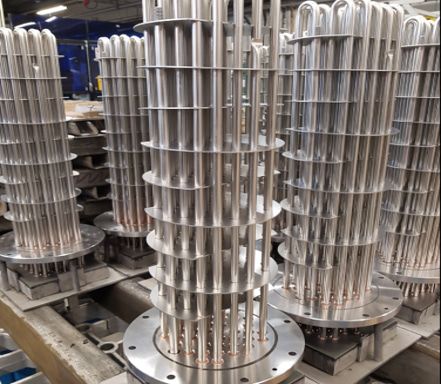
An immersion heater is a tubular element mounted on a screw plug or a flange so it can be sealed into the wall of a tank and sit directly in the liquid. It heats water, oil, fuel, chemicals and process baths from the inside, which wastes almost nothing, and it is chosen by the liquid it will live in rather than by wattage alone.
Flanged Heater
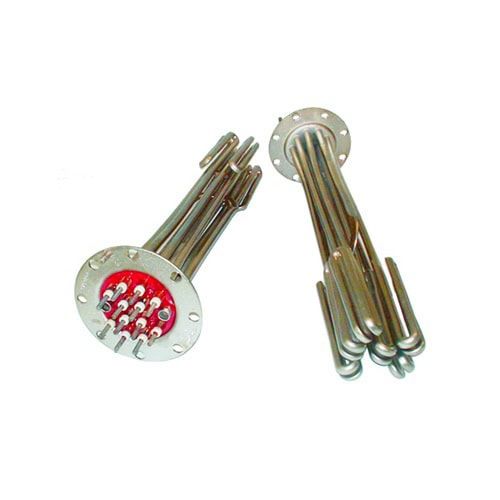
A flanged immersion heater is a bundle of hairpin elements welded into a flange that bolts onto a matching flange on the vessel. It is how large powers are put into a tank — tens of kilowatts, three phase — and it is the build used where there is pressure, a hot oil circuit, or a boiler.
Water Heater Element
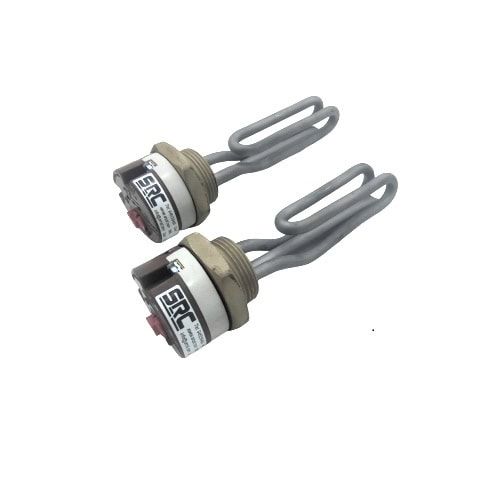
A water heater element is the screw-in element that heats a storage water heater or a hot water cylinder. It is usually a stainless steel or brass hairpin on a threaded plug, with a pocket down the middle for the thermostat, and it is chosen mainly by how hard the water is.
Samovar Element
A samovar heater element is the small stainless element that sits in the water chamber of an electric samovar or a tea urn. It is usually a ring or a hairpin of 1 to 3 kW in a food-grade stainless sheath, and it spends its life in water that is boiled and refilled several times a day.
Oil and Chemical Heater
An oil and chemical immersion heater is built for liquids that punish an element: thermal oil, diesel, mazut, acids, alkalis and plating solutions. It runs at a low watt density so the sheath never gets hot enough to char the oil, and its sheath material is chosen for what the liquid does to metal.
Ask for a Price or Technical Advice
Call us or send a WhatsApp message for a price, full specifications, or a custom build.
Last updated: