Molybdenum Heater
A molybdenum heater is a wire, strip or rod element for vacuum and inert-gas furnaces. It reaches about 1700 °C, but only where there is no oxygen — molybdenum burns away in air above roughly 400 °C. It is the element used for sintering, brazing and crystal growing under vacuum.
- Max temperature
- up to 1700 °C
- Atmosphere
- Vacuum or inert gas only
- In air
- Oxidises above 400 °C
- Forms
- Wire, strip and rod
- Supply
- Transformer, low voltage
- Custom builds
- To your hot zone
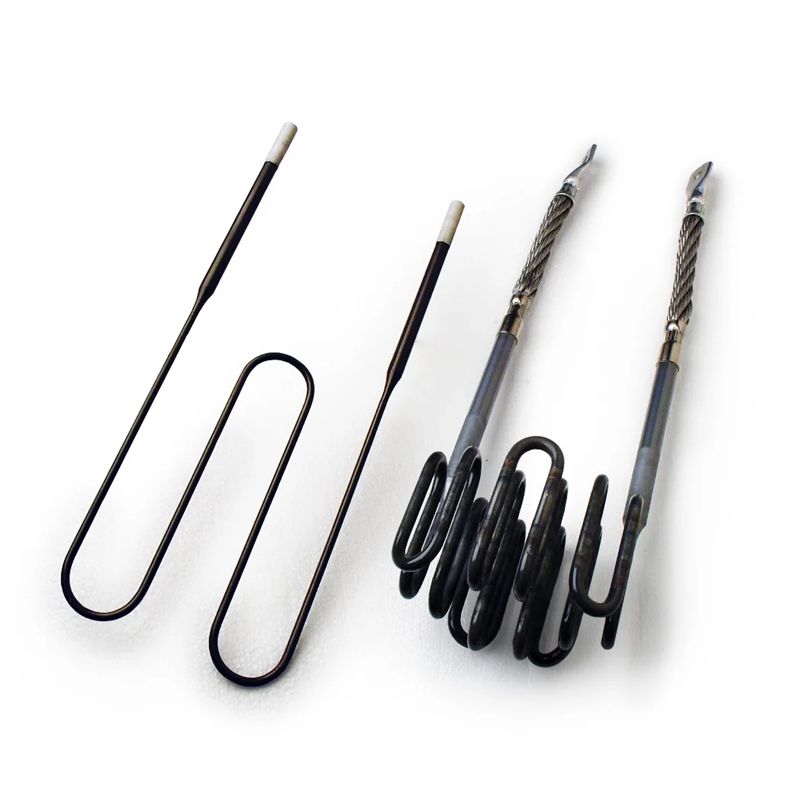
Ask for a Price or Technical Advice
Call us or send a WhatsApp message for a price, full specifications, or a custom build.
Technical Specifications
The figures below are the usual ranges for this type of element. Builds outside them are possible.
| Property | Value |
|---|---|
| Construction | Molybdenum wire, strip or rod, supported on ceramic insulators inside a shielded hot zone |
| Max element temperature | 1700 °C |
| Atmosphere | Vacuum, argon, nitrogen or dry hydrogen — never air at temperature |
| Oxidation in air | Begins near 400, rapid above 600 °C |
| Forms | Wound wire, folded strip, and rod |
| Heat shields | Molybdenum or tungsten sheets around the hot zone |
| After firing | Recrystallises and becomes brittle when cold |
| Electrical supply | Step-down transformer, low voltage and high current |
| Handling | Clean gloves; surface contamination causes hot spots |
| Mounting | On alumina insulators, free to expand |
| Control | Thyristor with current limit, and a vacuum interlock |
Where It Is Used
- Industrial furnaces and ovens
- Laboratory equipment
- Vacuum sintering and brazing
- Metal injection moulding debinding and sintering
- Crystal growing and specialist materials work
Choosing, Fitting and Looking After It
The atmosphere is not a detail, it is the whole condition of use
Molybdenum will reach 1700 °C and hold it for years — as long as there is no oxygen anywhere near it. In air above roughly 400 °C it oxidises, and unlike stainless or Incoloy the oxide gives no protection at all: it evaporates, taking the metal with it. An element left glowing in air does not degrade, it disappears.
So a molybdenum heater is never specified on its own. It is specified together with a vacuum system or an inert-gas supply that is good enough, and with the interlock that ties the two together.
Interlock the power to the vacuum, automatically
If the chamber loses vacuum while the elements are hot, they will be destroyed before anyone can react. The protection has to be a hard interlock: a pressure or flow signal that cuts the supply directly, without a person or a supervisory system in between. Treat this as part of the element specification, because in practice it is what decides whether the element has a life at all.
Everything moves by radiation, so shielding is part of the heater
In a vacuum there is no gas to carry heat by convection. All of it travels as radiation, in straight lines, to whatever it can see. That is why a vacuum furnace hot zone is wrapped in layers of reflective molybdenum or tungsten shielding: the shields send radiation back into the zone instead of letting it reach the cold wall. Damaged, warped or contaminated shields cost far more power than they look like they should.
Brittle after the first firing, and there is no way back
Molybdenum recrystallises at working temperature. Once it has, it is brittle cold, and a used element that looks perfectly sound will crack if it is bent, straightened or dropped. This changes how a furnace is serviced. Work around the elements rather than moving them, support them when anything nearby is being removed, and accept that an element which has to be displaced will probably need replacing.
Contamination becomes a hot spot
A fingerprint, a smear of oil, a fleck of dust from a workshop bench: at 1600 °C each of these is a place where the surface behaves differently from the metal around it, and the element thins or fails there. Handle new elements with clean gloves from the box to the furnace, keep the hot zone clean, and be careful about what is put into the chamber — binders and lubricants that outgas during a cycle land on the elements as well as on the pump.
Low voltage, high current, and connections that matter
Like the other elements in this family, molybdenum runs at low voltage and very high current from a step-down transformer. Everything about the current path matters: bus bars sized properly, connections clean and tight, feedthroughs in good condition. A resistive joint anywhere in that path turns into a local heater, and in a vacuum there is no air to carry that heat away from it.
Price
Price
The price for this product depends on the specification you order.
What Sets the Price
- Diameter and length
- Power and voltage needed
- Sheath material (stainless steel, brass and so on)
- Termination type and lead or thread length
- Whether a thermocouple is built in
- Order quantity
How It Compares
Molybdenum against the elements that work in air.
| Feature | Molybdenum | Silicon carbide | Molybdenum disilicide |
|---|---|---|---|
| Max temperature | 1700 °C | 1600 °C | 1800 °C |
| Works in air | No | Yes | Yes |
| Needs vacuum or inert gas | Yes | No | No |
| Brittle after use | Yes | Yes | Yes |
Common Questions
Why can molybdenum not be used in air?
It oxidises, and the oxide does not protect it — it evaporates away. Above about 400 °C the element starts losing material, and above 600 it goes quickly. In a vacuum or under argon there is no oxygen to react with, and the same metal lasts for years.
What happens if the vacuum is lost while it is hot?
The element is destroyed, often in one event. This is why a molybdenum furnace is interlocked: loss of vacuum or of inert gas has to cut the power immediately and automatically, not raise an alarm for someone to act on.
Why does an old element break so easily?
Molybdenum recrystallises at working temperature and is brittle when cold afterwards. A used element that was flexible when new will snap if it is bent, straightened or even knocked. Plan any furnace work around not disturbing the elements.
Why does it have to be handled with clean gloves?
Because anything left on the surface — skin oils, salts, dust — becomes a hot spot or a reaction site at temperature. Contaminated molybdenum fails at the mark. New elements are handled with gloves from the box to the furnace.
What are the shiny sheets around the elements for?
They are heat shields, usually molybdenum or tungsten. In a vacuum there is no gas to carry heat, so everything moves by radiation, and layers of reflective shielding are what keep the heat inside the hot zone instead of in the furnace wall.
Can it be used with hydrogen?
Dry hydrogen is a normal atmosphere for molybdenum and is used in sintering work. Wet hydrogen is not — water vapour will oxidise the element. Dew point matters here, and it is a furnace design question rather than an element question.
Related Products
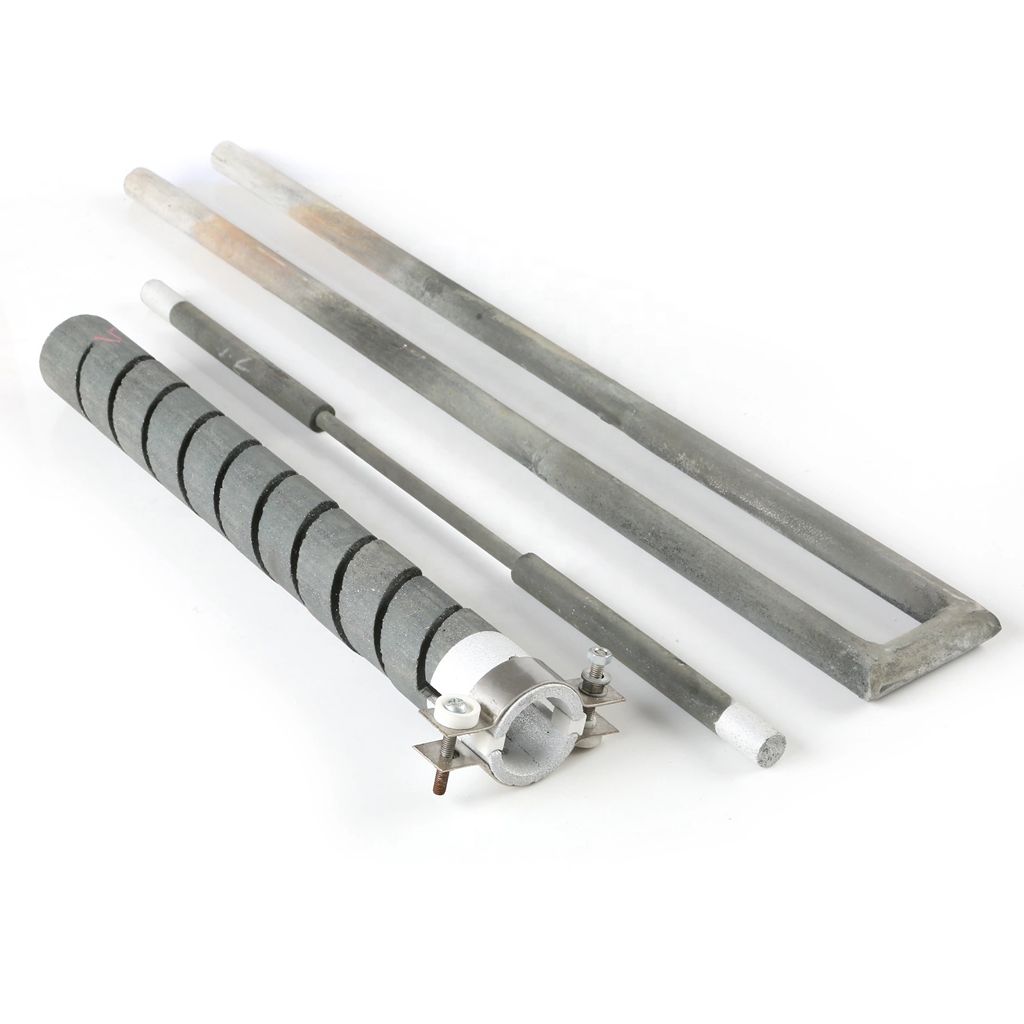
High Temperature Heater
A high temperature heater works above the range where an ordinary sheathed element survives — roughly 1000 °C and up. Silicon carbide rods, molybdenum disilicide elements, open resistance coils and molybdenum heaters take furnaces and kilns from 1000 °C to about 1800 °C, and each one is chosen as much by the atmosphere inside the furnace as by the temperature.
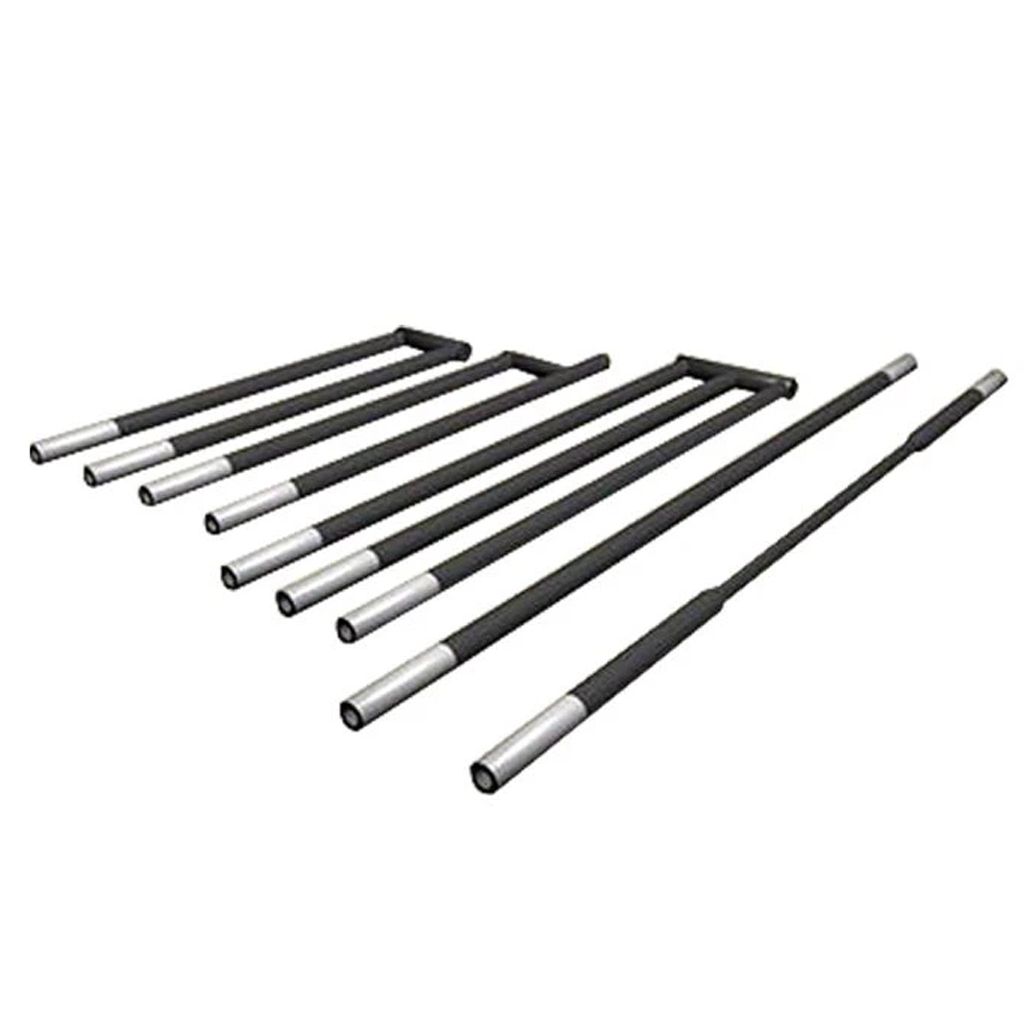
Silicon Carbide Heater
A silicon carbide heater is a ceramic rod that glows in open air at furnace temperatures up to about 1600 °C. It has no sheath and no wire — the rod itself is the resistance. It ages by slowly gaining resistance, so the furnace that runs it needs a transformer with tappings from the start.
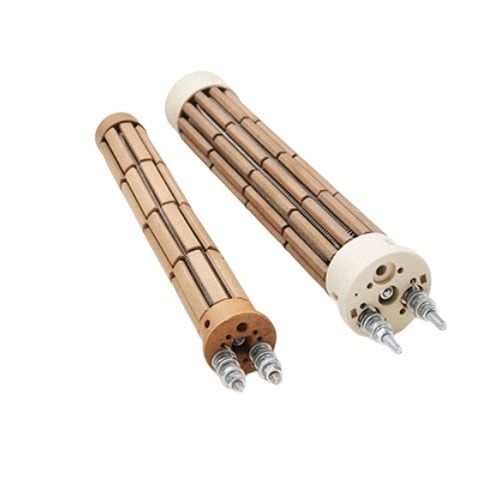
Ceramic Heater
A ceramic heater for high temperature work carries its resistance wire inside a ceramic body rather than leaving it bare in the chamber. Wire threaded through ceramic tubes and beads, or set into a fibre module, reaches about 1200 °C while staying protected from the load and from what the furnace gives off.
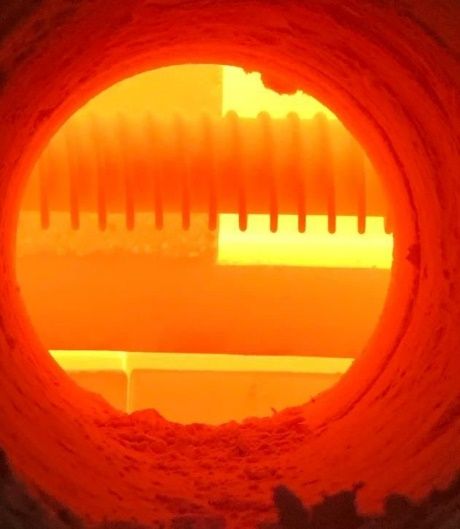
Furnace Heater
A furnace heater in its simplest form is an open coil of resistance wire laid in grooves in the lining or hung on ceramic supports inside the chamber. Iron-chrome-aluminium wire reaches about 1400 °C, nickel-chrome about 1200, and the coil is wound and pitched for the furnace it goes into.
Ask for a Price or Technical Advice
Call us or send a WhatsApp message for a price, full specifications, or a custom build.
Last updated: