Packaging Machinery
Sealing bars, shrink tunnels, date coders and cutting wires all run on small heaters that cycle constantly. The temperature window is narrow — a few degrees either way and the seal leaks or the film burns — so response speed matters as much as power.
Ask for a Price or Technical Advice
Call us or send a WhatsApp message for a price, full specifications, or a custom build.
The Job
A seal has to be made in a fraction of a second, in the same narrow temperature window, thousands of times a shift, along the whole length of the bar.
Working Conditions
The usual figures for this application. Yours may differ, and the element is sized from your figures, not these.
| Property | Value |
|---|---|
| Sealing temperature, common films | 120 to 220 °C |
| Shrink tunnel air temperature | 120 to 200 °C |
| Sealing dwell time | 0.2 to 2 s |
| Cartridge watt density in a bar | 8 to 20 W/cm² |
| Temperature tolerance along the bar | ±5 °C |
| Duty | Continuous cycling, hundreds of cycles an hour |
What Suits It
The element types that fit this job, best first.
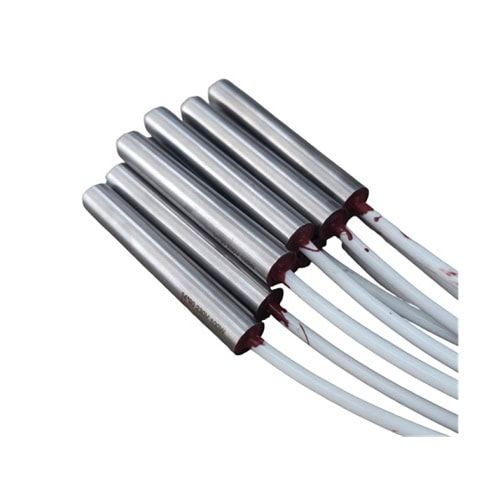
Cartridge Heater
A cartridge heater is a compact metal rod that slides into a drilled hole in a metal part and heats it from the inside. Nickel-chrome wire is wound on a ceramic core, packed with magnesium oxide and sealed in a stainless sheath. It carries far more power per square centimetre than any other element, which is why moulds, dies and platens use it.
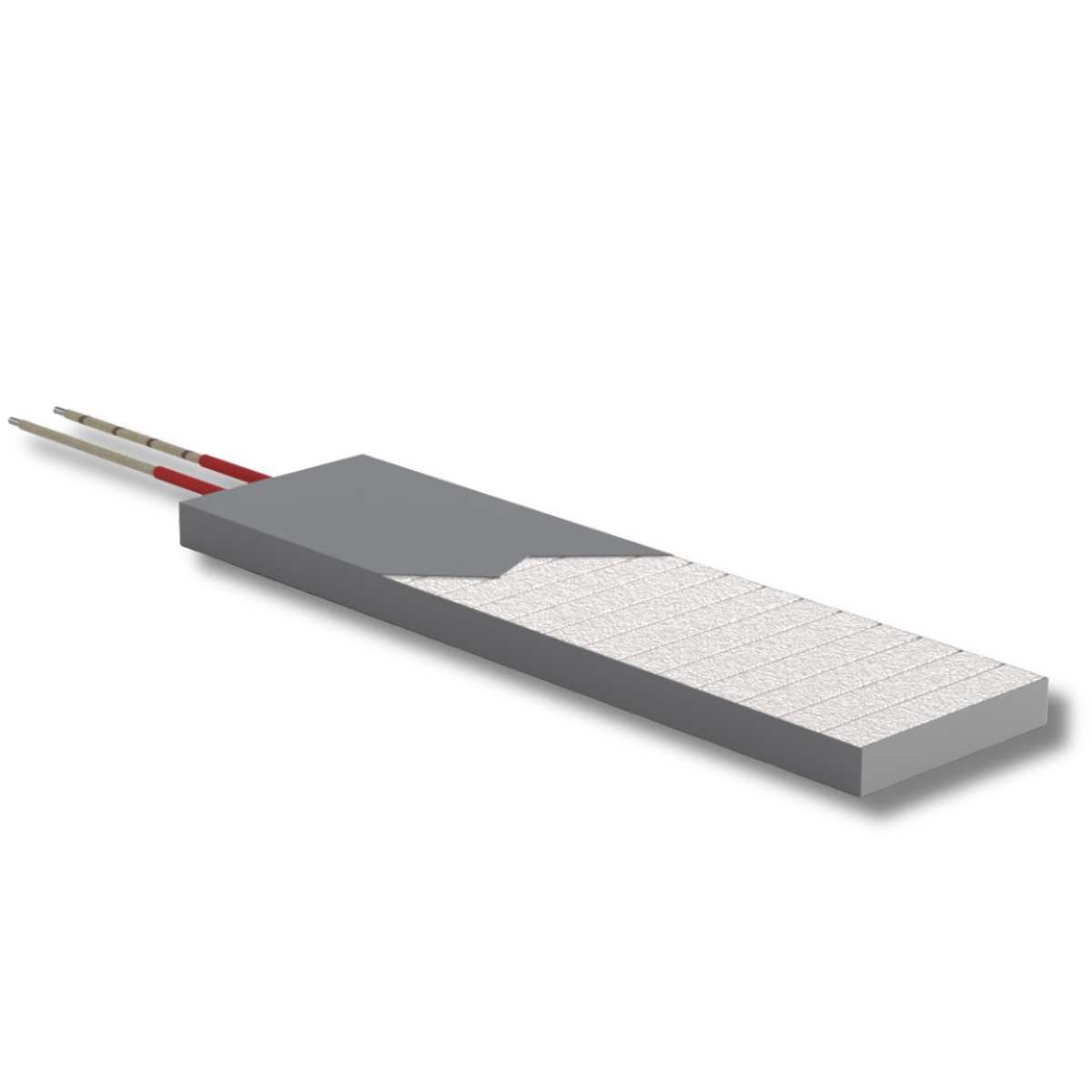
Strip Heater
A strip heater is a long, narrow flat element, usually 25 to 60 mm wide, that bolts along a bar, an edge or a plate and heats it in a line. Fitted with fins it becomes an air heater instead, and it is the simplest way to add heat to a surface that has no room for anything thicker.
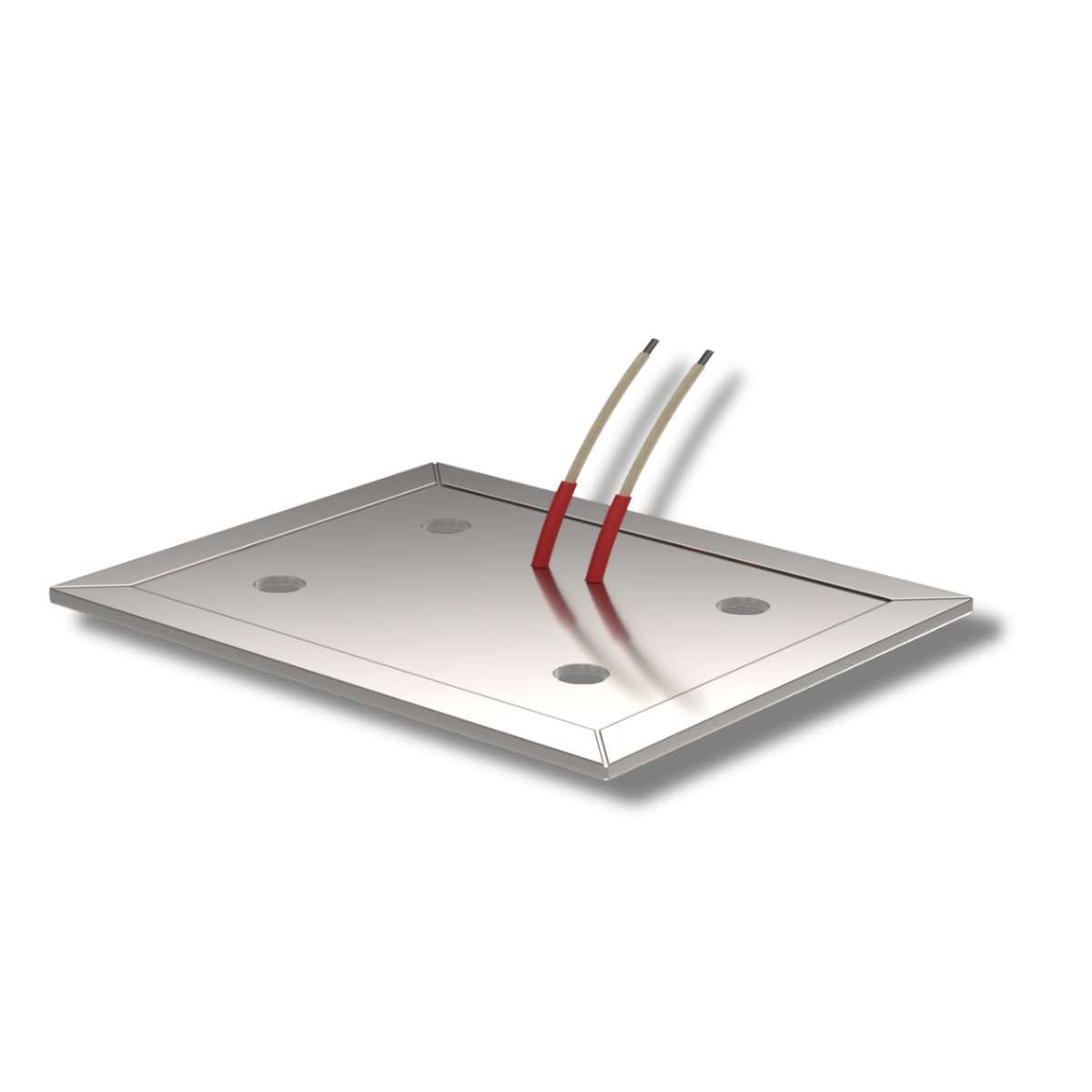
Plate Heater
A plate heater is a wide flat element that heats an area rather than a line. A resistance circuit is spread across a rectangular plate — clamped between metal sheets or cast into aluminium — so the whole face comes up to temperature together. It is used under vessels, moulds, tables and heated surfaces.
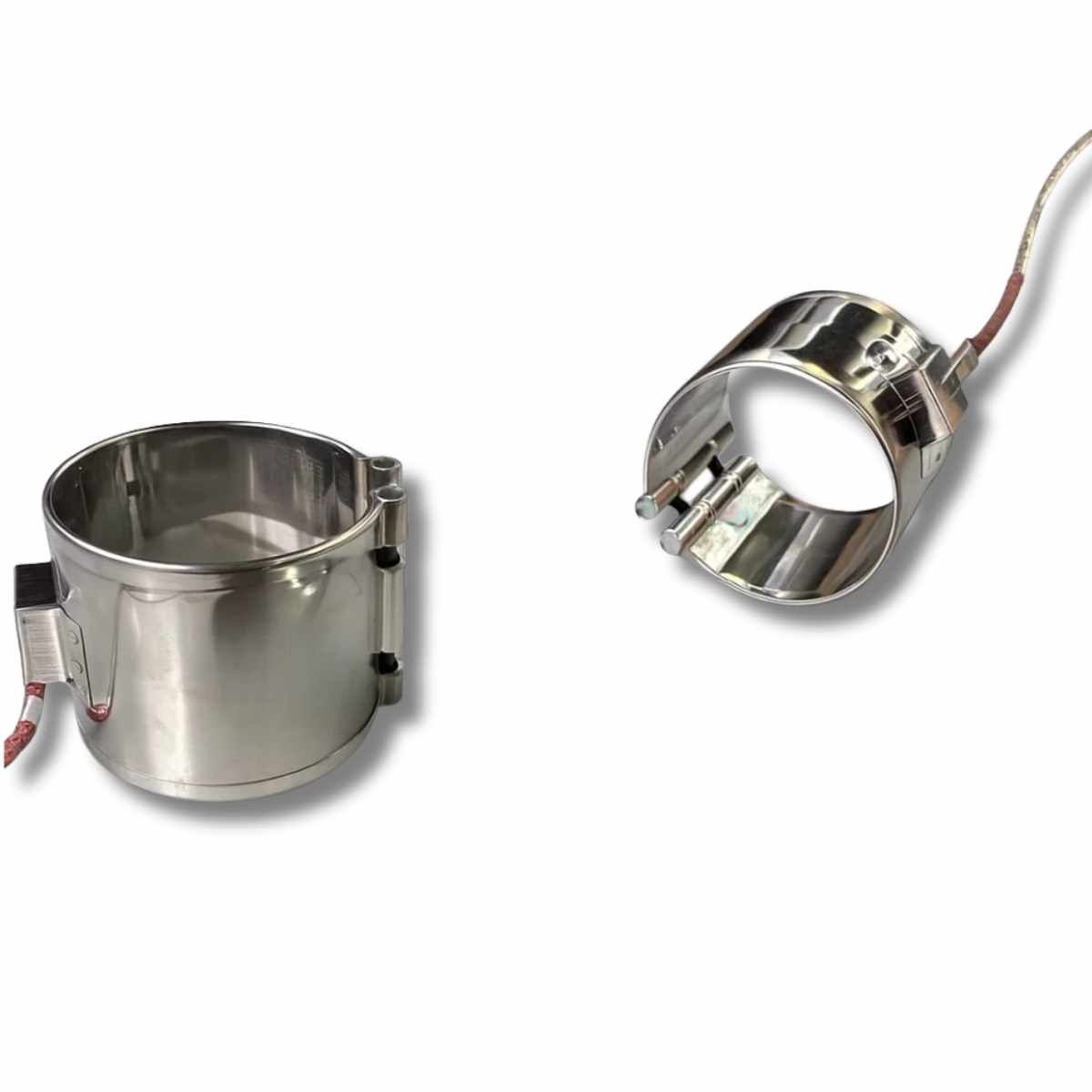
Mica Band Heater
A mica band heater is the thin, fast type of band heater. Flat nickel-chrome ribbon is wound over a mica sheet, covered with more mica and closed inside a stainless steel band about three millimetres thick. It heats an injection barrel quickly and cheaply, and we supply it for working temperatures up to 300 °C.
Finned Tubular Heater
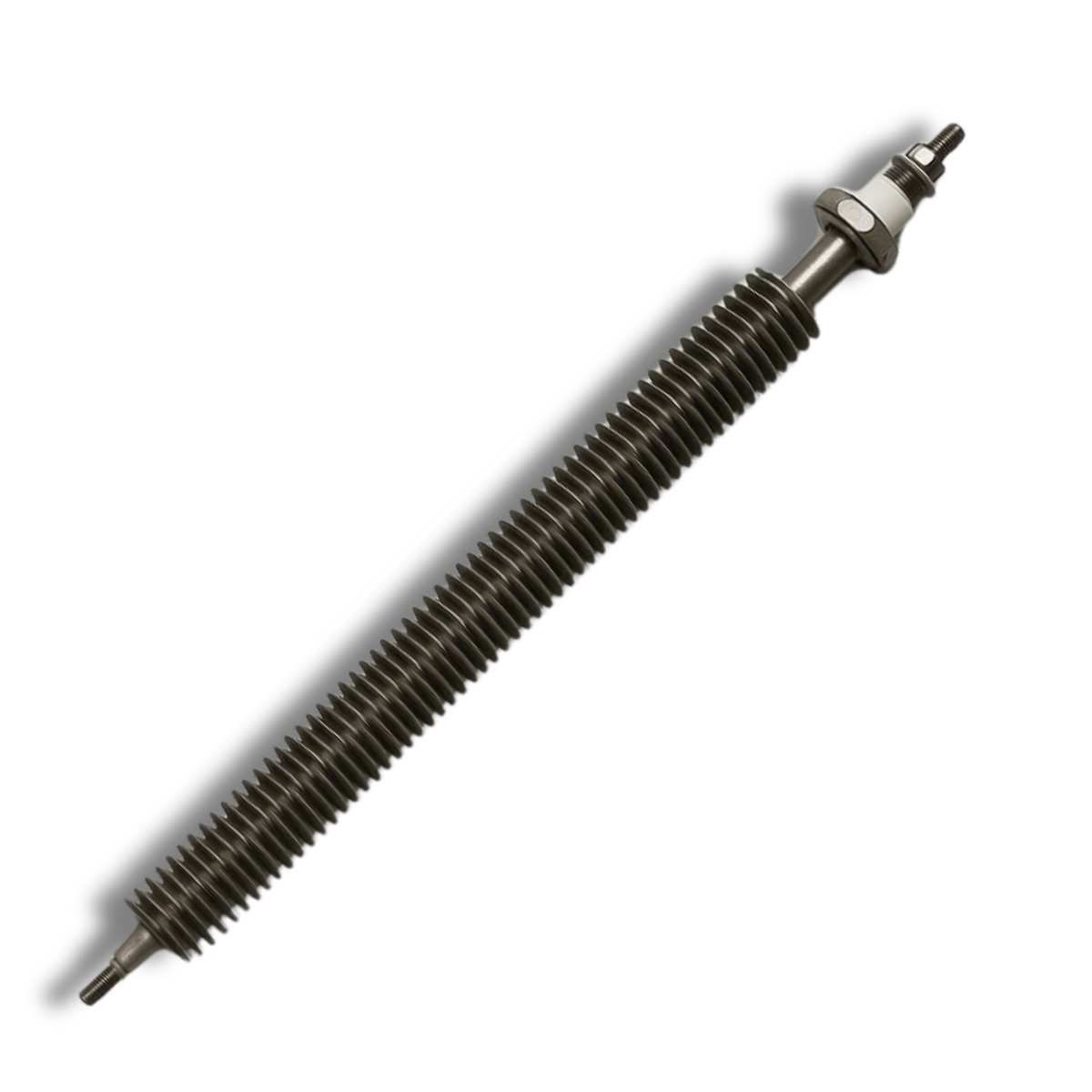
A finned tubular heater is a tubular element with thin metal fins wound and welded around the sheath. The fins multiply the surface touching the air by three to five times, so the same wattage transfers at a much lower sheath temperature. It is the standard choice for heating air and ducts.
Silicone Rubber Heater
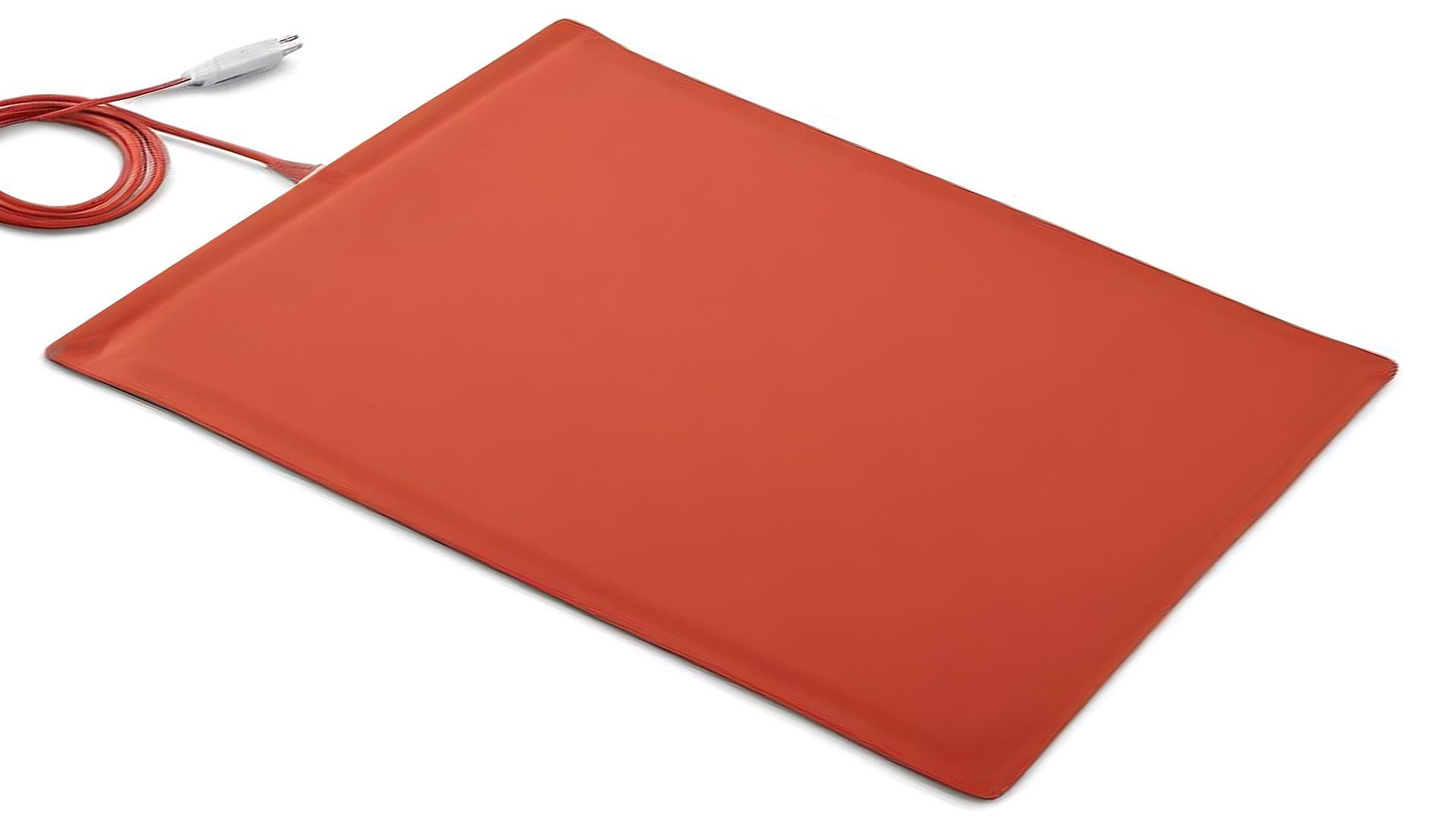
A silicone rubber heater is a thin sheet, one and a half to three millimetres thick, with an etched foil or wound wire circuit sealed between fibreglass reinforced silicone. It bends around curves, follows an irregular shape, and can be made in almost any outline, up to about 230 °C.
How to Get It Right
The problem is evenness, not heat
Getting a sealing bar hot is easy. Getting every millimetre of it to the same temperature, cycle after cycle, is the actual job. A seal is only as good as its coldest point, and a bag that leaks at one corner fails the same as one that was never sealed.
Bars lose heat at their ends, into the mountings and the frame. So a bar with evenly spread wattage runs cool at the ends and hot in the middle. The fix is distributed wattage — a cartridge deliberately built with more power in some sections than others — or more, shorter cartridges arranged to compensate.
Cycling is the duty, and it decides the size
A packaging heater does not settle at a temperature and stay there. It loses a burst of heat into the film at every seal and has to recover before the next one. As the line speeds up, the recovery time shrinks.
That is why a bar can be perfectly stable in the morning and drift below sealing temperature when production is pushed. The heater is not failing; it was sized for a slower line. When choosing, size on the hardest duty the machine will run, not the average.
The fit in the bore does the work
A cartridge heats by conduction into the metal around it. In a new bar with a reamed hole that is efficient and the cartridge lives for years. In an old bar, the bore has worn oval, carbon and residue have built up inside it, and the same cartridge now sits in a loose hole with an air gap around it.
That is the usual reason a machine starts eating cartridges after years of trouble-free running. Clean and check the bores before blaming the elements.
Put the sensor where the seal is made
Control from the middle of the working length, in the bar itself, at the depth the seal happens. A sensor at the end of the bar, or in the frame, reports a temperature the film never sees. On narrow-window films — a few degrees between a weak seal and a burnt one — that offset is the difference between a good shift and a scrapped batch.
Leads fail before elements on moving machines
Sealing bars move thousands of times a day, and the lead flexes at the same point every time. Braided or spring-protected leads, a proper strain relief and a cable route that does not force a tight bend all matter more here than on a static machine. When a heater on a moving bar goes open circuit, check the lead where it enters before condemning the element.
Shrink tunnels are air heaters wearing a different name
Everything about air heating applies: fins for surface, moving air to carry the heat, an interlock so the elements cannot run with the fan stopped. A tunnel that starts scorching film usually has an airflow problem — a blocked inlet, a slipping fan belt — rather than an element problem.
What Usually Goes Wrong
The mistakes that shorten an element's life on this kind of job.
- A cold end on the sealing bar. One under-heated section means one leaking seal in every pack from that lane.
- Undersized cartridges that cannot recover between cycles, so the bar drifts down as the line speeds up.
- Loose cartridges in a worn bar. The bore opens up over the years and the fit that worked when new no longer conducts.
- Sensor at one end of the bar, controlling a temperature the other end never sees.
- Ignoring the leads. Sealing bars move constantly, and a lead that flexes at the same point eventually breaks there.
- Running a shrink tunnel with a blocked or slowing fan, which overheats the elements and scorches the film.
Common Questions
Why does one end of my sealing bar seal properly and the other does not?
Heat is escaping into the frame at the ends, or the cartridges are not distributed for it. A bar wants either distributed wattage — more power at the ends than in the middle — or cartridges long enough to cover the full sealing length.
What is distributed wattage and do I need it?
It is a cartridge built with more heat at some sections than others, usually more at the ends. It exists exactly for bars and platens that lose heat at the edges, and it is the proper fix for the cold-end problem.
How do I choose between a cartridge, a strip and a plate heater?
Cartridges go inside a drilled bar and give the fastest, most even response. Strip heaters bolt to a flat surface where drilling is not possible. Plate heaters heat a whole platen or a flat tool face.
Why does the bar cool down when the line runs faster?
Each seal takes heat out of the bar and there is less time between cycles to put it back. If the temperature drifts down as speed rises, the heater is undersized for the duty, not faulty.
What heats a shrink tunnel?
Finned tubular elements and a fan. The elements heat air and the air shrinks the film. Airflow matters more than wattage — a slowing fan burns film and elements together.
Can you make a heater to match the bar we already have?
Yes. The bore diameter and depth, the bar length, the power, the voltage and the lead arrangement are enough to build a matching cartridge.
Ask for a Price or Technical Advice
Call us or send a WhatsApp message for a price, full specifications, or a custom build.
Last updated: