Oil and Chemical Immersion Heater
An oil and chemical immersion heater is built for liquids that punish an element: thermal oil, diesel, mazut, acids, alkalis and plating solutions. It runs at a low watt density so the sheath never gets hot enough to char the oil, and its sheath material is chosen for what the liquid does to metal.
- Watt density in oil
- 1 to 3 W/cm²
- Sheath material
- Stainless steel
- Max working temperature
- up to 800 °C
- Mounting
- Screw plug or flange
- Voltage
- 220 / 380 V
- Custom builds
- To your tank, liquid and duty
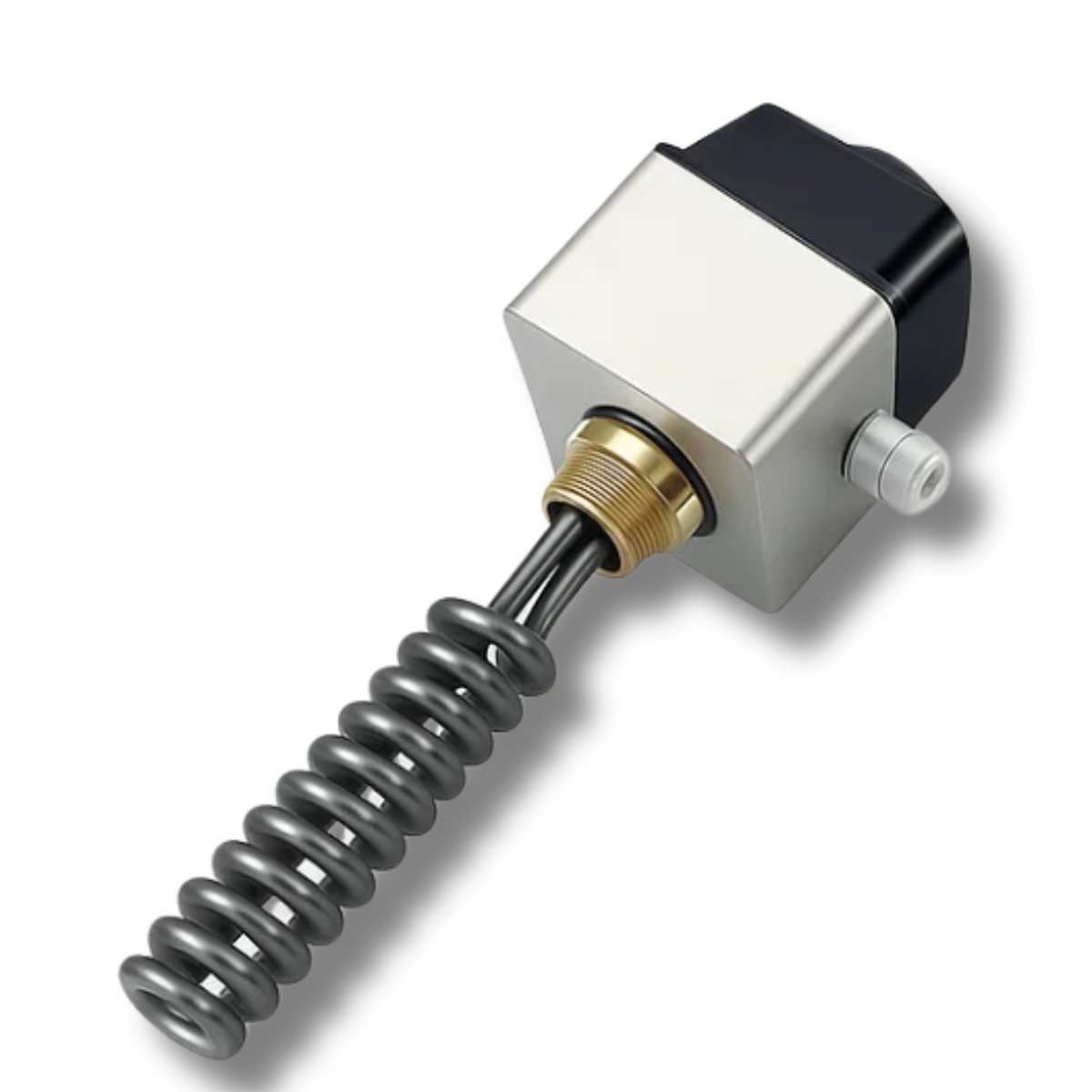
Ask for a Price or Technical Advice
Call us or send a WhatsApp message for a price, full specifications, or a custom build.
Technical Specifications
The figures below are the usual ranges for this type of element. Builds outside them are possible.
| Property | Value |
|---|---|
| Construction | Hairpin tubular elements on a plug or flange, sized for a long heated length at low watt density |
| Sheath for thermal oil and mazut | Stainless steel |
| Sheath for acids and plating | Titanium, or PTFE-coated |
| Sheath for alkalis | Stainless 316 or low-carbon steel, by the solution |
| Safe watt density in thermal oil | 1 to 3 W/cm² |
| Safe watt density in heavy fuel oil | 1 to 1.5 W/cm² |
| Safe watt density in a plating bath | 2 to 4 W/cm² |
| Max working temperature | up to 800 °C |
| Working voltage | 220 single phase or 380 three phase V |
| Control | Sensor in the liquid plus a separate high-limit sensor on the sheath side |
| Termination | Terminal enclosure, weatherproof to order |
| Power tolerance | +5 to -10 % |
Sizes and Specifications We Supply
| Property | What we supply |
|---|---|
| Length | 200 to 3,000 mm |
| Maximum power per element | Set by the order — no practical ceiling |
| Voltage | 220, 380 V |
| Sheath material | Stainless steel |
| Maximum working temperature | 800 °C |
| Termination | Flange or threaded |
| Built-in thermocouple | On request |
| Delivery | 3 working days |
| Minimum order | 1 piece |
Where It Is Used
- Oil, fuel and mazut heating
- Tank and drum heating
- Water and liquid heating
- Plating, pickling and degreasing baths
- Thermal oil circuits and jacketed vessels
- Burner fuel preheating
Choosing, Fitting and Looking After It
Watt density is the whole design, and it is set by the liquid
In water an element can carry ten watts on every square centimetre. In thermal oil the same element must be derated to one to three, and in heavy fuel oil to the bottom of that band. Nothing about the element changes — what changes is how fast the liquid takes heat off the sheath.
That means a heater for oil is long, or it is several elements, or both. If a supplier fits the same physical element that would go in a water tank and just labels it for oil, the tank will char the sheath within weeks. The way to size it is to work backwards: pick the safe density for the liquid, then find the heated length that the power needs at that density, then design the bundle to fit it into the tank.
Charring is a runaway, not wear
Once carbon deposits on the sheath, it insulates. The sheath then runs hotter to push the same heat through the deposit, which chars more oil, which insulates more. It accelerates, and it ends with a failed element and an oil charge that has to be dumped. This is why the safe watt density figure is not conservative advice — it is the line the process stays stable below.
Moving oil, or a heater that cannot deliver its rating
Still oil against a hot sheath forms a stagnant film that carries heat badly. Circulation is what breaks that film. A pumped loop is best; failing that, place the element low with a clear path above it so natural convection can run. What does not work is an element sitting in a corner behind a baffle where the oil never moves.
On mazut and heavy fuel oil there is a second reason: the fuel is thick or solid when cold. Bring it up slowly, and do not run the heater at full power against a solid charge — the oil next to the sheath melts, gets very hot and chars while the bulk of the tank is still cold.
The chemical, not the category, chooses the sheath
“Acid tank” is not enough to specify a heater. Sulphuric at one concentration and temperature behaves very differently from the same acid at another, and hydrochloric is a different problem again. Titanium covers a wide range of plating and pickling work. Strong acids that attack every metal need a PTFE-coated element, which brings its own limit — the coating sets the maximum temperature, well below the sheath’s own.
Send the solution name, the concentration, the working temperature and anything added to it. That is the information the choice actually rests on.
Protect for the case where the liquid is gone
Two independent things must be true for a fuel or oil heater to be safe: the control sensor works, and the element cannot be energised when it is not covered. The first is the thermostat. The second is a level switch wired to break the supply, not to sound a warning. Oil that has been overheated is a fire, not an inconvenience, and this is the one place in the catalogue where that has to be said plainly.
Coated elements need handling rules of their own
A PTFE-coated element is only as good as its coating. A chip from a spanner, a knock against a tank wall on the way in, or a scrape on the boss exposes bare metal, and the acid then attacks that one spot. Fit them carefully, never lever them, and check the coating whenever the tank is opened.
Price
Price
From 3,000,000 Toman
Prices checked — confirm the figure before ordering, as it moves with the exchange rate and with the specification.
What Sets the Price
- Diameter and length
- Power and voltage needed
- Sheath material (stainless steel, brass and so on)
- Termination type and lead or thread length
- Whether a thermocouple is built in
- Order quantity
How It Compares
Why oil and chemicals are not just "water at a different temperature".
| Feature | Water | Thermal oil | Plating bath |
|---|---|---|---|
| Safe watt density | 8 to 12 W/cm² | 1 to 3 W/cm² | 2 to 4 W/cm² |
| What goes wrong | Scale | Charring on the sheath | Corrosion of the sheath |
| Usual sheath | Stainless or copper | Stainless steel | Titanium or PTFE coated |
| Circulation | Helpful | Essential | Helpful |
Common Questions
Why must the watt density be so low in oil?
Oil carries heat away far more slowly than water, so the sheath runs much hotter for the same power. Past a certain sheath temperature the oil chars onto it, that carbon layer insulates, the sheath gets hotter still, and the element cooks itself from the outside in.
What does a charred element look like?
Black, hard and crusty, and it does not wipe off. If an element comes out of an oil tank looking like that, replacing it without changing the design just repeats the failure — the watt density was too high, or the oil was not moving, or the element was in a dead corner of the tank.
Does the oil need to be circulating?
In almost every case, yes. Still oil forms a stagnant hot layer against the sheath. A pump, or at least a tank shaped so natural convection can run past the element, keeps fresh oil against the surface and lets the element deliver its rated power safely.
How do I choose the sheath for a chemical bath?
By the chemistry and the concentration, not by the family of chemical. Titanium suits most plating and acid baths; PTFE coating suits strong acids that attack every metal; stainless 316 handles many alkaline solutions. Send the solution name, its strength and its working temperature.
Can one heater serve a tank that changes duty?
Only if it is designed for the worst case. A heater sized for water and later used on oil will fail, because the watt density that was safe in water is several times too high in oil. Say every liquid the tank will hold before the heater is built.
What extra protection does a fuel tank need?
A high-limit cut-out independent of the control thermostat, a low-level cut that removes power before the element can be uncovered, and terminal enclosure suitable for the area. On heavy fuel oil, also allow for the element being buried in solidified oil at start-up.
Related Products
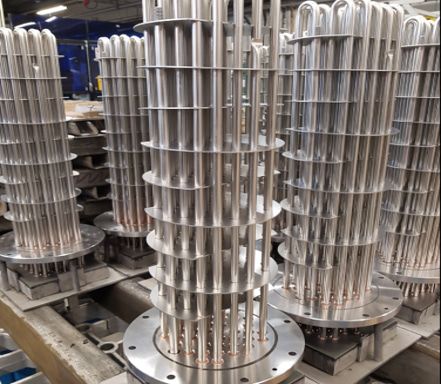
Immersion Heater
An immersion heater is a tubular element mounted on a screw plug or a flange so it can be sealed into the wall of a tank and sit directly in the liquid. It heats water, oil, fuel, chemicals and process baths from the inside, which wastes almost nothing, and it is chosen by the liquid it will live in rather than by wattage alone.
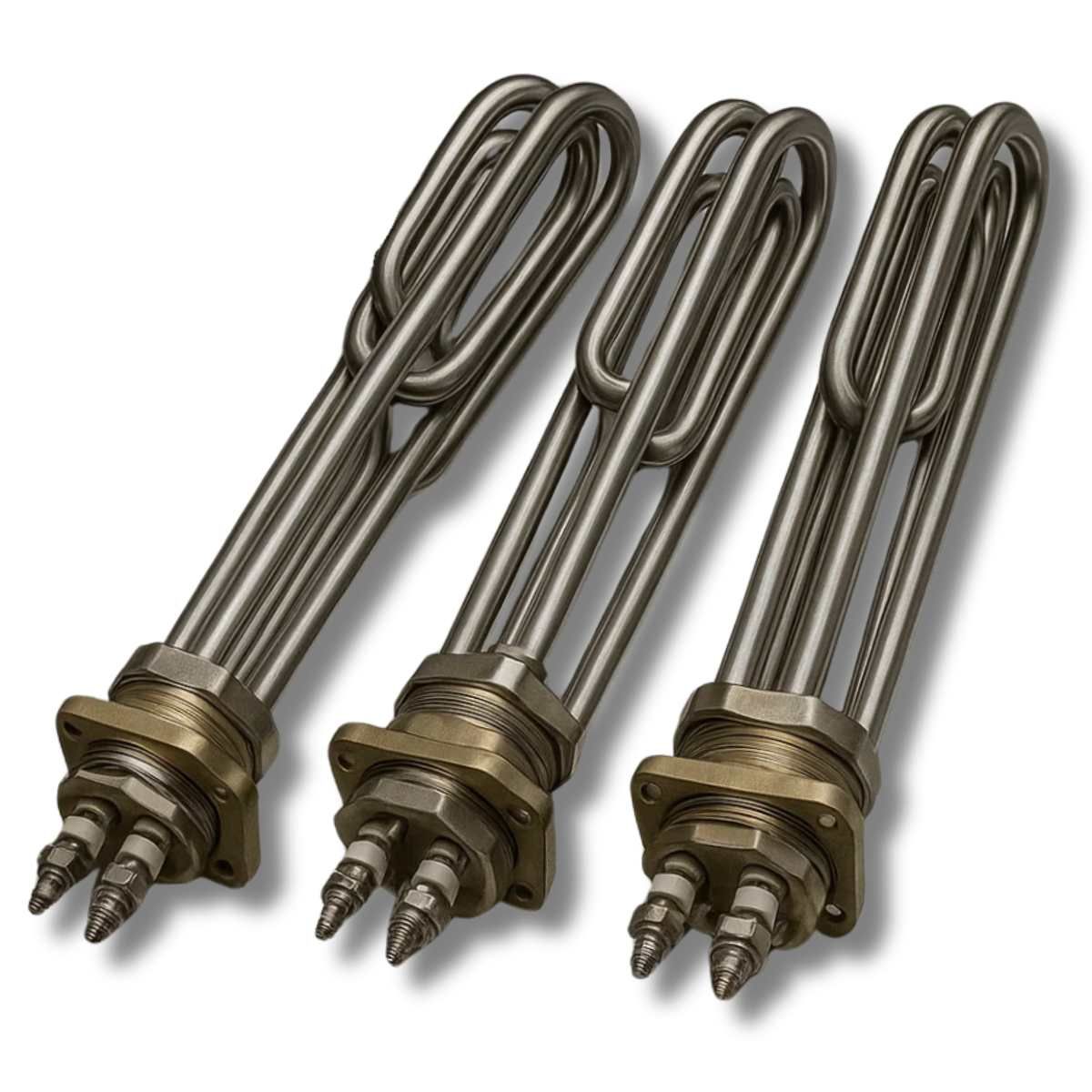
Screw Plug Heater
A screw plug immersion heater is a hairpin element brazed or welded into a threaded plug, so it screws straight into a boss on the side or the top of a tank. It is the simplest sealed way to put heat inside a vessel, and it suits tanks up to a few kilowatts at low and medium pressure.
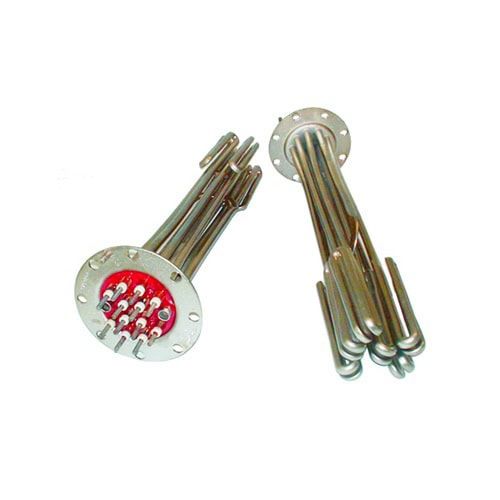
Flanged Heater
A flanged immersion heater is a bundle of hairpin elements welded into a flange that bolts onto a matching flange on the vessel. It is how large powers are put into a tank — tens of kilowatts, three phase — and it is the build used where there is pressure, a hot oil circuit, or a boiler.
Water Heater Element
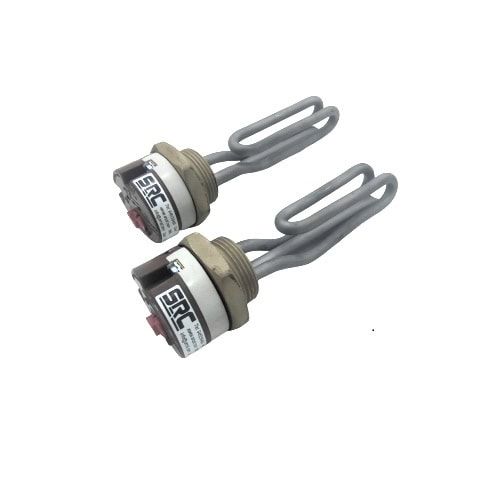
A water heater element is the screw-in element that heats a storage water heater or a hot water cylinder. It is usually a stainless steel or brass hairpin on a threaded plug, with a pocket down the middle for the thermostat, and it is chosen mainly by how hard the water is.
Samovar Element
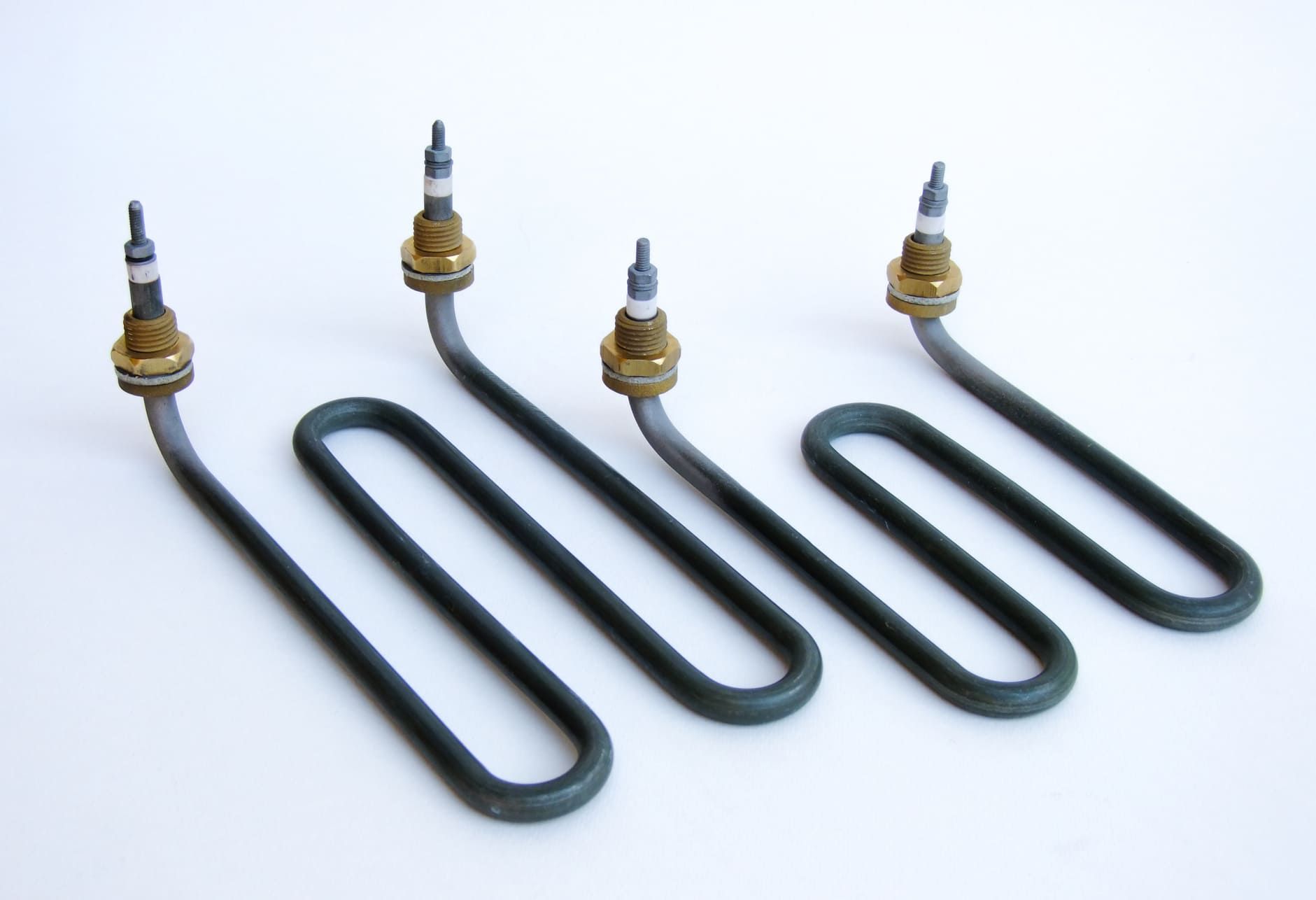
A samovar heater element is the small stainless element that sits in the water chamber of an electric samovar or a tea urn. It is usually a ring or a hairpin of 1 to 3 kW in a food-grade stainless sheath, and it spends its life in water that is boiled and refilled several times a day.
Ask for a Price or Technical Advice
Call us or send a WhatsApp message for a price, full specifications, or a custom build.
Last updated: