Heating Element Selection Guide
Choosing a heating element comes down to five questions: what you are heating, how hot it has to get, how the heat reaches the work, how much power the job needs, and what the sheath has to survive. Answer those five and the catalogue narrows to one or two types.
Ask for a Price or Technical Advice
Call us or send a WhatsApp message for a price, full specifications, or a custom build.
Narrow It Down
Two answers rule out most of the catalogue: what you are heating, and how the heat has to reach it.
24 element types match
Nothing in the catalogue answers both of those together. Call us — that combination usually means a custom build.
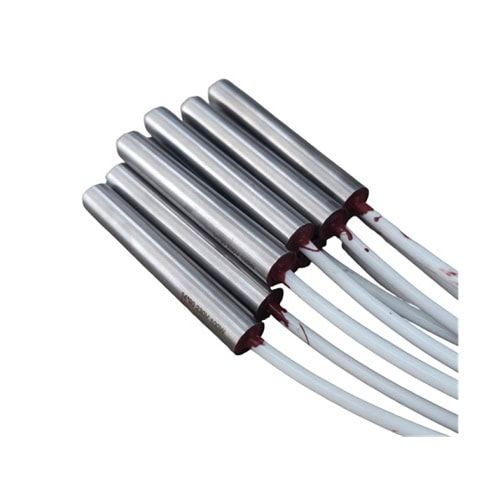
Cartridge Heater
A cartridge heater is a compact metal rod that slides into a drilled hole in a metal part and heats it from the inside. Nickel-chrome wire is wound on a ceramic core, packed with magnesium oxide and sealed in a stainless sheath. It carries far more power per square centimetre than any other element, which is why moulds, dies and platens use it.
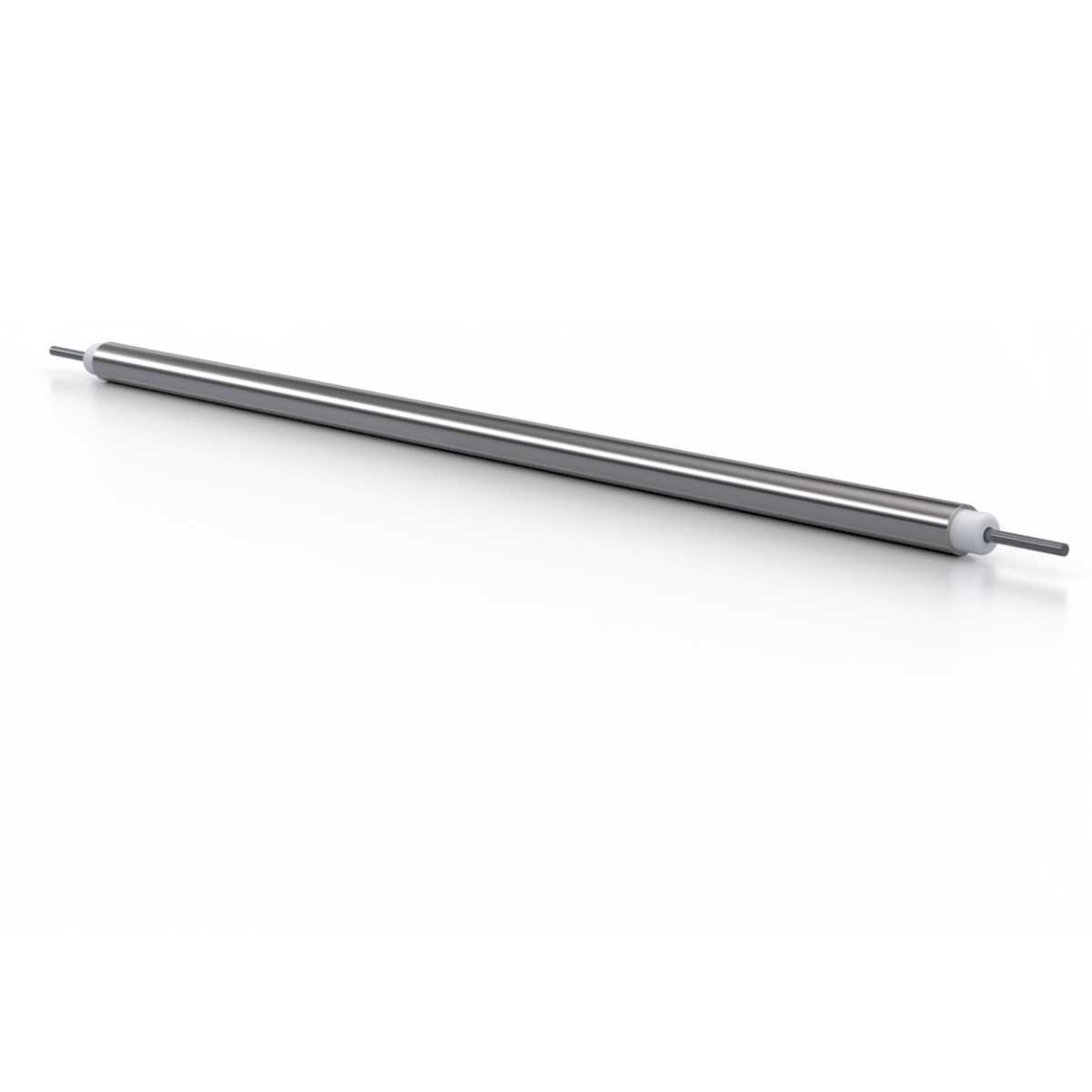
Straight Tubular Heater
A straight tubular heater is the simplest form of tubular element: one straight rod with no bends and a terminal at each end. It is made for places that already have a straight bore, pipe or channel, where the element can sit in without changing direction.
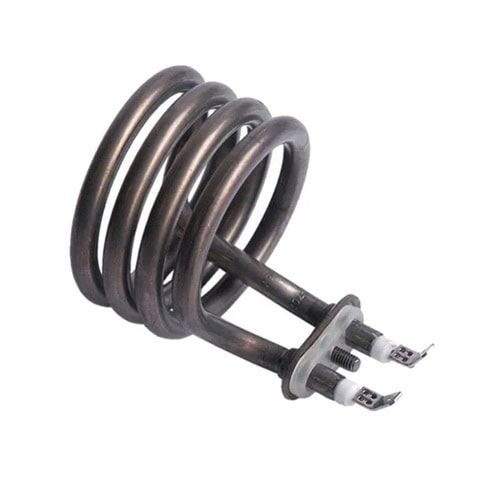
Formed Tubular Heater
A formed tubular heater is a tubular element bent into shape after it is made: a U, a ring, a spiral, or whatever the drawing calls for. Bending lets you fit a long heated length into a small space, or match the element to the shape of the part it heats.
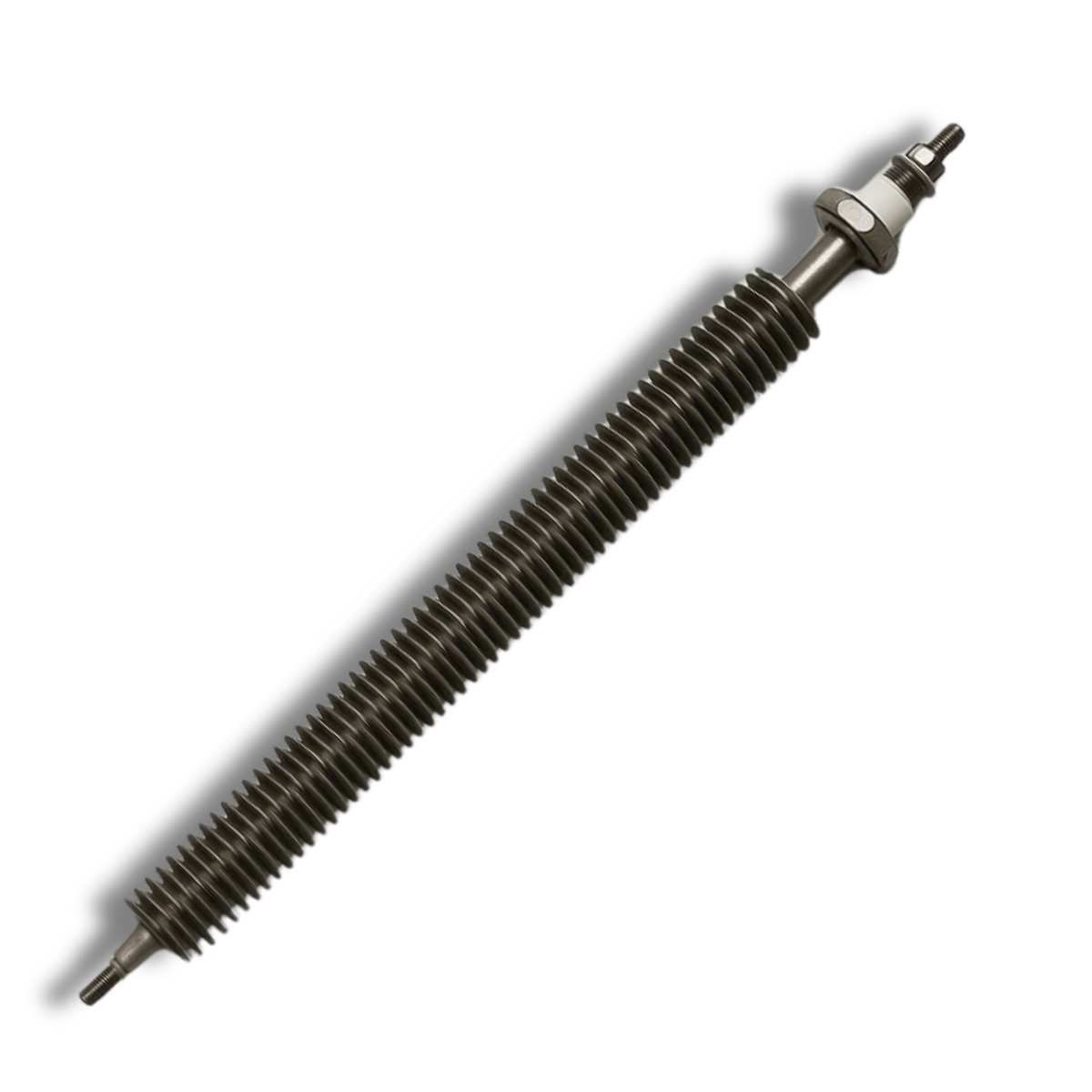
Finned Tubular Heater
A finned tubular heater is a tubular element with thin metal fins wound and welded around the sheath. The fins multiply the surface touching the air by three to five times, so the same wattage transfers at a much lower sheath temperature. It is the standard choice for heating air and ducts.
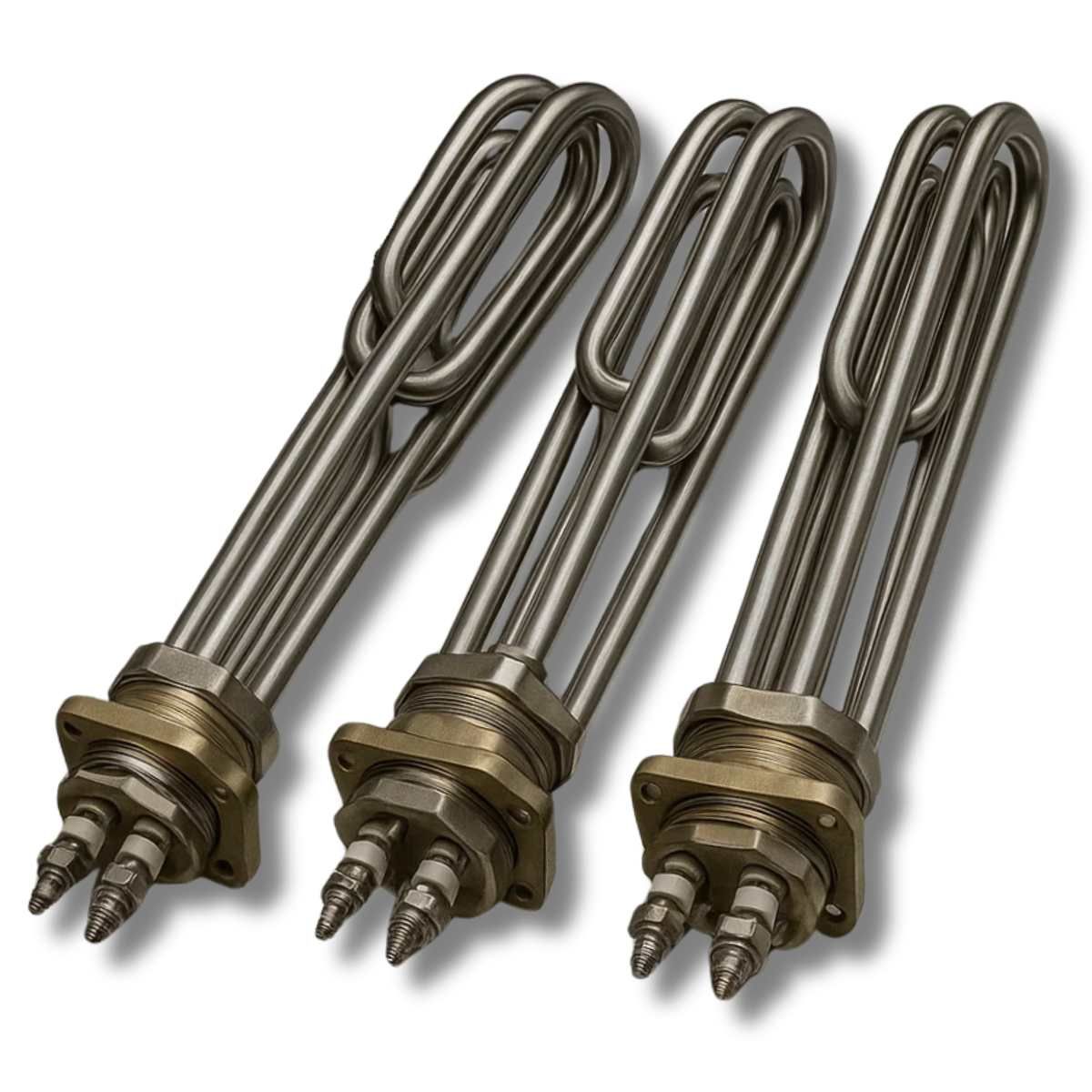
Screw Plug Heater
A screw plug immersion heater is a hairpin element brazed or welded into a threaded plug, so it screws straight into a boss on the side or the top of a tank. It is the simplest sealed way to put heat inside a vessel, and it suits tanks up to a few kilowatts at low and medium pressure.
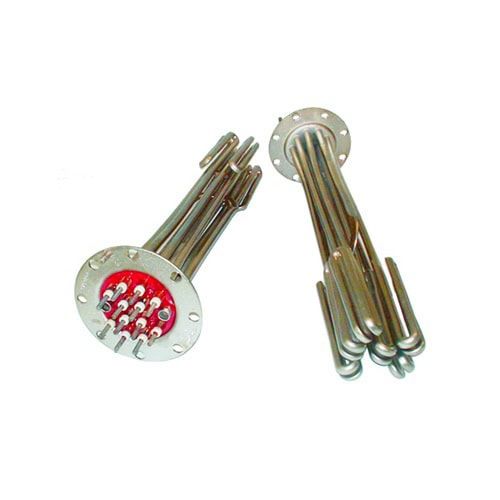
Flanged Heater
A flanged immersion heater is a bundle of hairpin elements welded into a flange that bolts onto a matching flange on the vessel. It is how large powers are put into a tank — tens of kilowatts, three phase — and it is the build used where there is pressure, a hot oil circuit, or a boiler.
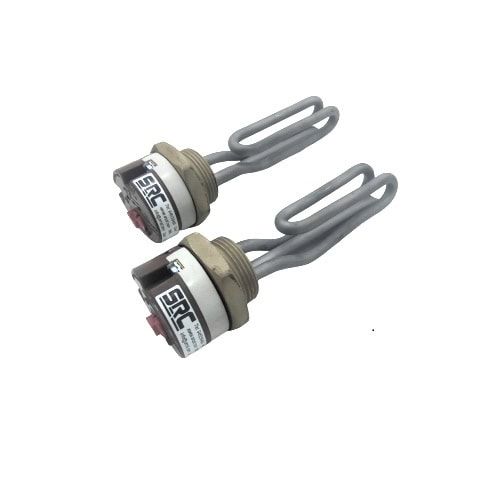
Water Heater Element
A water heater element is the screw-in element that heats a storage water heater or a hot water cylinder. It is usually a stainless steel or brass hairpin on a threaded plug, with a pocket down the middle for the thermostat, and it is chosen mainly by how hard the water is.
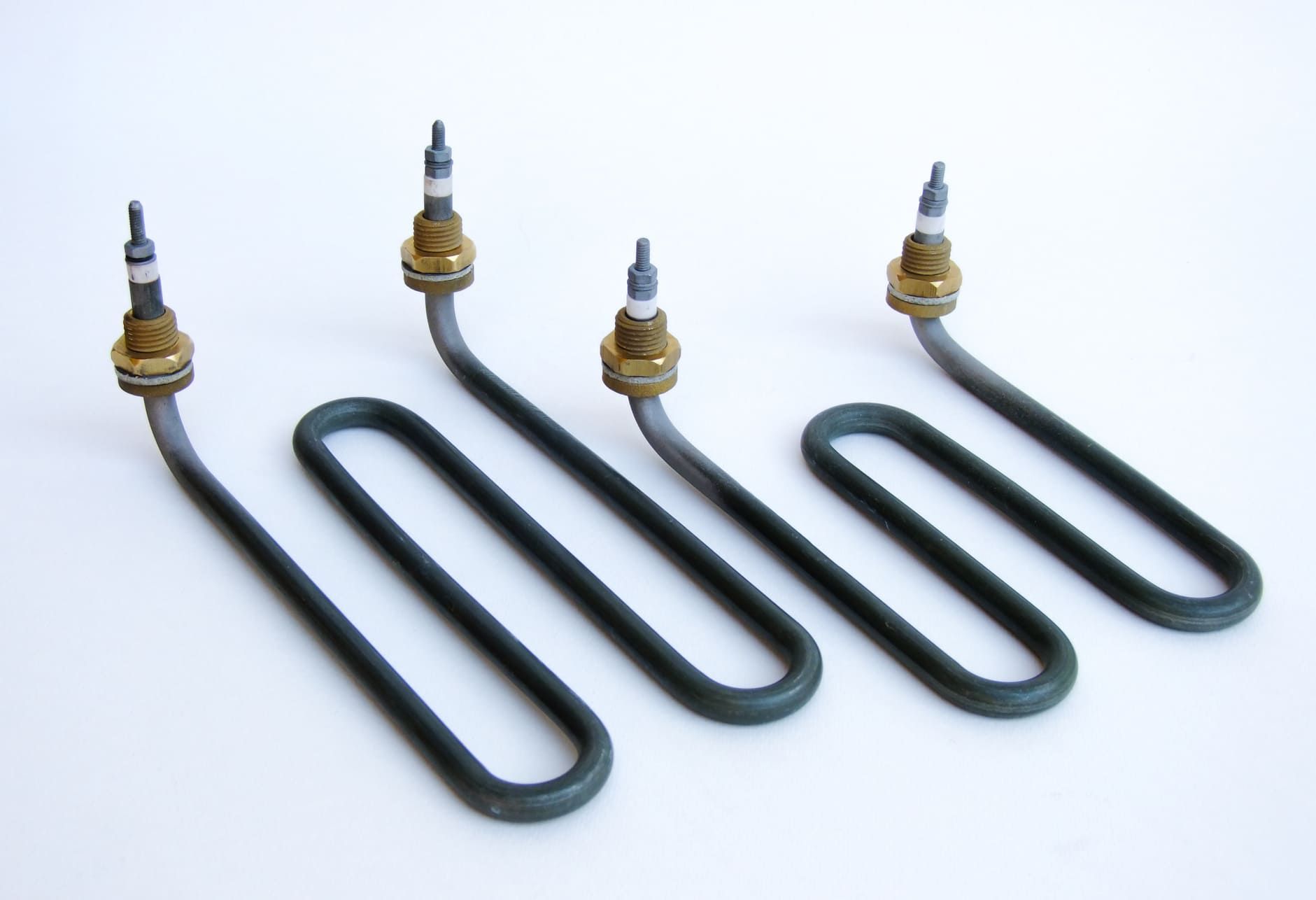
Samovar Element
A samovar heater element is the small stainless element that sits in the water chamber of an electric samovar or a tea urn. It is usually a ring or a hairpin of 1 to 3 kW in a food-grade stainless sheath, and it spends its life in water that is boiled and refilled several times a day.
Oil and Chemical Heater
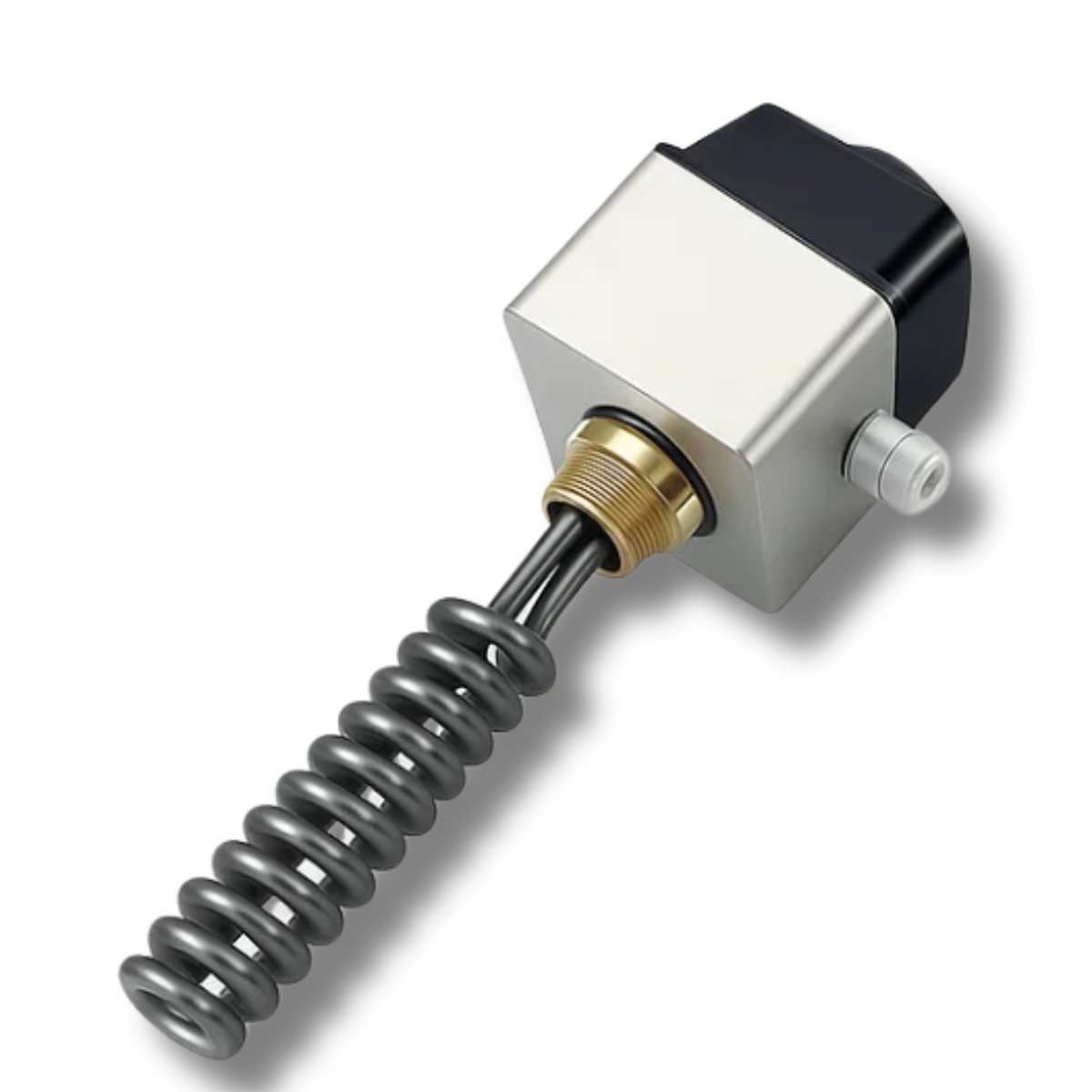
An oil and chemical immersion heater is built for liquids that punish an element: thermal oil, diesel, mazut, acids, alkalis and plating solutions. It runs at a low watt density so the sheath never gets hot enough to char the oil, and its sheath material is chosen for what the liquid does to metal.
Mica Band Heater
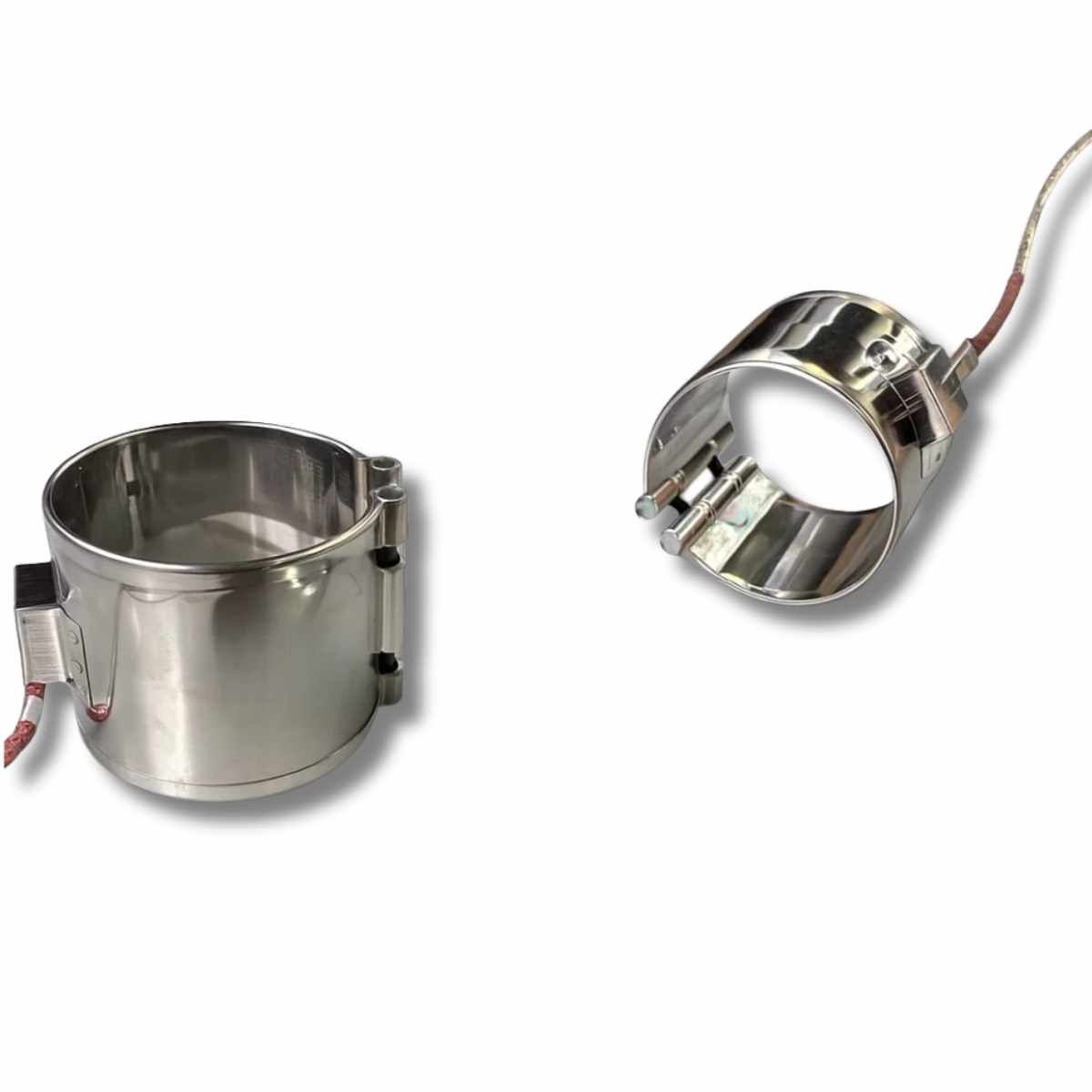
A mica band heater is the thin, fast type of band heater. Flat nickel-chrome ribbon is wound over a mica sheet, covered with more mica and closed inside a stainless steel band about three millimetres thick. It heats an injection barrel quickly and cheaply, and we supply it for working temperatures up to 300 °C.
Ceramic Band Heater
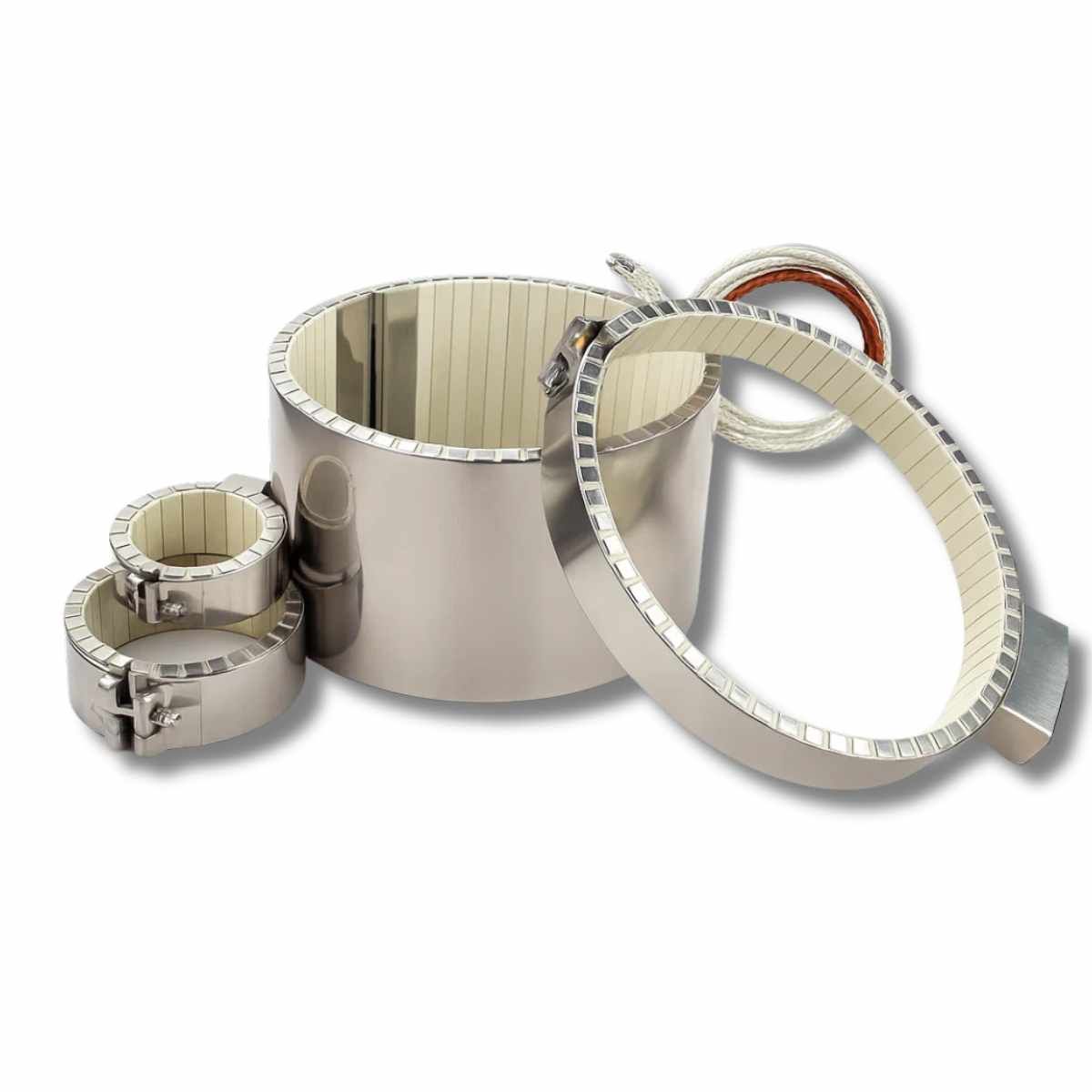
A ceramic band heater carries its resistance wire threaded through interlocking ceramic bricks, with a ceramic fibre blanket and a stainless frame behind them. We supply it for working temperatures up to 500 °C, it keeps heating even where contact with the barrel is imperfect, and its built-in insulation means less of its heat is lost to the workshop.
Nozzle Heater
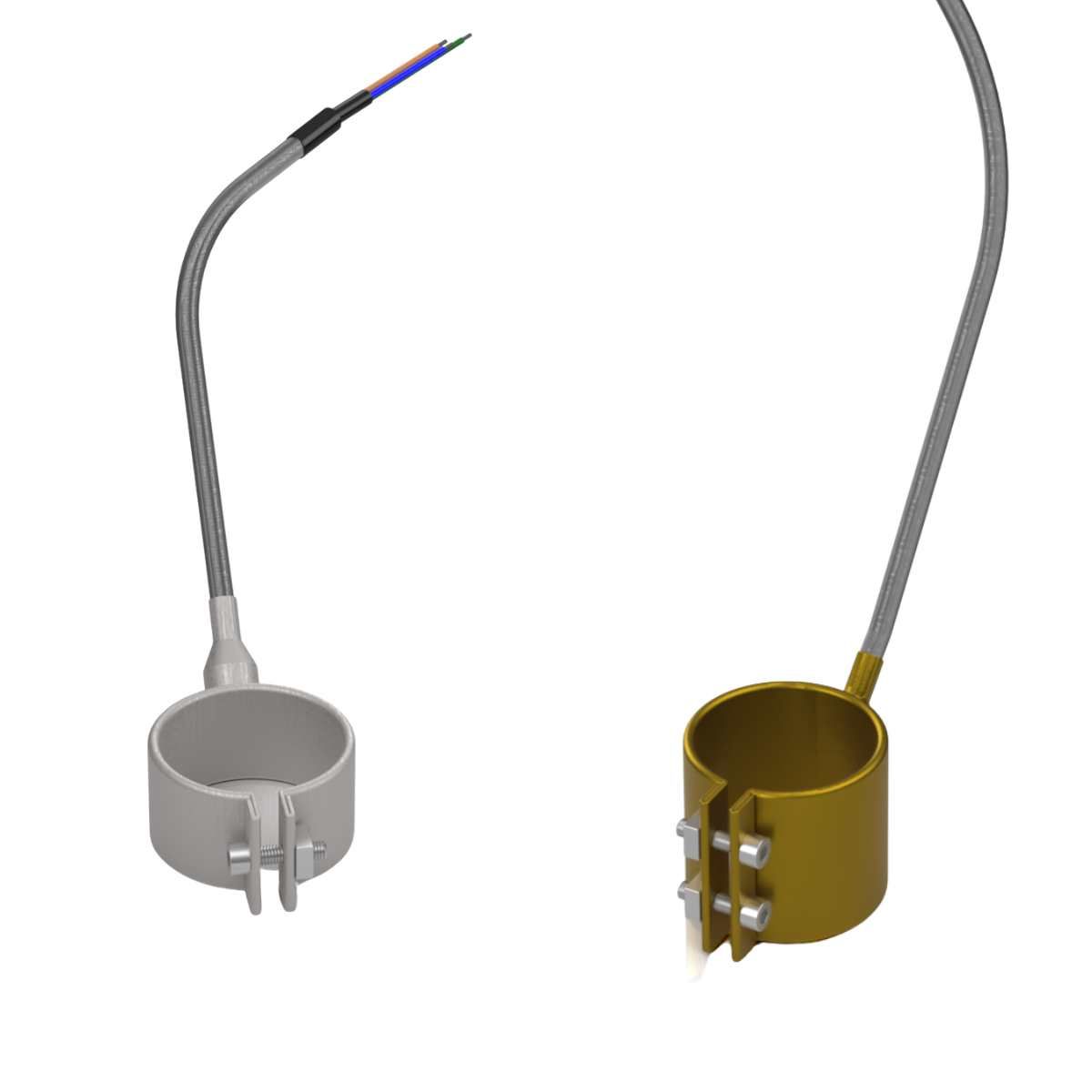
A nozzle heater is a small, narrow band heater made for the tip of an injection machine or a hot runner nozzle. It wraps a diameter of only 15 to 60 mm, often carries its own thermocouple, and holds the melt at temperature through the last few centimetres before it enters the mould.
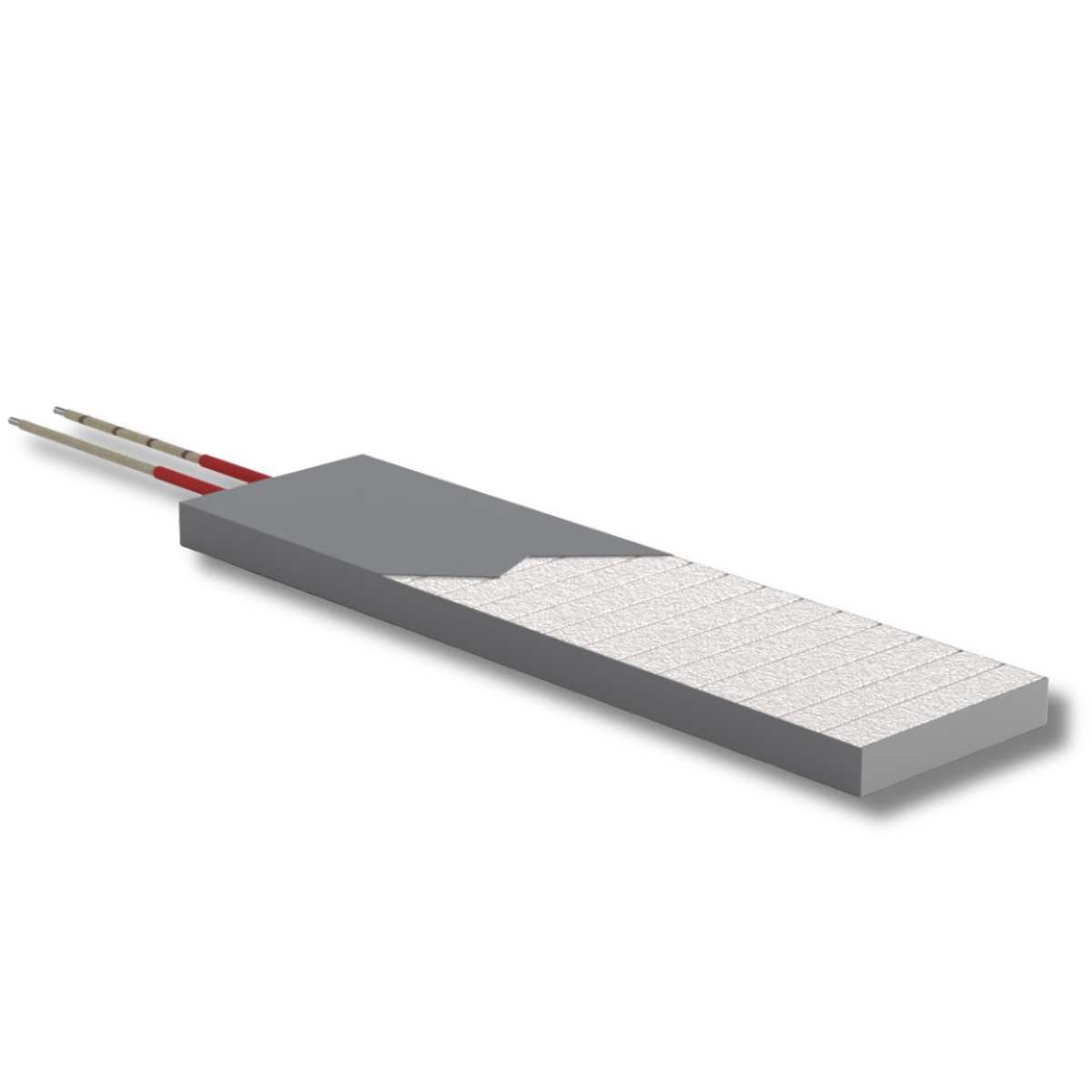
Strip Heater
A strip heater is a long, narrow flat element, usually 25 to 60 mm wide, that bolts along a bar, an edge or a plate and heats it in a line. Fitted with fins it becomes an air heater instead, and it is the simplest way to add heat to a surface that has no room for anything thicker.
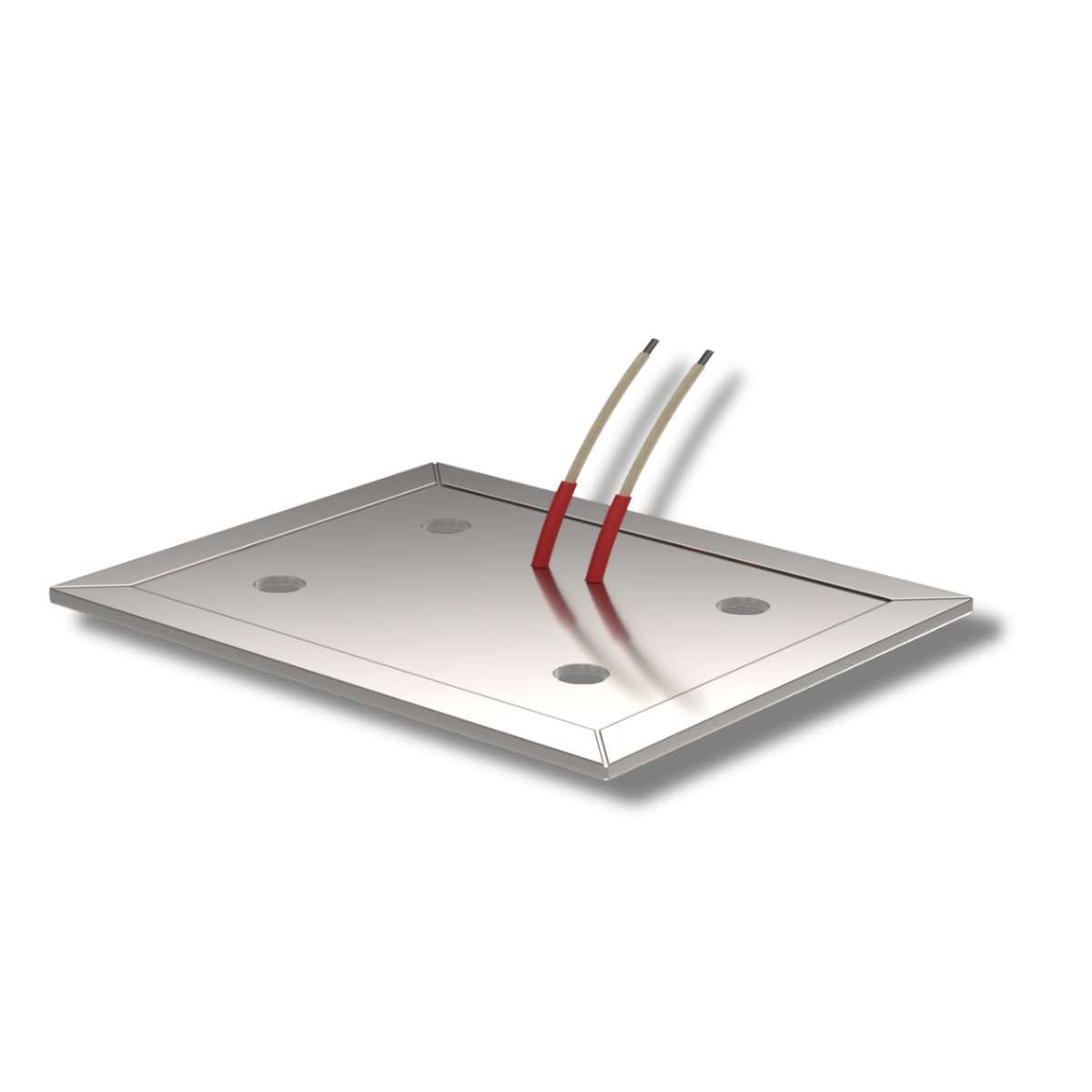
Plate Heater
A plate heater is a wide flat element that heats an area rather than a line. A resistance circuit is spread across a rectangular plate — clamped between metal sheets or cast into aluminium — so the whole face comes up to temperature together. It is used under vessels, moulds, tables and heated surfaces.
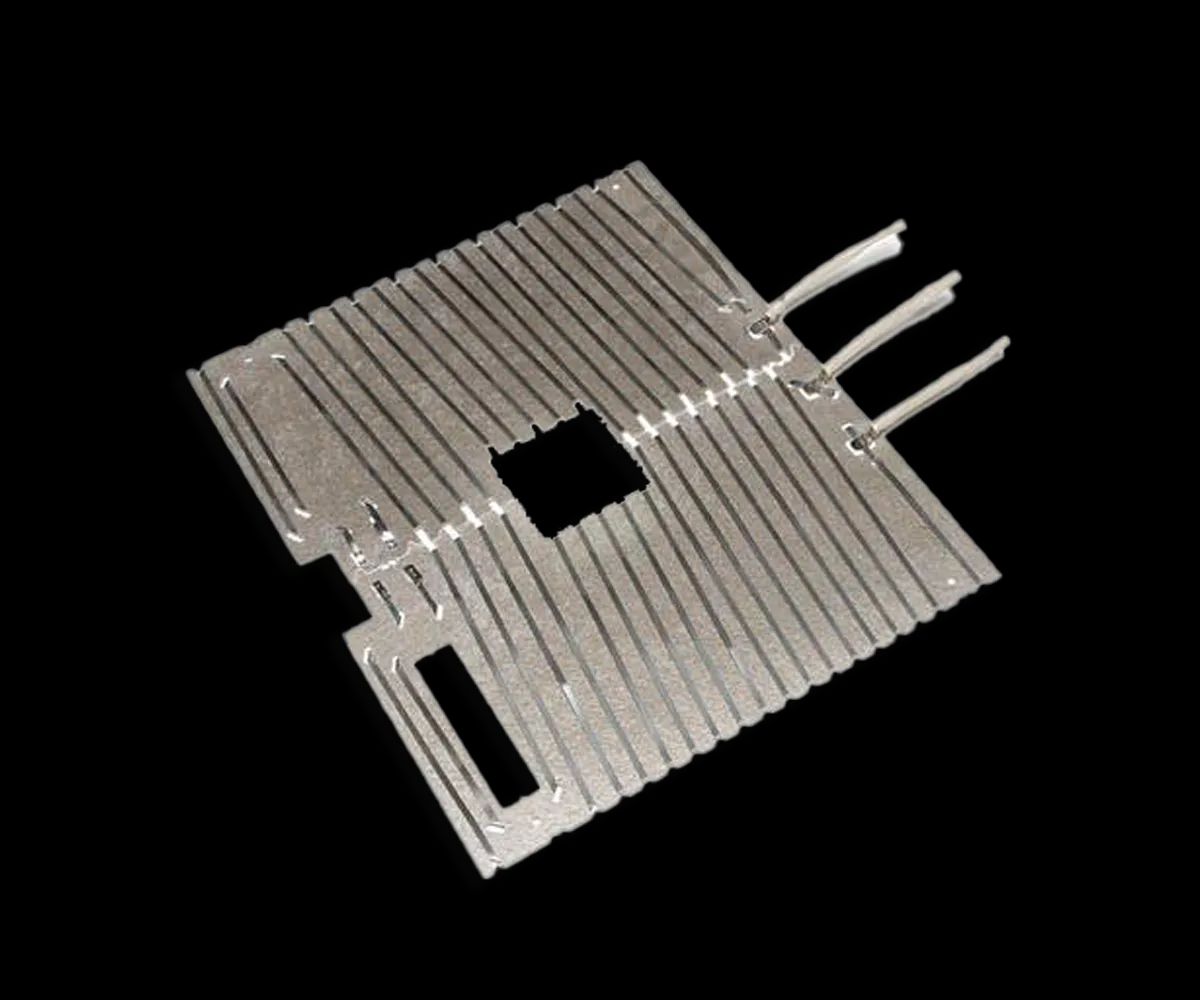
Heat Press Heater
A heat press heater is the element built into the platen of a press — a heat transfer press, a laminating press, a hot stamping or a vulcanising machine. Its whole job is an even temperature across the pressing face, because everything the press makes is only as good as the coldest corner of that face.
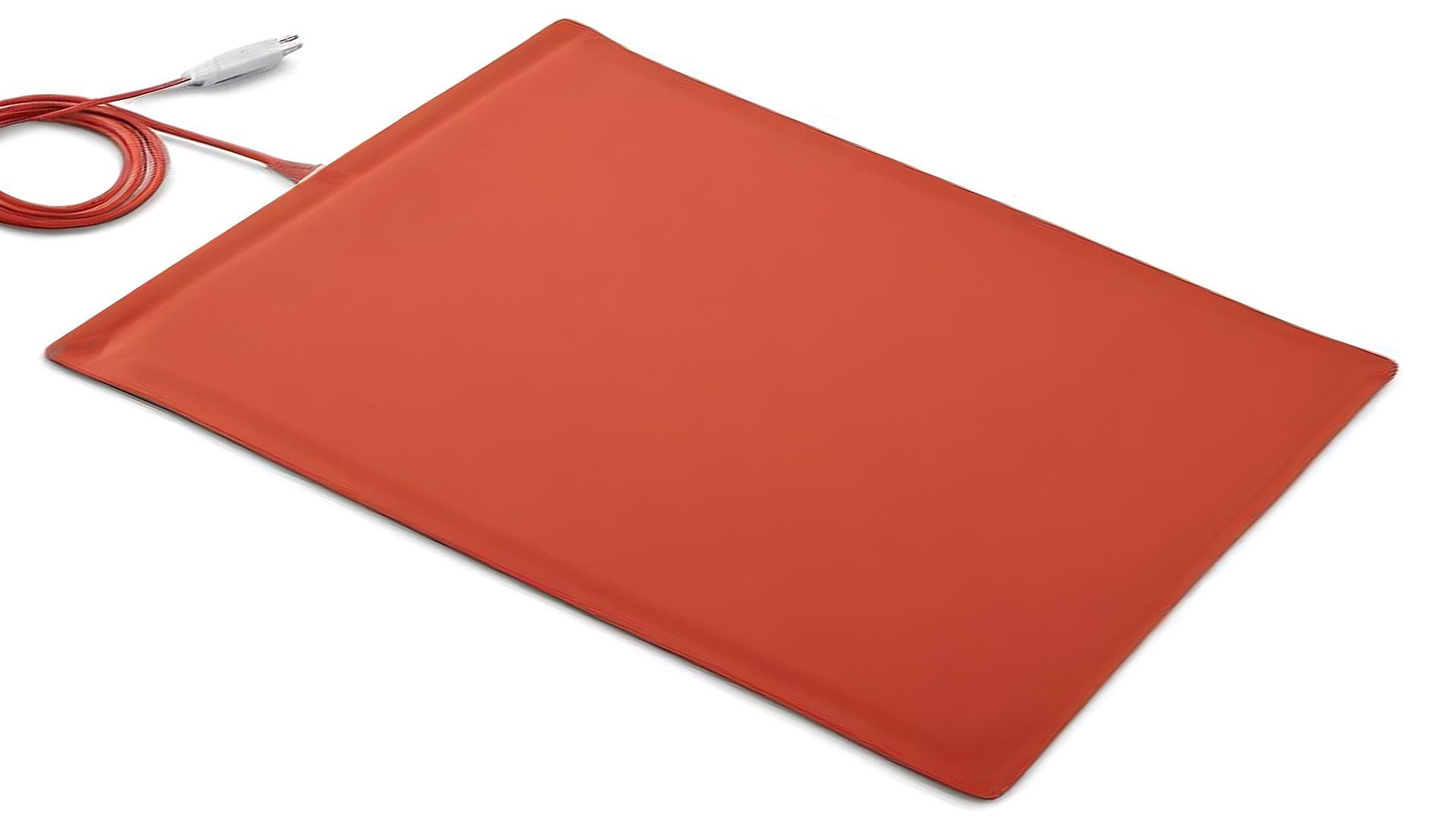
Silicone Rubber Heater
A silicone rubber heater is a thin sheet, one and a half to three millimetres thick, with an etched foil or wound wire circuit sealed between fibreglass reinforced silicone. It bends around curves, follows an irregular shape, and can be made in almost any outline, up to about 230 °C.
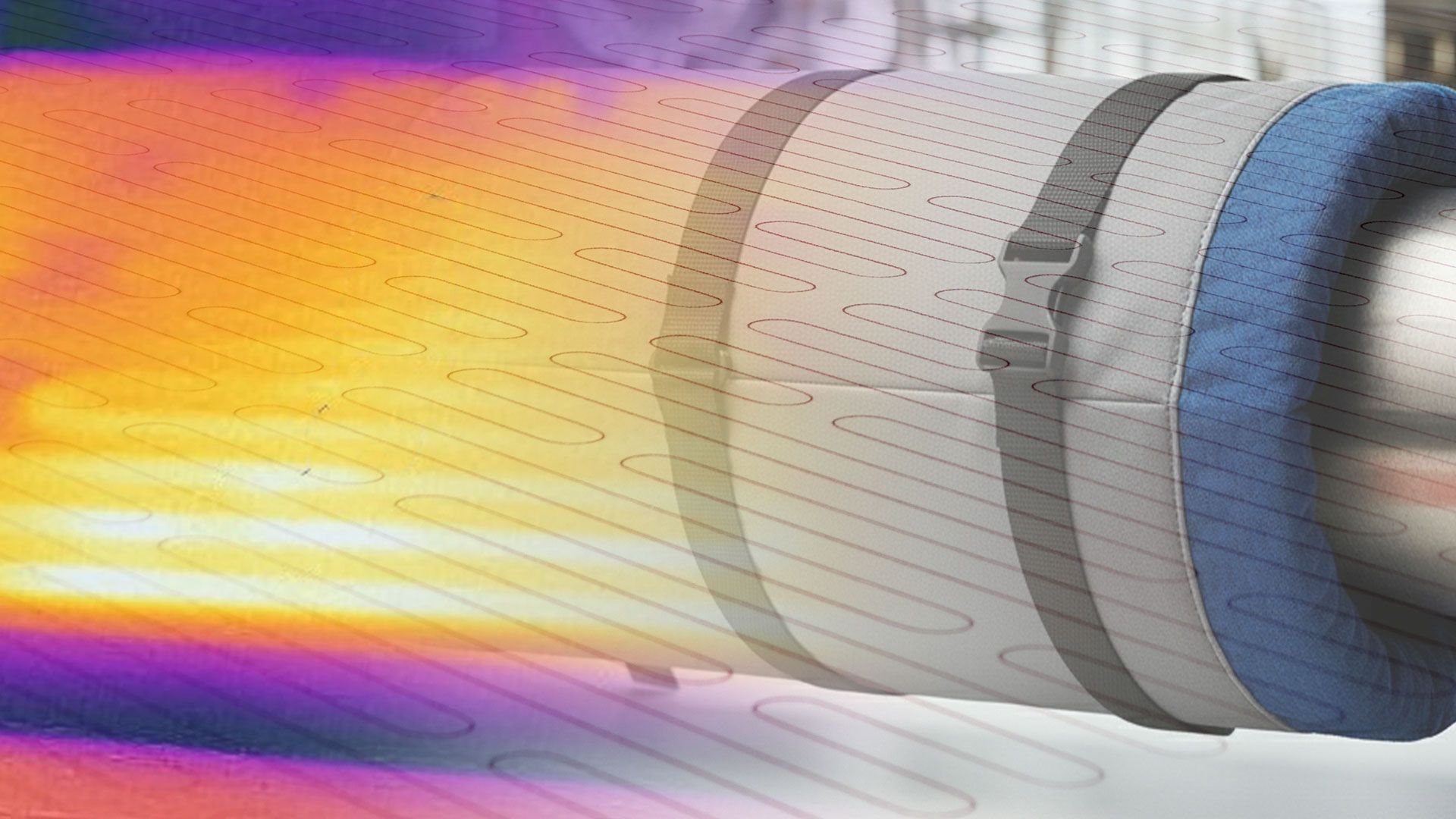
Drum and Tank Heater
A drum and tank heater is a flexible jacket that straps around the outside of a drum, a barrel or a small tank and warms the contents through the wall. Nothing goes into the liquid, so it suits material that must not be contaminated and vessels that have no opening to fit an element into.
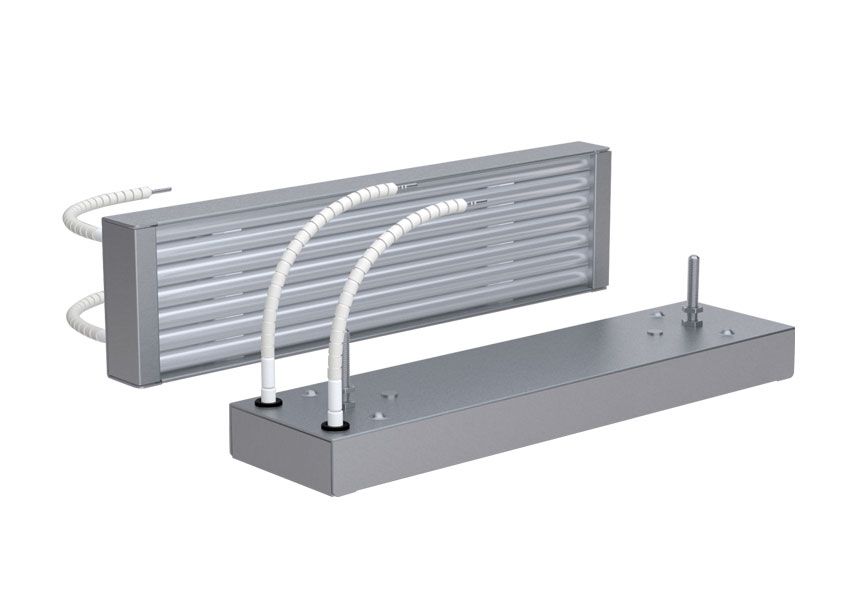
Quartz Heater
A quartz heater is a coiled resistance wire inside a clear quartz tube. The tube reaches 900 to 1200 °C and radiates medium-wave infrared, which most plastics, coatings and water absorb well. It reaches working output in a second or two and is the general-purpose radiant element for drying and forming.
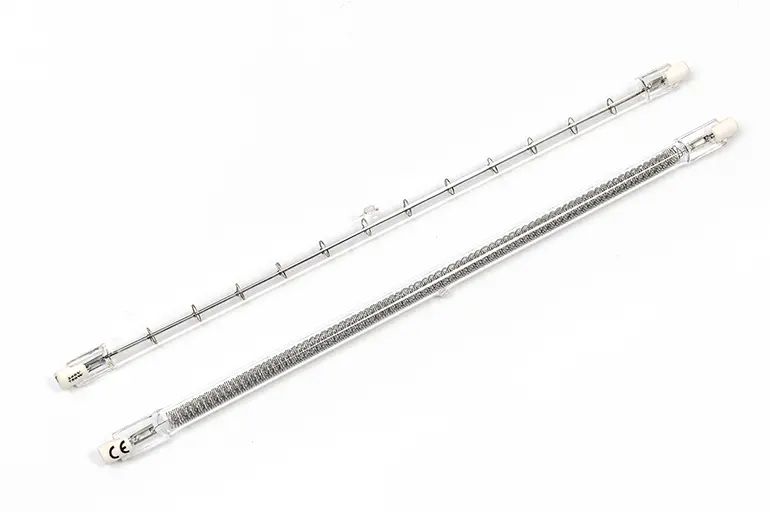
Halogen Heater
A halogen heater is a tungsten filament in a halogen-filled quartz lamp, running at up to 2200 °C. It emits short-wave infrared, reaches full output in under a second, and goes cold almost as fast. It is chosen where heat has to be intense, local, and switched on and off with the process.
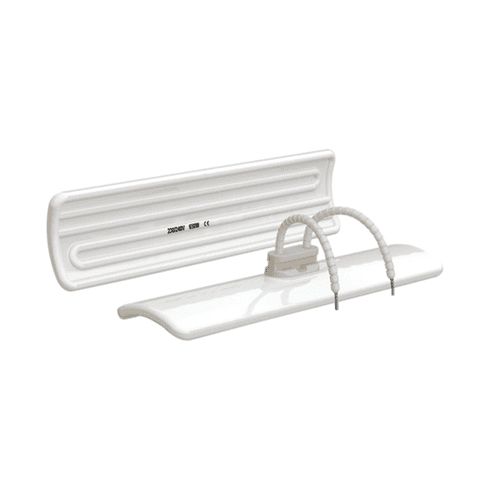
Ceramic Infrared Heater
A ceramic infrared heater is a resistance coil embedded in a glazed ceramic body that radiates long-wave infrared from a face running at 300 to 750 °C. It is slow, steady and robust, and it is the radiant element used where plastic has to be heated evenly without being scorched.
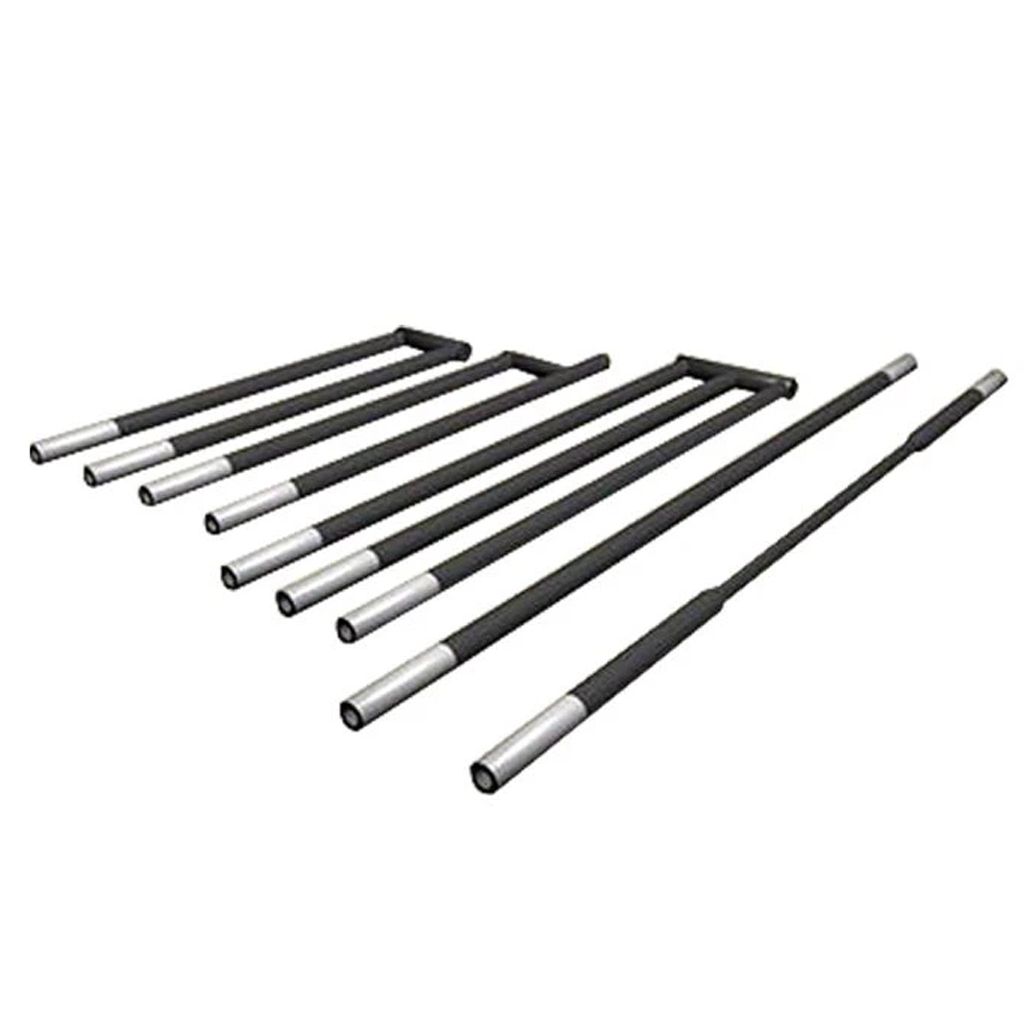
Silicon Carbide Heater
A silicon carbide heater is a ceramic rod that glows in open air at furnace temperatures up to about 1600 °C. It has no sheath and no wire — the rod itself is the resistance. It ages by slowly gaining resistance, so the furnace that runs it needs a transformer with tappings from the start.
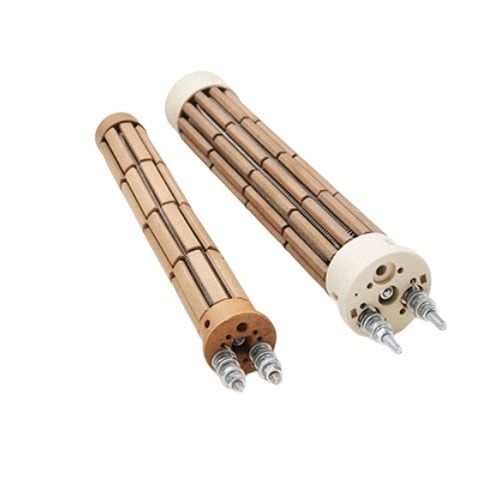
Ceramic Heater
A ceramic heater for high temperature work carries its resistance wire inside a ceramic body rather than leaving it bare in the chamber. Wire threaded through ceramic tubes and beads, or set into a fibre module, reaches about 1200 °C while staying protected from the load and from what the furnace gives off.
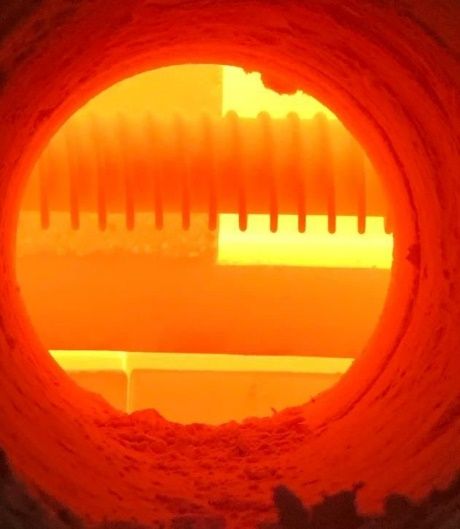
Furnace Heater
A furnace heater in its simplest form is an open coil of resistance wire laid in grooves in the lining or hung on ceramic supports inside the chamber. Iron-chrome-aluminium wire reaches about 1400 °C, nickel-chrome about 1200, and the coil is wound and pitched for the furnace it goes into.
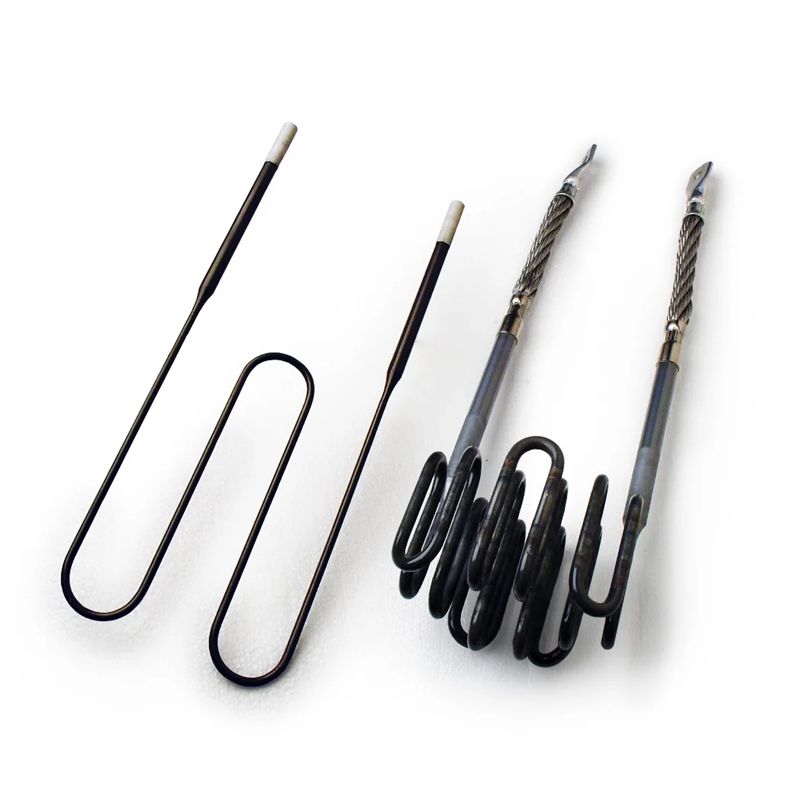
Molybdenum Heater
A molybdenum heater is a wire, strip or rod element for vacuum and inert-gas furnaces. It reaches about 1700 °C, but only where there is no oxygen — molybdenum burns away in air above roughly 400 °C. It is the element used for sintering, brazing and crystal growing under vacuum.
The Detail
1. What you are heating decides almost everything
The medium sets the safe watt density, and the safe watt density sets the size of the element. Water carries heat away well and takes 6 to 12 W/cm². Heavy oil takes 1 to 2, because oil that sits against a hot sheath chars onto it and the carbon layer then insulates the element from the very thing meant to cool it. Air is somewhere between, and metal — a mould or a platen with a cartridge in a drilled hole — takes far more than any of them.
Get this wrong and nothing else saves the element. The right power in the wrong medium still burns out.
2. How hot it has to get rules out whole families
Anything up to about 230 °C can use a flexible silicone heater. Up to about 450 to 650 °C covers mica and ceramic band heaters, strip heaters and plate heaters. Tubular, cartridge and immersion elements run to about 750 °C at the sheath. Above 1000 °C you are into the high-temperature family — silicon carbide, molybdenum, furnace wire — and into a different way of controlling the heat.
Be clear about which temperature you mean. The temperature of the work, the temperature of the sheath and the temperature of the resistance wire inside it are three different numbers, and a datasheet limit is usually the sheath.
3. How the heat reaches the work
Four ways, and they suit different shapes of problem. Immersed — the element sits in the liquid, which is the most efficient arrangement there is. In a duct — air passes over a finned element, and the fins are there because air carries heat away badly. In a bore — a cartridge inside a drilled hole in metal, where the clearance between the two decides its life. Clamped on — a band around a barrel or a plate against a surface, where the flatness and the tightness of the contact decide everything.
The fifth, radiant, touches nothing at all and heats whatever it can see. What it cannot see stays cold.
4. Power sizes the job; watt density sizes the element
These are two separate sums and they are done in this order. First the power: mass, specific heat, temperature rise, time, plus a margin for heat loss. Then the watt density: that power spread over the heated surface you have room for.
If the watt density comes out too high, do not reduce the power — the job would never reach temperature. Make the heated length longer, use a larger diameter, or split the same power across more elements.
5. What the sheath has to survive
The last question is chemical, not thermal. Stainless 304 lasts years in ordinary water and months in chlorinated or acidic water. Titanium handles plating baths that eat stainless. Incoloy 800 handles heat and hard water together. Copper conducts beautifully and corrodes in the wrong bath.
Answer these five in order and you will have a type, a rough size and a material. What is left — terminations, thread sizes, thermocouples, lead lengths — are details of the build, and those are worth a phone call.
Common Questions
Which heating element should I use for water?
An immersion heater, screwed or flanged into the tank, for anything with a fitting to take one. A formed tubular element for an open bath or a small tank. What matters more than the type is the sheath material and the watt density — water is forgiving on power and unforgiving on both of those.
How do I know what power I need?
Work out the mass, the temperature rise and the time you will accept, then add a margin for the heat the tank or duct loses to the room. The power calculator does the arithmetic. Sizing by "what the old one was" repeats whatever mistake was made last time.
What is watt density, and why does it matter more than power?
Watt density is the power spread over the heated surface of the sheath, in watts per square centimetre. Power decides how fast the job heats. Watt density decides whether the element survives. Two elements of the same wattage and different lengths have completely different lives.
Which sheath material should I pick?
Stainless 304 or 321 for ordinary water and air, copper for domestic hot water, titanium for plating baths and seawater, Incoloy 800 for hot, hard or chemically aggressive liquids and for high air temperatures. The sheath is chosen against the medium, never against the budget.
Can I use one large element instead of three small ones?
Only if the watt density still lands in the safe range. Splitting the same power across more elements is the standard fix for a figure that comes out too high, and it also means the job keeps running at reduced power when one element fails.
What do you need from me before you can suggest an element?
What is being heated, the temperature it has to reach, the voltage available, the power or the physical sizes if you know them, and how the element mounts. With those five, a type and a size can be named. Without them, any answer is a guess.
Ask for a Price or Technical Advice
Call us or send a WhatsApp message for a price, full specifications, or a custom build.
Last updated: