Samovar Heater Element
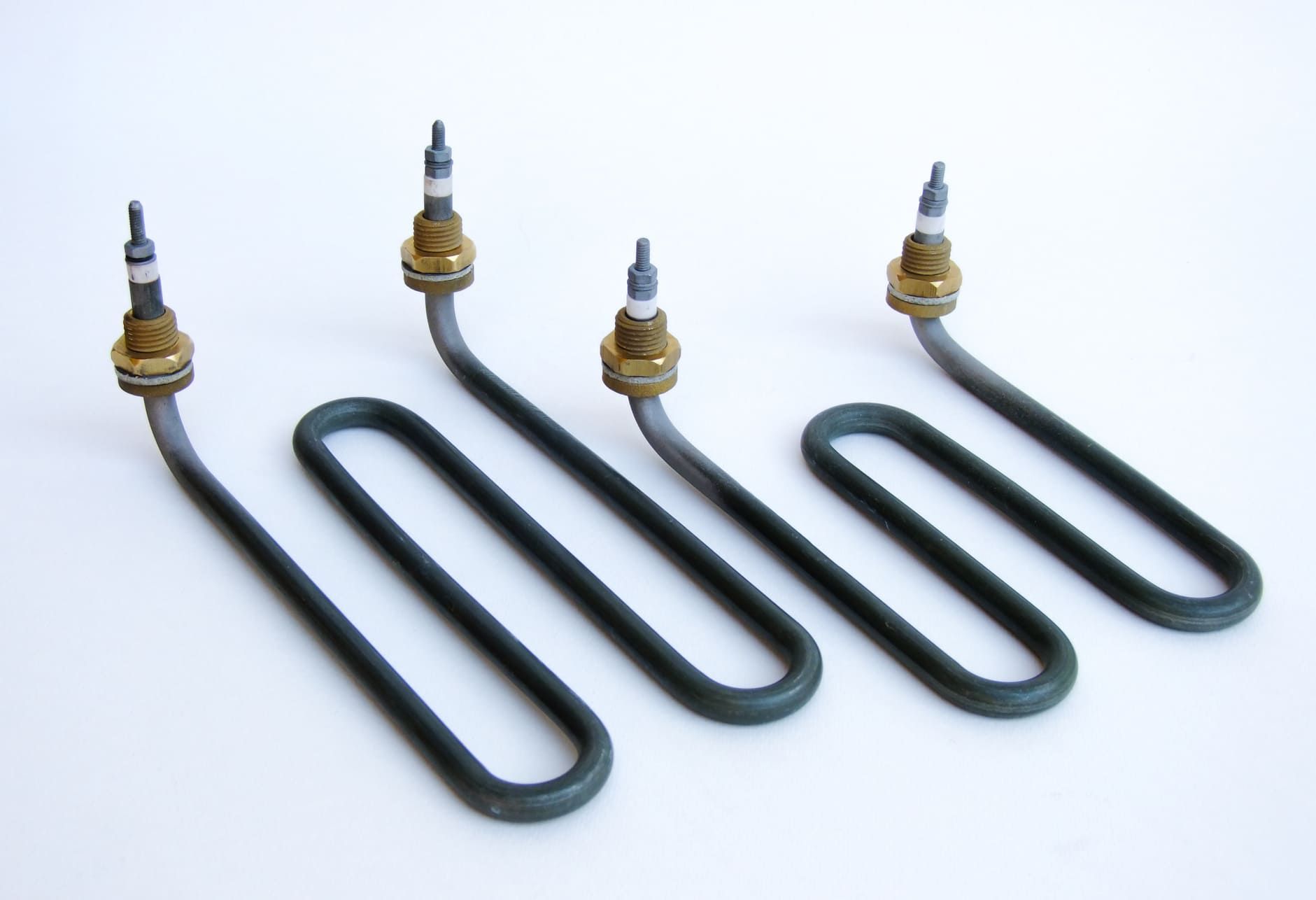
A samovar heater element is the small stainless element that sits in the water chamber of an electric samovar or a tea urn. It is usually a ring or a hairpin of 1 to 3 kW in a food-grade stainless sheath, and it spends its life in water that is boiled and refilled several times a day.
- Maximum power
- up to 3 kW
- Sheath material
- Food-grade stainless 304
- Shape
- Ring or hairpin
- Delivery
- In stock, same day
- Voltage
- 220 V
- Custom builds
- To your chamber and thread
Ask for a Price or Technical Advice
Call us or send a WhatsApp message for a price, full specifications, or a custom build.
Technical Specifications
The figures below are the usual ranges for this type of element. Builds outside them are possible.
| Property | Value |
|---|---|
| Construction | Tubular element formed into a ring or a hairpin, sealed into a threaded plug or a flanged base |
| Sheath material | Stainless 304, food grade |
| Sheath diameter | 6.5 or 8 mm |
| Ring diameter | Made to the chamber, commonly 80 to 200 mm |
| Safe watt density in water | 8 to 11 W/cm² |
| Working voltage | 220 single phase V |
| Protection | Thermal cut-out against dry running, strongly recommended |
| Sealing | Gasket against a flat face, or a welded base |
| Termination | Threaded studs with ceramic beads, under a cover |
| Power tolerance | +5 to -10 % |
Sizes and Specifications We Supply
| Property | What we supply |
|---|---|
| Maximum power per element | 3,000 W |
| Voltage | 220 V |
| Sheath material | Stainless steel |
| Maximum working temperature | 100 °C |
| Termination | Nut |
| Delivery | In stock, same day |
| Minimum order | 1 piece |
The size ordered most often is 2,000 W.
Where It Is Used
- Food and pharmaceutical industry
- Water and liquid heating
- Electric samovars and tea urns
- Catering water boilers
Choosing, Fitting and Looking After It
Dry running is the failure, and it is preventable
Almost every samovar element that fails was uncovered when it failed. The water boils down, the top of the element comes out into the steam, and that section has nothing to carry its heat away. It goes from working to open circuit in a couple of minutes.
The element cannot protect itself. A thermal cut-out mounted against the plug or the base, wired in series so it breaks the supply, is what protects it — and it protects the samovar body, the bench it stands on and whoever is nearby, which matters more. On anything that is left switched on unattended, treat the cut-out as part of the element, not as an accessory.
Keep it off the floor of the chamber
Sediment and scale settle at the bottom. An element lying against the base heats that deposit rather than the water, and the sheath under it runs far hotter than the water. A ring element supported a centimetre or two above the base stays in clean water and lets the chamber be rinsed out properly.
Descale it, never scrape it
Boiling concentrates whatever the water carries, so a samovar scales faster than almost anything else in a kitchen. Descale with citric acid or a proprietary solution, let it work, and rinse well. What must not happen is scraping. A stainless sheath is protected by a very thin oxide layer, and a scratch through it gives corrosion somewhere to start. Most samovar elements that pit and leak were cleaned with a tool at some point.
The terminals live in steam
Steam rises out of the chamber and finds the terminal cover. Water condensing on the studs is the usual cause of a tripped RCD on a samovar that has worked for years. Keep the cover fitted, make sure the earth connection to the plug is sound, and dry the terminal area after any spill or overfill.
An element that trips an RCD after standing unused often has moisture in the magnesium oxide rather than a real fault. Left somewhere warm and dry for a day it frequently recovers, and the insulation resistance reading will say so.
Watt density and the taste of the water
Water in contact with a very hot sheath scales faster and, in a drinking application, tastes of it. Keeping the watt density in the middle of the range rather than at the top — which means a slightly longer element for the same kilowatts — gives a sheath that runs cooler, scales more slowly and needs cleaning less often. On a samovar that is filled and boiled several times a day, that difference is measured in months of life.
Build to the chamber, not to a catalogue size
Samovars vary. The chamber diameter, its depth, the position of the tap, whether the element enters from below or through the side — all of it differs between makers and between decades. Measure the old element in place before it is removed, note which way the terminals face, and the replacement will fit the first time.
Price
Price
850,000 – 2,500,000 Toman
Prices checked — confirm the figure before ordering, as it moves with the exchange rate and with the specification.
What Sets the Price
- Diameter and length
- Power and voltage needed
- Sheath material (stainless steel, brass and so on)
- Termination type and lead or thread length
- Whether a thermocouple is built in
- Order quantity
How It Compares
A samovar element against the water heater element it resembles.
| Feature | Samovar | Water heater |
|---|---|---|
| Duty | Boils, empties, refills, all day | Holds a tank warm |
| Sheath | Food-grade stainless | Stainless steel or brass |
| Main risk | Running dry | Scale |
| Shape | Ring or small hairpin | Long hairpin |
Common Questions
Why do samovar elements burn out so often?
Because they are run dry. A samovar is left switched on, the water boils away, and within a minute or two of the element being uncovered the wire inside fails. Nothing about the element prevents this; a thermal cut-out does.
What protection should it have?
A thermal cut-out fitted against the base or the element plug, wired in series with the supply. It costs very little and it is the difference between a boiled-dry samovar that has to be refilled and one that has to be rebuilt.
Which sheath material is right?
Food-grade stainless. It is in drinking water, so the sheath has to be a material that does not taint it and can be cleaned. Copper is used in plumbing but is not the right choice inside a samovar chamber.
How do I remove scale from it?
With a descaling solution — citric acid works — left to stand and then rinsed thoroughly. Never scrape it. A scratched stainless sheath corrodes at the scratch, and the marks left by a knife or a screwdriver are where the next failure starts.
Ring or hairpin?
A ring spreads the heat around the base and suits a wide, shallow chamber. A hairpin reaches deeper and suits a narrow one. Whichever the chamber takes, the element has to sit clear of the base so scale and sediment do not build up underneath it.
Can you build one for an old samovar?
Yes. Measure the chamber diameter and depth, the thread or mounting on the old element, the ring diameter if it is a ring, where the terminals come out, and the wattage from the plate. Most samovars in service are older than the parts stocked for them.
Related Products
Immersion Heater
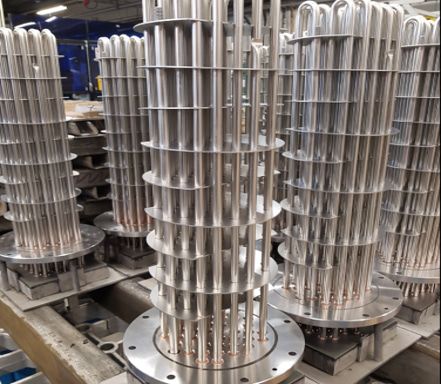
An immersion heater is a tubular element mounted on a screw plug or a flange so it can be sealed into the wall of a tank and sit directly in the liquid. It heats water, oil, fuel, chemicals and process baths from the inside, which wastes almost nothing, and it is chosen by the liquid it will live in rather than by wattage alone.
Screw Plug Heater
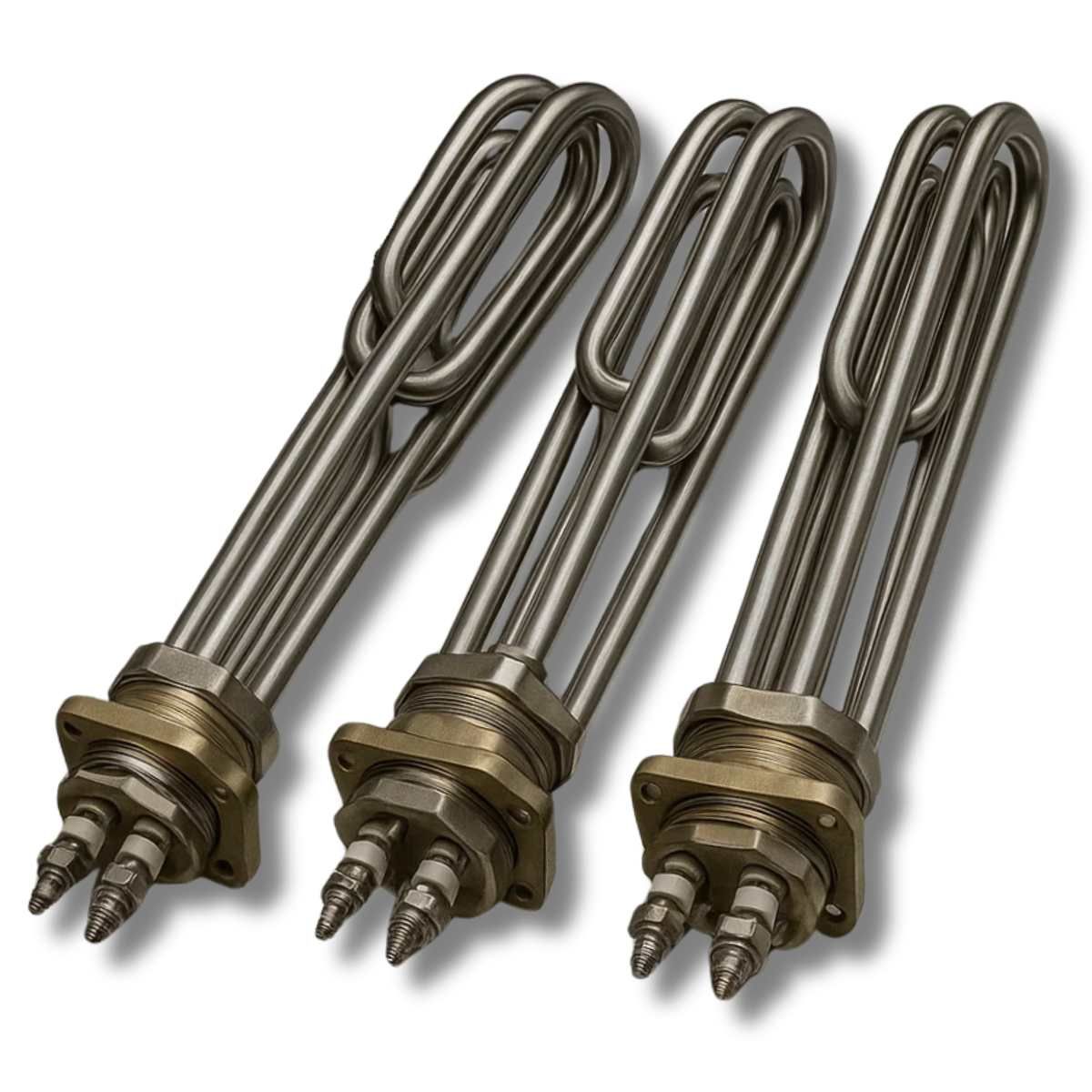
A screw plug immersion heater is a hairpin element brazed or welded into a threaded plug, so it screws straight into a boss on the side or the top of a tank. It is the simplest sealed way to put heat inside a vessel, and it suits tanks up to a few kilowatts at low and medium pressure.
Flanged Heater
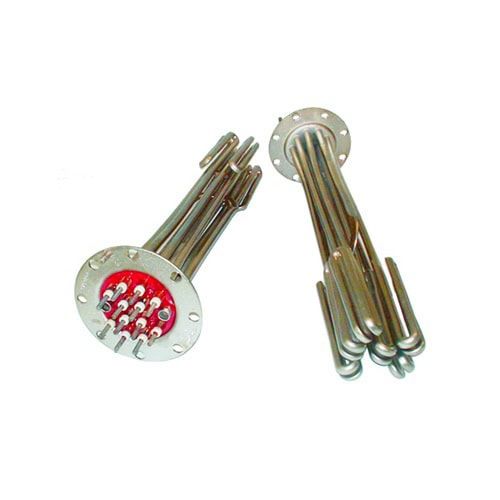
A flanged immersion heater is a bundle of hairpin elements welded into a flange that bolts onto a matching flange on the vessel. It is how large powers are put into a tank — tens of kilowatts, three phase — and it is the build used where there is pressure, a hot oil circuit, or a boiler.
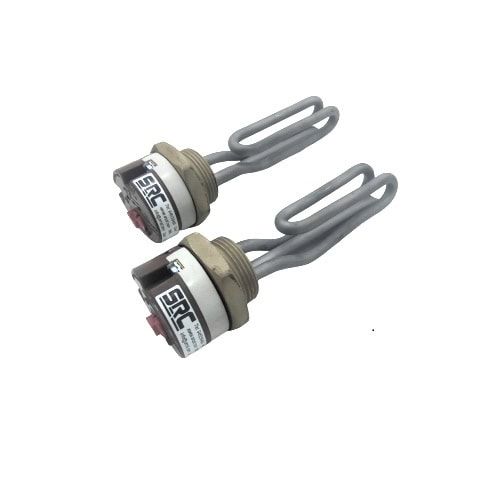
Water Heater Element
A water heater element is the screw-in element that heats a storage water heater or a hot water cylinder. It is usually a stainless steel or brass hairpin on a threaded plug, with a pocket down the middle for the thermostat, and it is chosen mainly by how hard the water is.
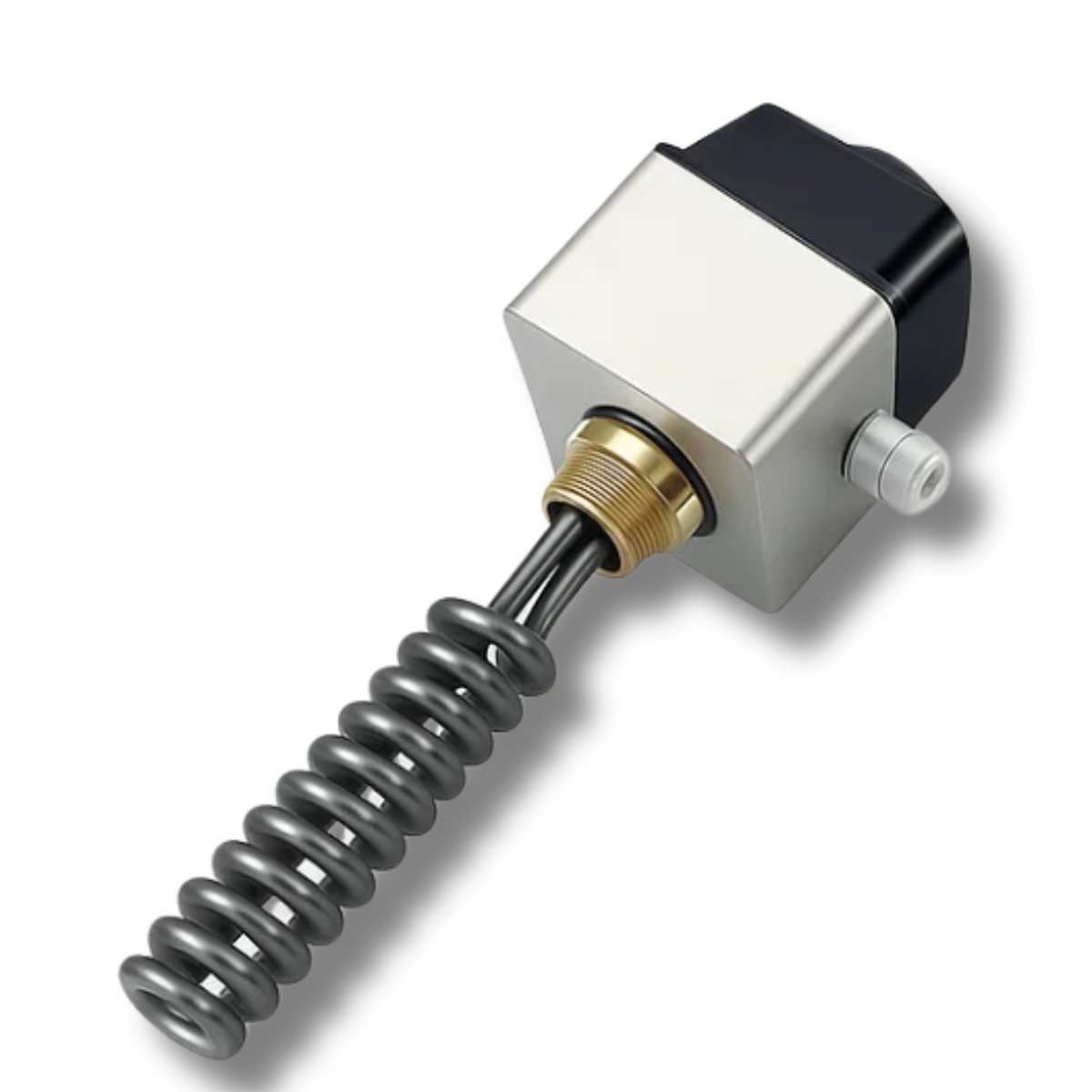
Oil and Chemical Heater
An oil and chemical immersion heater is built for liquids that punish an element: thermal oil, diesel, mazut, acids, alkalis and plating solutions. It runs at a low watt density so the sheath never gets hot enough to char the oil, and its sheath material is chosen for what the liquid does to metal.
Ask for a Price or Technical Advice
Call us or send a WhatsApp message for a price, full specifications, or a custom build.
Last updated: