Laboratory Equipment
Laboratory heating is small, precise and repeatable. Incubators, water baths, hot plates, drying ovens and small furnaces need stable temperature and a known accuracy far more than they need power, and most of them run for days without anyone watching.
Ask for a Price or Technical Advice
Call us or send a WhatsApp message for a price, full specifications, or a custom build.
The Job
A small chamber, plate or bath has to hold a set temperature closely and repeatably, often unattended for days, with heat that is even enough that the reading means something.
Working Conditions
The usual figures for this application. Yours may differ, and the element is sized from your figures, not these.
| Property | Value |
|---|---|
| Incubators and baths | 30 to 100 °C |
| Drying ovens | 50 to 300 °C |
| Muffle furnaces | Up to 1200 °C |
| Typical stability required | ±0.5 to ±2 °C |
| Typical power | 100 to 3000 W |
| Common element types | Silicone blanket, cartridge, plate, tubular, ceramic |
What Suits It
The element types that fit this job, best first.

Silicone Rubber Heater
A silicone rubber heater is a thin sheet, one and a half to three millimetres thick, with an etched foil or wound wire circuit sealed between fibreglass reinforced silicone. It bends around curves, follows an irregular shape, and can be made in almost any outline, up to about 230 °C.
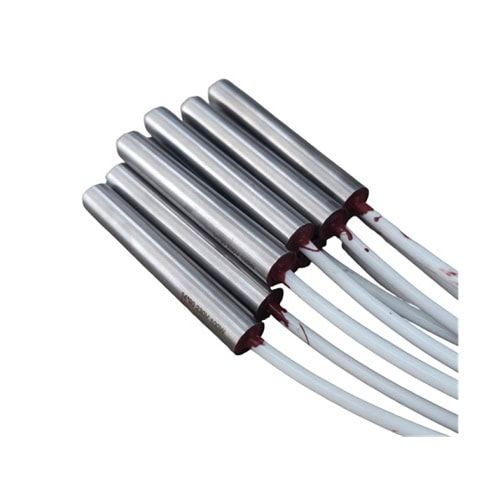
Cartridge Heater
A cartridge heater is a compact metal rod that slides into a drilled hole in a metal part and heats it from the inside. Nickel-chrome wire is wound on a ceramic core, packed with magnesium oxide and sealed in a stainless sheath. It carries far more power per square centimetre than any other element, which is why moulds, dies and platens use it.
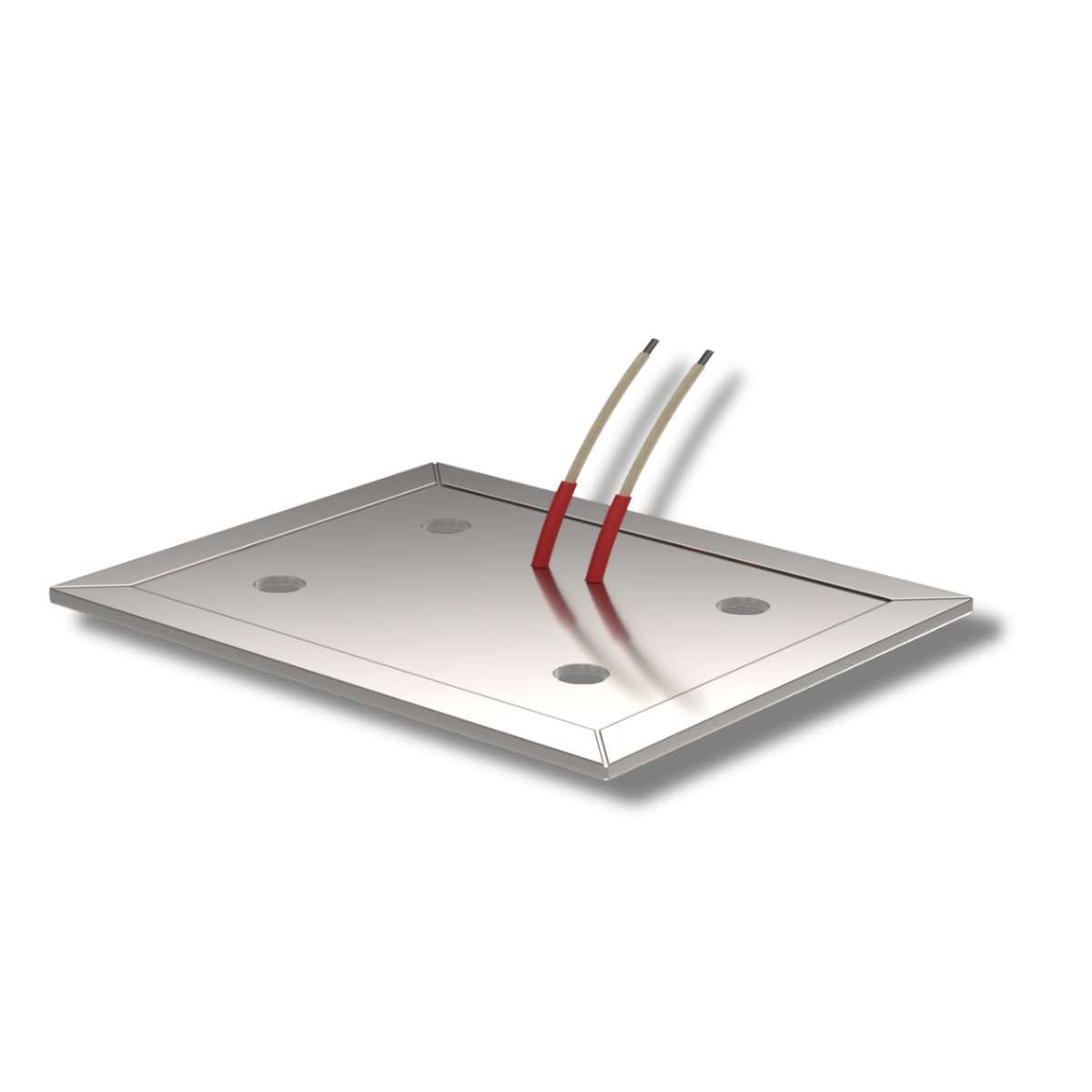
Plate Heater
A plate heater is a wide flat element that heats an area rather than a line. A resistance circuit is spread across a rectangular plate — clamped between metal sheets or cast into aluminium — so the whole face comes up to temperature together. It is used under vessels, moulds, tables and heated surfaces.
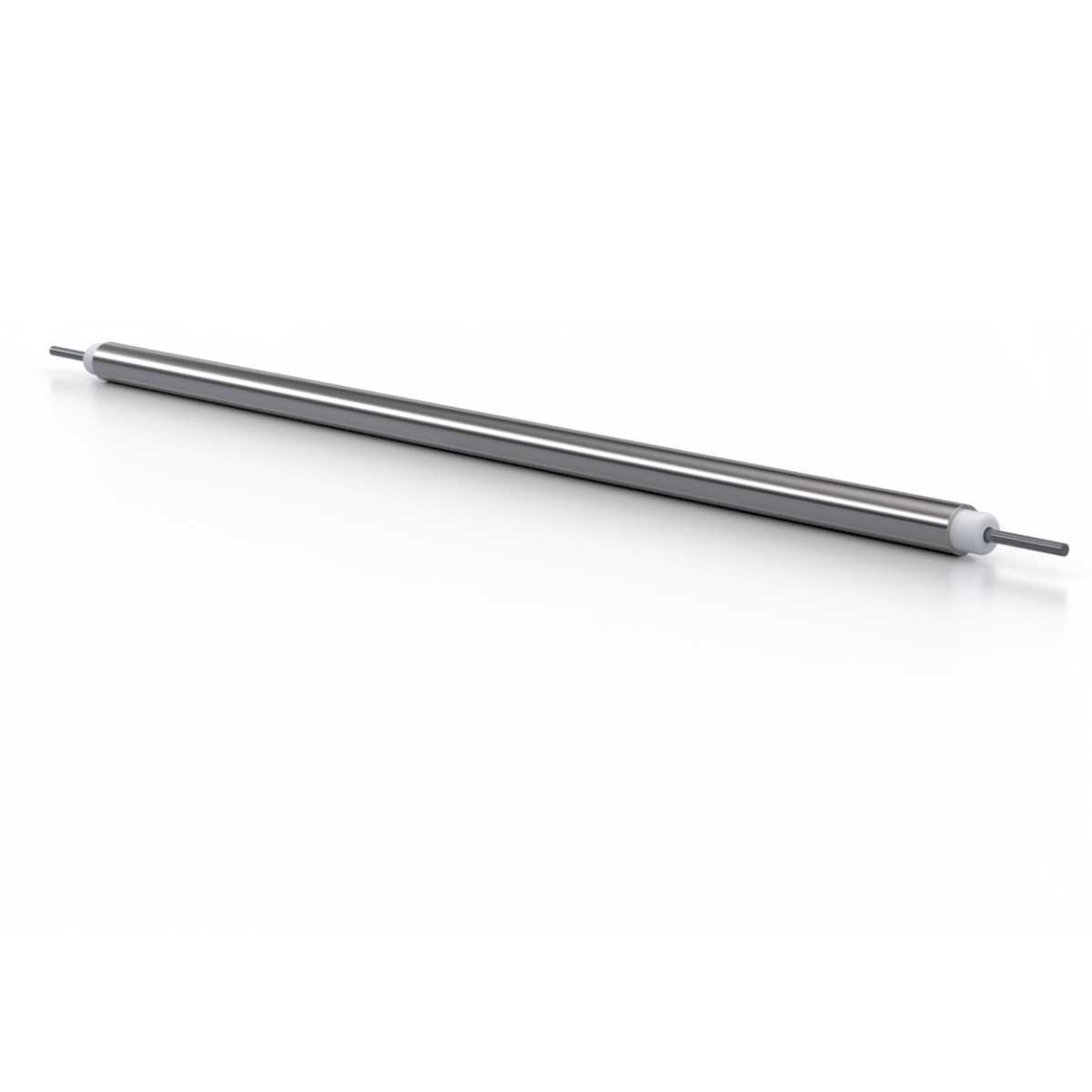
Straight Tubular Heater
A straight tubular heater is the simplest form of tubular element: one straight rod with no bends and a terminal at each end. It is made for places that already have a straight bore, pipe or channel, where the element can sit in without changing direction.
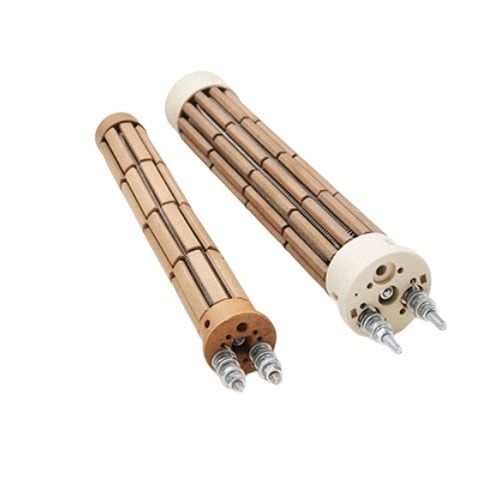
Ceramic Heater
A ceramic heater for high temperature work carries its resistance wire inside a ceramic body rather than leaving it bare in the chamber. Wire threaded through ceramic tubes and beads, or set into a fibre module, reaches about 1200 °C while staying protected from the load and from what the furnace gives off.
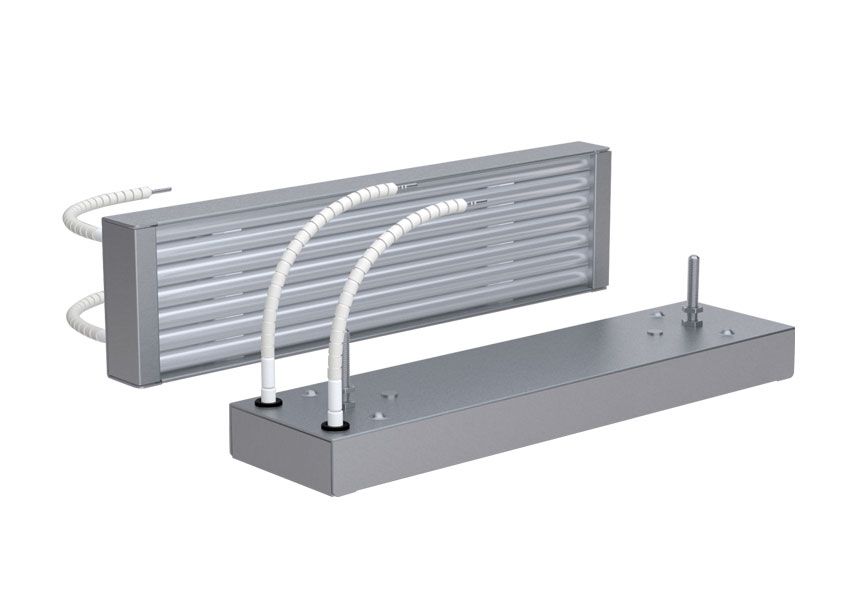
Quartz Heater
A quartz heater is a coiled resistance wire inside a clear quartz tube. The tube reaches 900 to 1200 °C and radiates medium-wave infrared, which most plastics, coatings and water absorb well. It reaches working output in a second or two and is the general-purpose radiant element for drying and forming.
How to Get It Right
Stability, not speed
Most laboratory heating faults come from too much power, not too little. A big element in a small chamber heats fast, overshoots the setpoint, switches off, undershoots and hunts around the target for the rest of the run. The samples see a sawtooth, not a temperature.
Steady holding comes from the opposite approach: modest power spread over a large area, so the chamber approaches the setpoint gently and the controller only has to make small corrections. Where fast heat-up genuinely matters, the answer is a controller that ramps and then eases off, not a bigger heater.
Spread the heat, then measure the space
A chamber heated from one wall has a gradient, whatever the display says. The sample nearest the element is warmer than the one at the door, and no amount of controller tuning changes that.
Spread the heat: a blanket around the vessel, elements on more than one surface, a plate under the whole base rather than a rod under one corner. Then, in a chamber that carries air, add circulation. Once the heat is spread, put the sensor out in the working space where the samples actually sit — a sensor strapped to the element measures the element and reports a comfortable lie.
Silicone blankets earn their place in a lab
A flexible silicone heater bonded to the outside of a vessel or the underside of a plate spreads its power over the whole area it covers. That low watt density is exactly what delicate work needs: no hot spot for a sample to sit against, no scorching of media, and an even surface temperature to control from.
They also suit odd shapes — a curved flask, a small tank, an instrument housing — where no rigid element would fit.
Unattended means two independent protections
Laboratory equipment runs overnight and over weekends with nobody in the room. The control thermostat will eventually fail, usually stuck on. So there needs to be a second, independent over-temperature cut-out with its own sensor, set above the working temperature and below anything dangerous.
Liquid baths need level protection as well. A bath that boils dry is a burnt-out element at best, and the beginning of a fire at worst.
The terminals fail first in a chemical room
Solvent vapour, acid fumes and salt spray attack terminal blocks, lead insulation and crimps long before they trouble a stainless sheath. Keep the terminal end out of the vapour path, use proper glands and sealed boxes, and when an element in a lab goes open circuit, look at the connections before condemning the element itself.
What Usually Goes Wrong
The mistakes that shorten an element's life on this kind of job.
- Sizing on the fastest heat-up rather than the steadiest hold. Too much power makes a chamber that overshoots and hunts.
- One heater on one side, so the chamber has a gradient and every sample sits at a slightly different temperature.
- A sensor beside the element rather than out in the working space, so the display is confidently wrong.
- No independent over-temperature cut-out on equipment that runs unattended overnight.
- Assuming any element is safe in a water bath that boils dry. Baths need level protection like any other tank.
- Letting solvent vapour or salt spray reach the terminals, which corrodes them long before the element wears out.
Common Questions
How do I get stable temperature rather than fast heating?
Use less power spread over more area, and a controller with proper PID tuning. A large, gently heated surface holds a temperature far better than a small, powerful one that switches on and off.
What is a silicone blanket heater used for in a lab?
Wrapping or bonding to a vessel, a plate or the underside of a tank. It spreads heat evenly over a whole surface at low watt density, which is what makes it good for anything that must not have hot spots.
What temperature stability should I expect?
A well-designed bath or incubator holds ±0.5 °C at the sensor. What matters more is uniformity across the working space, which depends on spreading the heat and on stirring or circulation, not on the controller.
What protection does unattended equipment need?
Two independent devices: the control thermostat and a separate over-temperature cut-out with its own sensor. On liquid baths, add level protection so the element cannot be powered dry.
Can you build a replacement heater for an imported instrument?
Usually, from the old part or from its dimensions, power and voltage. Send photos, the dimensions and the rating plate, and where possible the failed element itself.
Why does my oven read the right temperature but dry unevenly?
Because the sensor reports one point and the chamber has a gradient. Either the heat is not spread around the chamber or there is no circulating fan. Uniformity is a layout problem, not a controller problem.
Ask for a Price or Technical Advice
Call us or send a WhatsApp message for a price, full specifications, or a custom build.
Last updated: