Flanged Immersion Heater
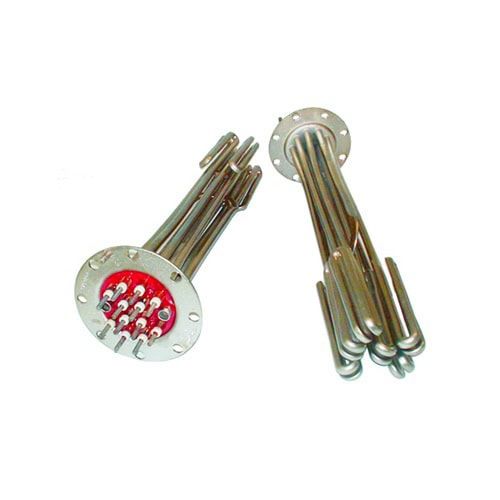
A flanged immersion heater is a bundle of hairpin elements welded into a flange that bolts onto a matching flange on the vessel. It is how large powers are put into a tank — tens of kilowatts, three phase — and it is the build used where there is pressure, a hot oil circuit, or a boiler.
- Flange sizes
- ANSI 2 to 8 inch
- Usual power
- 10 to 100+ kW
- Max working temperature
- up to 800 °C
- Supply
- 220 or 380 V
- Sensors
- Thermowell plus a high limit
- Custom builds
- To your flange drilling
Ask for a Price or Technical Advice
Call us or send a WhatsApp message for a price, full specifications, or a custom build.
Technical Specifications
The figures below are the usual ranges for this type of element. Builds outside them are possible.
| Property | Value |
|---|---|
| Construction | A bundle of hairpin tubular elements welded into a flange, under a terminal enclosure |
| Flange size | ANSI 2, 3, 4, 6 and 8 inch, other standards to order |
| Flange material | Carbon steel or stainless |
| Sheath material | Stainless steel |
| Max working temperature | up to 800 °C |
| Safe watt density in water | 8 to 12 W/cm² |
| Safe watt density in oil | 1 to 3 W/cm² |
| Supply | 220 single phase or 380 three phase, elements grouped in star or delta V |
| Temperature control | Thermowell with a control sensor, plus a separate high-limit sensor |
| Baffles | Fitted along the bundle to hold the elements apart and guide flow |
| Termination | Bolted terminal enclosure, weatherproof to order |
| Power tolerance | +5 to -10 % |
Sizes and Specifications We Supply
| Property | What we supply |
|---|---|
| Length | 150 to 3,000 mm |
| Maximum power per element | Set by the order — no practical ceiling |
| Voltage | 220, 380 V |
| Sheath material | Stainless steel |
| Maximum working temperature | 800 °C |
| Termination | Flange |
| Built-in thermocouple | On request |
| Delivery | 3 working days |
| Minimum order | 1 piece |
Where It Is Used
- Water and liquid heating
- Oil, fuel and mazut heating
- Tank and drum heating
- Industrial furnaces and ovens
- Boilers, calorifiers and pressure vessels
- Thermal oil circuits and heat exchangers
Choosing, Fitting and Looking After It
Match the drilling, not the nominal size
“Four inch flange” is not a specification. There are several standards in use, with different bolt circles, different hole counts and different thicknesses, and they look alike until the heater is hanging from a crane over an open vessel. Measure the bolt circle diameter, count the holes, measure one hole, measure the outside diameter and the thickness, and send those numbers. A photograph with a tape laid across the flange is worth more than a nominal size.
Match the flange material to the vessel as well. A stainless flange bolted to a carbon steel vessel puts two dissimilar metals in permanent contact with an electrolyte between them, and the joint corrodes from the inside.
Baffles are not packaging
The plates spaced along the element bundle look like shipping supports and get thrown away on site. They are not. They keep the hairpins from touching each other — two elements in contact make a hot spot at the point of contact — they damp vibration in a flowing liquid, and in a circulation heater they force the flow across the elements instead of straight down the middle of the shell.
The bolt-up is a procedure, not a step
Clean both faces. Use a new gasket, every time. Bring the bolts up in a criss-cross pattern in three passes, at a third, two thirds and full torque. Then run the vessel up to temperature, let it cool, and check the bolts again — the first heat cycle relaxes them, and a flange that was tight on the day of fitting is the one that weeps a week later.
Plan how it will come out before it goes in
A flanged heater is long, heavy and awkward, and one day it has to be withdrawn. It needs clear space in front of the flange at least equal to the immersed length, and a way to take the weight while the last bolts come out. On a vessel in a plant room, check that clearance while the heater is still on the truck. Fitting one into a space it can never leave means the next replacement is a cutting job.
Watch the load balance when elements are replaced
The bundle is wired as three balanced groups. If one element fails and is disconnected rather than replaced, the bank goes out of balance, one phase takes more current than the others, and the protection sees a fault that is not where it appears to be. Note the grouping before disturbing the wiring, and put it back the same way.
The enclosure is the other half of the reliability
Everything electrical sits in a box bolted on top of a hot vessel, often outdoors. Steam finds its way in, condenses on the lid and drips onto the terminals. Use the weatherproof enclosure where the site calls for it, keep the gland pointing down, and check the terminal torque at every service — a loose terminal on a three-phase heater of this size overheats the block before anything else notices.
Price
Price
From 3,000,000 Toman
Prices checked — confirm the figure before ordering, as it moves with the exchange rate and with the specification.
What Sets the Price
- Diameter and length
- Power and voltage needed
- Sheath material (stainless steel, brass and so on)
- Termination type and lead or thread length
- Whether a thermocouple is built in
- Order quantity
How It Compares
Flanged against screw plug, on what actually separates them.
| Feature | Flanged | Screw plug |
|---|---|---|
| Power range | Tens of kilowatts | Up to about 15 kW |
| Pressure | Suits pressure vessels | Low and medium |
| Sensors | Thermowell built in | Usually a separate boss |
| Servicing | Bolts and a new gasket | One spanner |
| Weight | Needs lifting gear | Two hands |
Common Questions
What do you need from me to build one?
The flange size and its drilling — the bolt circle, the number of holes and the hole size — the immersed length available, the liquid, the working temperature, the power and the supply. A photograph of the existing flange next to a tape measure settles most of it.
Why is there a thermowell?
So a sensor can be changed without draining the vessel. The well is a closed tube welded into the flange that reaches into the liquid; the sensor slides inside it. Without one, replacing a failed sensor means opening a pressure joint.
Why two sensors rather than one?
One controls, one protects. The control sensor holds the process temperature. The high-limit sensor is wired to cut the supply outright if that fails, if the level drops, or if a contactor sticks. On a heater of this size a runaway is a serious event, not an inconvenience.
What are the plates along the element bundle for?
They are baffles. They hold the elements apart so no two touch, stop the bundle vibrating in a moving liquid, and steer the flow along the elements rather than straight past them. On a circulation heater they are what makes the heat transfer work.
Can it go into an existing flange?
That is the normal case. The heater is built to your bolt pattern, in a flange material that matches your vessel so the two do not corrode against each other. Send the drilling, not just the nominal size — the same nominal size exists in several standards.
How is the power split across three phases?
The elements are grouped into three balanced circuits, in star or delta. It matters that they are balanced, because an unbalanced bank loads one phase and can trip the supply. When elements are replaced, keep the grouping the installer set up.
Related Products
Immersion Heater
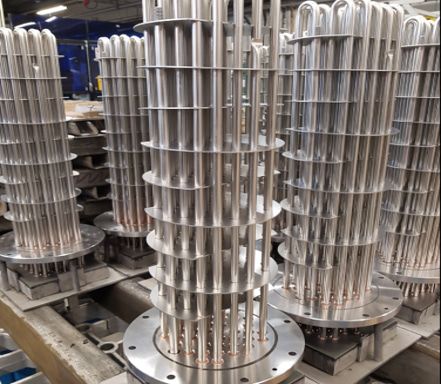
An immersion heater is a tubular element mounted on a screw plug or a flange so it can be sealed into the wall of a tank and sit directly in the liquid. It heats water, oil, fuel, chemicals and process baths from the inside, which wastes almost nothing, and it is chosen by the liquid it will live in rather than by wattage alone.
Screw Plug Heater
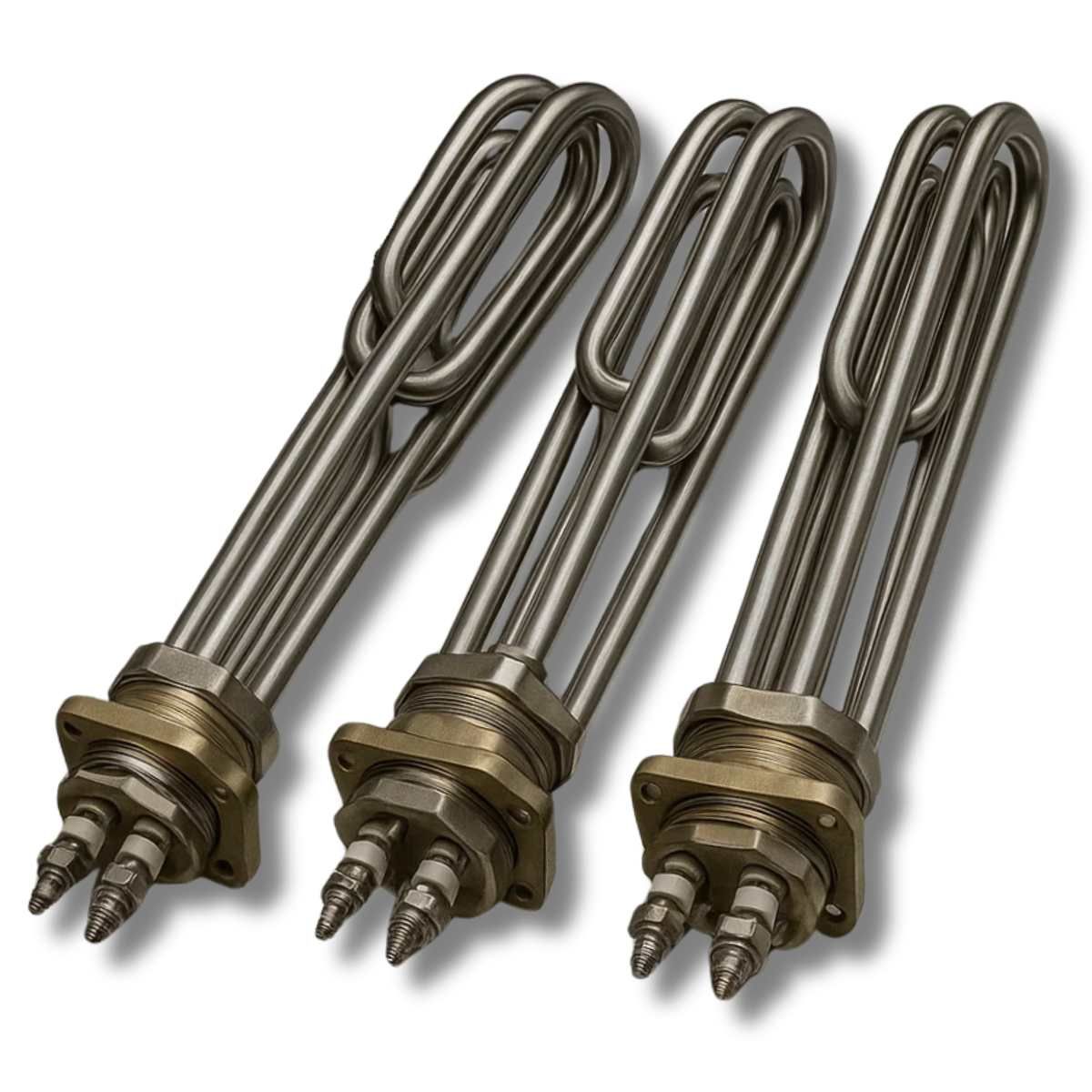
A screw plug immersion heater is a hairpin element brazed or welded into a threaded plug, so it screws straight into a boss on the side or the top of a tank. It is the simplest sealed way to put heat inside a vessel, and it suits tanks up to a few kilowatts at low and medium pressure.
Water Heater Element
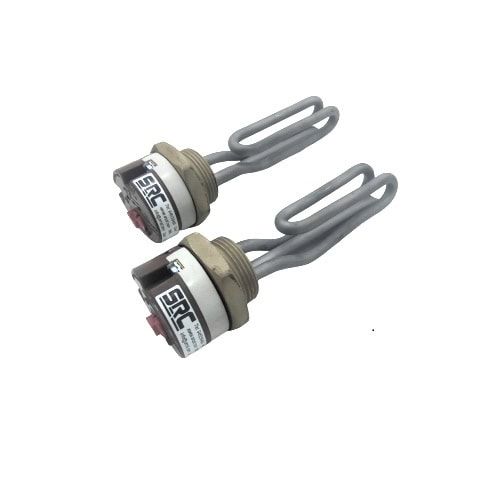
A water heater element is the screw-in element that heats a storage water heater or a hot water cylinder. It is usually a stainless steel or brass hairpin on a threaded plug, with a pocket down the middle for the thermostat, and it is chosen mainly by how hard the water is.
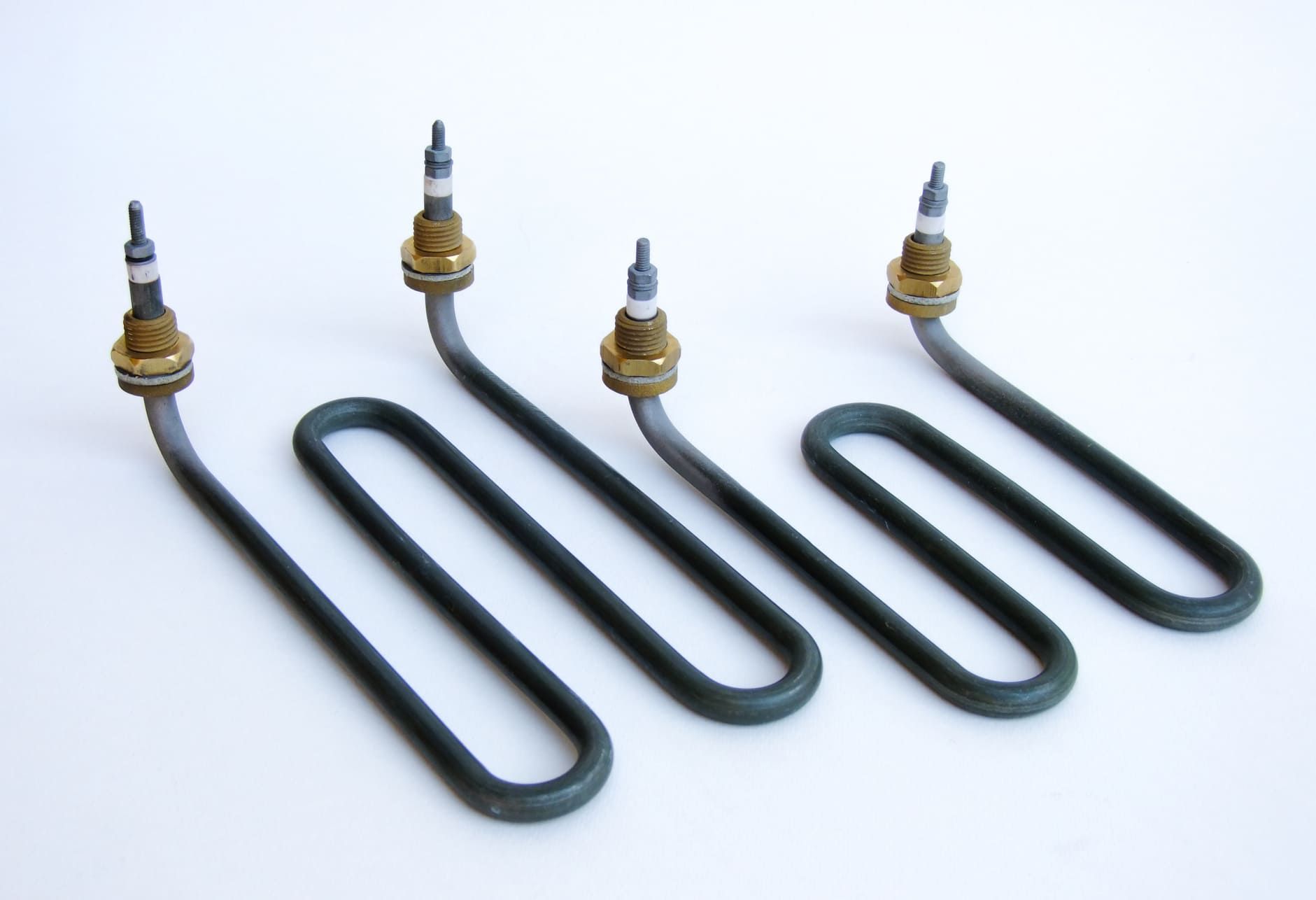
Samovar Element
A samovar heater element is the small stainless element that sits in the water chamber of an electric samovar or a tea urn. It is usually a ring or a hairpin of 1 to 3 kW in a food-grade stainless sheath, and it spends its life in water that is boiled and refilled several times a day.
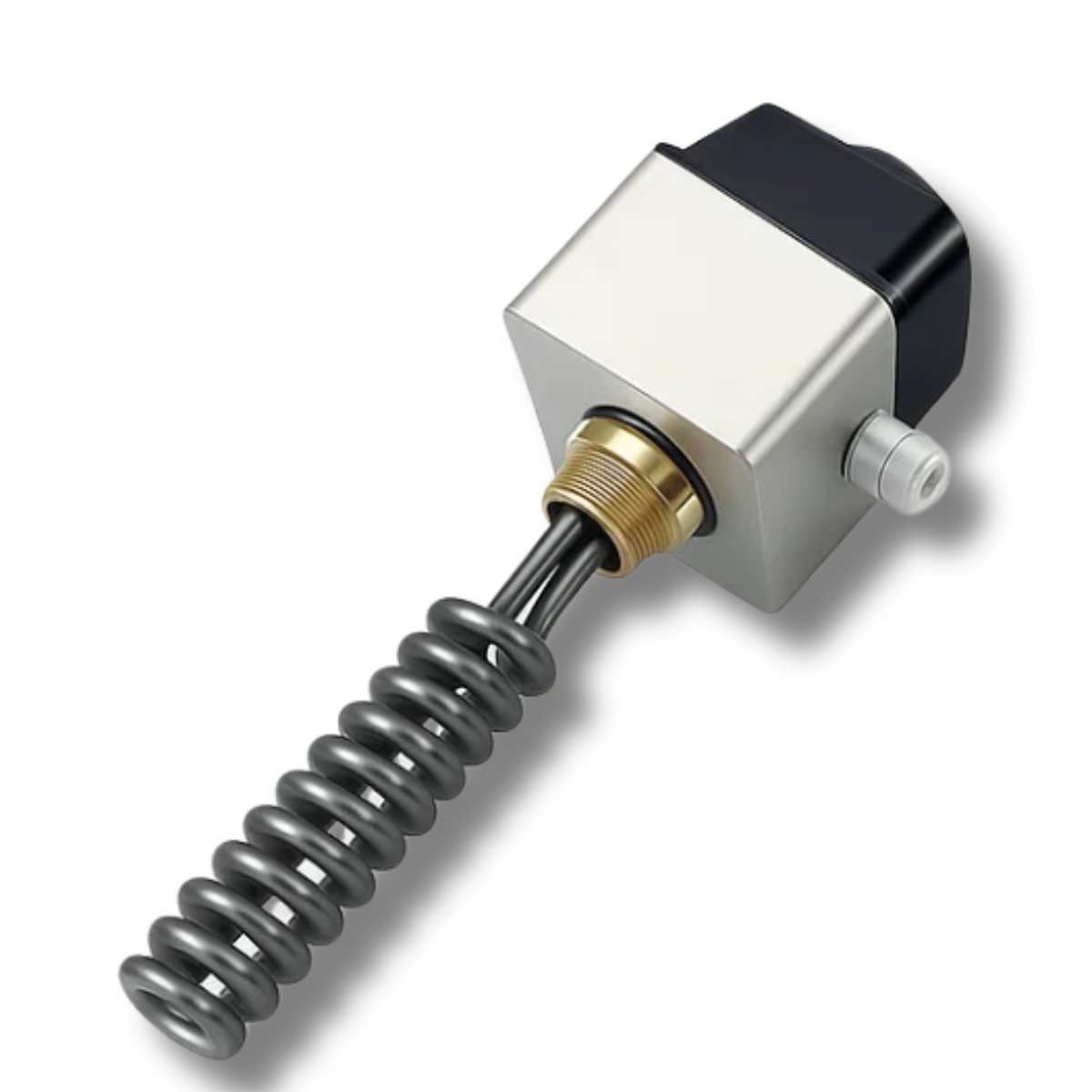
Oil and Chemical Heater
An oil and chemical immersion heater is built for liquids that punish an element: thermal oil, diesel, mazut, acids, alkalis and plating solutions. It runs at a low watt density so the sheath never gets hot enough to char the oil, and its sheath material is chosen for what the liquid does to metal.
Ask for a Price or Technical Advice
Call us or send a WhatsApp message for a price, full specifications, or a custom build.
Last updated: