Water Heater Element
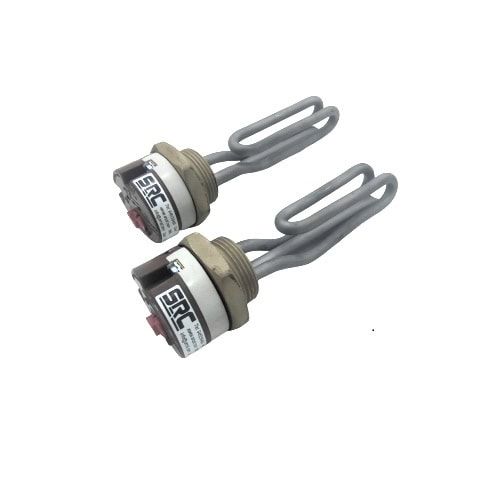
A water heater element is the screw-in element that heats a storage water heater or a hot water cylinder. It is usually a stainless steel or brass hairpin on a threaded plug, with a pocket down the middle for the thermostat, and it is chosen mainly by how hard the water is.
- Maximum power
- up to 2 kW
- Thread
- 1¼ inch BSP, and to order
- Sheath material
- Stainless steel or brass
- Thermostat
- Pocket built into the element
- Delivery
- In stock, same day
- Custom builds
- To your boss and cylinder depth
Ask for a Price or Technical Advice
Call us or send a WhatsApp message for a price, full specifications, or a custom build.
Technical Specifications
The figures below are the usual ranges for this type of element. Builds outside them are possible.
| Property | Value |
|---|---|
| Construction | Hairpin tubular element on a threaded plug, with a central pocket for the thermostat probe |
| Thread | 1¼ inch BSP standard, other sizes to order |
| Sheath material | Stainless steel or brass |
| Max working temperature | up to 100 °C |
| Safe watt density in water | 8 to 12 W/cm² |
| Immersed length | Set by the cylinder, commonly 250 to 700 mm |
| Working voltage | 220 single phase V |
| Thermostat | Rod thermostat in the pocket, with a manual-reset thermal cut-out |
| Sealing | Fibre or rubber gasket against the boss face |
| Termination | Terminal head under a cover, earthed to the plug |
| Power tolerance | +5 to -10 % |
Sizes and Specifications We Supply
| Property | What we supply |
|---|---|
| Maximum power per element | 2,000 W |
| Voltage | 220 V |
| Sheath material | Stainless steel or brass |
| Maximum working temperature | 100 °C |
| Termination | Threaded |
| Built-in thermocouple | Yes — analogue thermostat |
| Delivery | In stock, same day |
| Minimum order | 1 piece |
Where It Is Used
- Water and liquid heating
- Food and pharmaceutical industry
- Storage water heaters and cylinders
- Washroom and kitchen hot water
- Solar cylinders, as the backup element
Choosing, Fitting and Looking After It
Water hardness decides the material and the service interval
Scale is what kills water heater elements, not electricity. It grows fastest on the hottest surface in the tank, which is the element, and once a layer has formed the element has to run hotter to push the same heat through it. That makes more scale. The loop ends with a failed element and a cylinder full of debris.
Where the water is hard, choose Incoloy over copper, keep the watt density at the lower end of the range by using a longer element, and put descaling in the maintenance calendar rather than waiting for a failure. A cylinder that takes noticeably longer to heat than it did last year is telling you the schedule is already overdue.
Look after the anode and the tank looks after the element
Every steel or enamelled cylinder has a sacrificial anode, and its whole purpose is to corrode so the tank does not. Once it has dissolved, the tank starts to rust, the water carries that rust, and it settles onto the element. Elements fitted into a corroding cylinder fail again and again, and each time it looks like an element problem.
Pull the anode when the element is out. It costs very little and it is the only moment when checking it is easy.
Fit the element low, and leave the sludge somewhere to go
Sediment collects at the bottom of a cylinder. An element sitting right on that layer heats sludge instead of water, and the sheath under it runs far hotter than the water around it. A few centimetres of clearance above the floor keeps the element in clean water and leaves a place for the debris to sit until the cylinder is drained.
The gasket, not the thread, does the sealing
Most cylinder bosses are a parallel thread with a flat face, and the seal is the gasket against that face. Winding extra tape onto the thread does not help and can split the boss. Use a new gasket, make sure the face is clean and unpitched, and tighten enough to compress the gasket evenly. If a boss face is pitted, that is a cylinder problem and no gasket will hide it for long.
Earth it properly and use an RCD
The element is a metal object in water, connected to the mains, in a room where people are wet. The earth connection at the terminal head is not decorative. Make it off, tighten it, and confirm it. Fit an RCD on the circuit, and if it trips, treat it as a real fault — measure the insulation resistance from the terminals to the plug before switching anything back on. A wet magnesium oxide core reads low, and it will trip again.
Two elements are often better than one
On a large cylinder, two smaller elements at different heights beat one big one. The lower element does the main heating, the upper one can be switched alone for a quick, small volume of hot water without heating the whole tank. Each runs at a lower watt density, so both scale more slowly, and a failure leaves you with half a system rather than none.
Price
Price
1,800,000 – 5,000,000 Toman
Prices checked — confirm the figure before ordering, as it moves with the exchange rate and with the specification.
What Sets the Price
- Diameter and length
- Power and voltage needed
- Sheath material (stainless steel, brass and so on)
- Termination type and lead or thread length
- Whether a thermocouple is built in
- Order quantity
How It Compares
The three sheath materials, and what the water decides.
| Feature | Copper | Stainless 316 | Stainless steel or brass |
|---|---|---|---|
| Soft water | Very good | Good | Good |
| Hard water | Scales heavily | Scales | Best of the three |
| Chlorinated water | Poor | Fair | Good |
| Cost | Lowest | Middle | Highest |
Common Questions
Why does my element keep failing in a year or two?
In most of Iran the answer is hard water. Limescale builds on the sheath, acts as a blanket, and the element cooks behind its own scale. Descaling on a schedule, and an Incoloy sheath rather than copper, are the two things that change it.
What is the anode rod and why does it matter?
It is a magnesium rod inside the cylinder that corrodes instead of the tank. When it is used up, the tank starts corroding, and a tank that has begun to rust will keep eating elements. Check the anode whenever the element is changed; it is a cheap part.
Can I fit a higher wattage element to heat faster?
Only if the cabling and the breaker allow it, and only if the element is long enough to carry the power without exceeding the safe watt density. Squeezing more kilowatts onto the same length raises the sheath temperature and speeds up scaling, which makes the heater slower within months.
What is the difference between the thermostat and the cut-out?
The thermostat switches the element on and off to hold the water at temperature. The cut-out is a separate safety that trips once, has to be reset by hand, and exists for the case where the thermostat fails on. Never bypass a cut-out that has tripped — find out why it did.
How do I know if the element or the thermostat has failed?
With the power off, measure across the element terminals. An open circuit means the element. A normal reading means the element is fine and the fault is in the thermostat, the cut-out or the wiring. Also measure from a terminal to the plug — a low reading there is an element leaking to earth.
Can you make one for an old cylinder with an unusual boss?
Yes. Measure the thread across the boss, its depth, and how far the element can reach inside before it meets the far wall or the coil. Older cylinders often have threads that are no longer stocked, and building to the boss is cheaper than replacing the cylinder.
Related Products
Immersion Heater
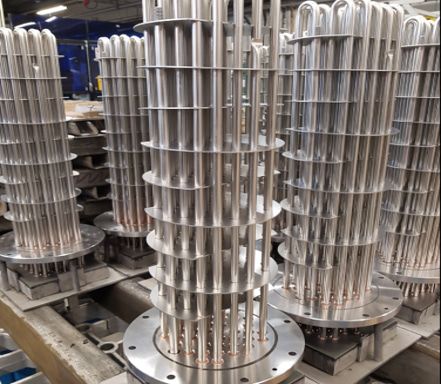
An immersion heater is a tubular element mounted on a screw plug or a flange so it can be sealed into the wall of a tank and sit directly in the liquid. It heats water, oil, fuel, chemicals and process baths from the inside, which wastes almost nothing, and it is chosen by the liquid it will live in rather than by wattage alone.
Screw Plug Heater
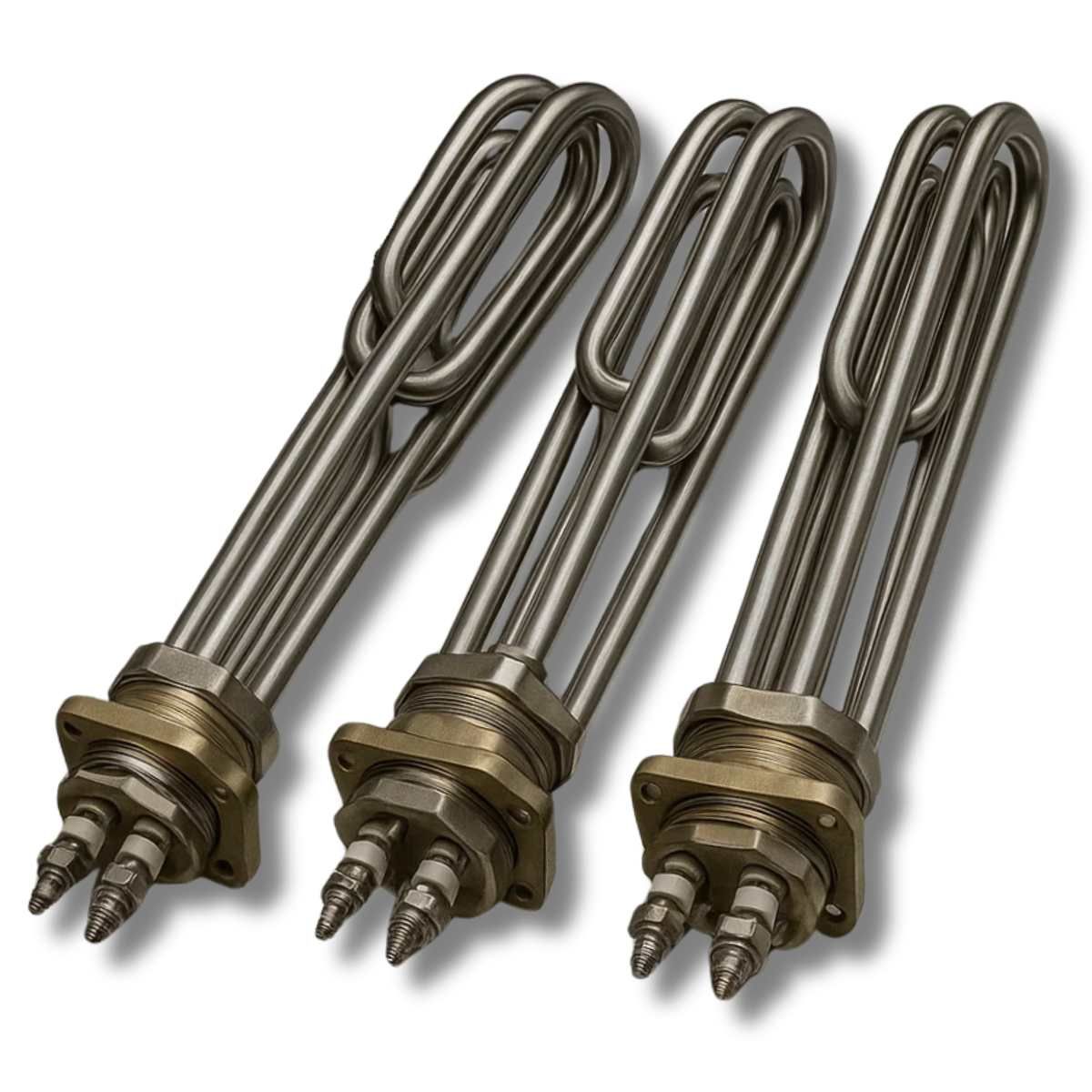
A screw plug immersion heater is a hairpin element brazed or welded into a threaded plug, so it screws straight into a boss on the side or the top of a tank. It is the simplest sealed way to put heat inside a vessel, and it suits tanks up to a few kilowatts at low and medium pressure.
Flanged Heater
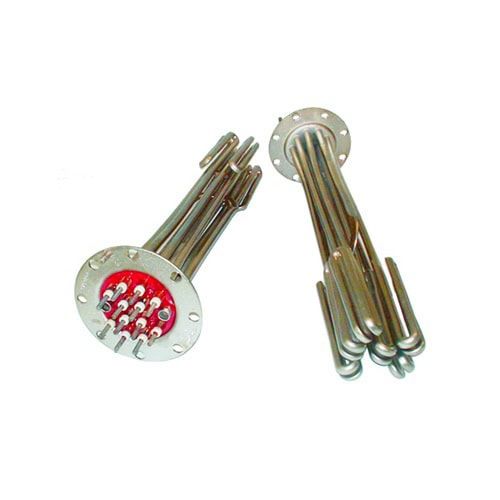
A flanged immersion heater is a bundle of hairpin elements welded into a flange that bolts onto a matching flange on the vessel. It is how large powers are put into a tank — tens of kilowatts, three phase — and it is the build used where there is pressure, a hot oil circuit, or a boiler.
Samovar Element
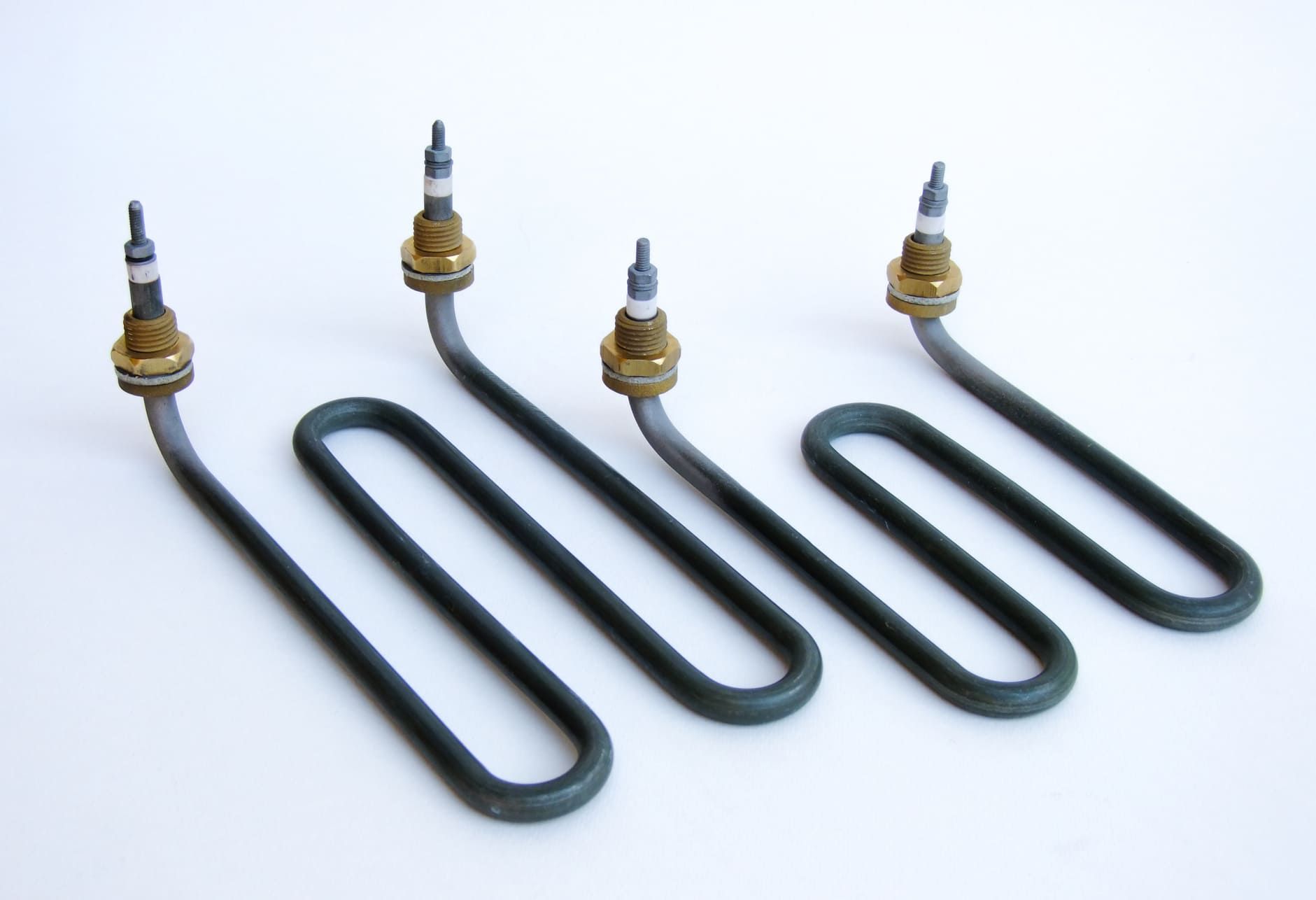
A samovar heater element is the small stainless element that sits in the water chamber of an electric samovar or a tea urn. It is usually a ring or a hairpin of 1 to 3 kW in a food-grade stainless sheath, and it spends its life in water that is boiled and refilled several times a day.
Oil and Chemical Heater
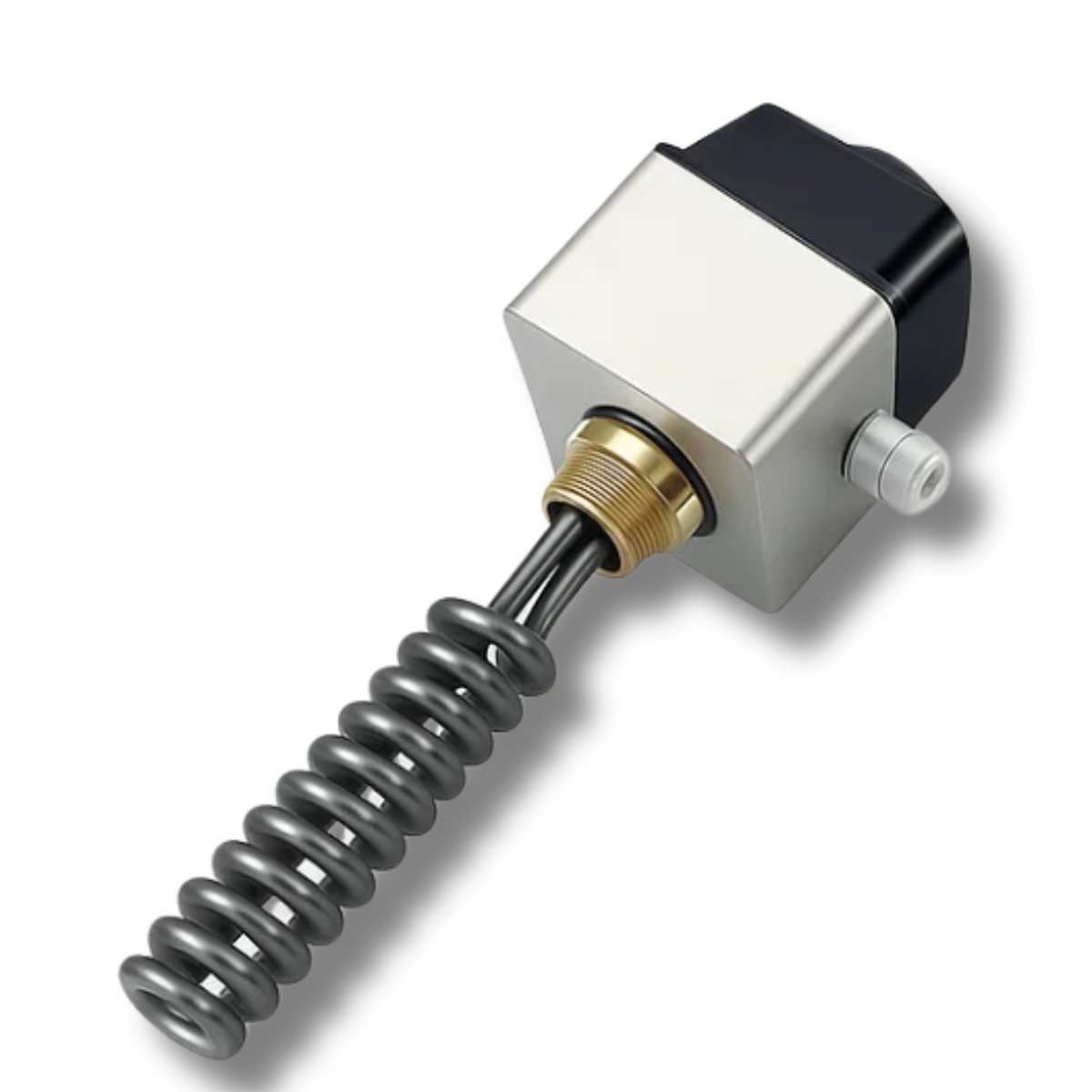
An oil and chemical immersion heater is built for liquids that punish an element: thermal oil, diesel, mazut, acids, alkalis and plating solutions. It runs at a low watt density so the sheath never gets hot enough to char the oil, and its sheath material is chosen for what the liquid does to metal.
Ask for a Price or Technical Advice
Call us or send a WhatsApp message for a price, full specifications, or a custom build.
Last updated: